Category: logistic solutions

How to Forecast Customer Demand: Methods & Benefits

Imagine this: we are approaching peak seasons like White Friday, National Day, or year-end sales, and you are restocking your inventory. You order the same amount you always do when replenishing stock – but when the season begins, your products almost immediately sell out.

The following year, around the same time, you anticipate that the season will be as busy as the previous year and definitely don’t want to run out of stock again.

So, you review your records to see how many sales you made and how many backorders you had last season, and you use this data to estimate how much stock you will need. In the end, you order twice the usual amount and successfully get through the holiday season without any issues.

This is a classic example of demand forecasting. By making data-driven predictions about sales, customer interest, and order volume (rather than guessing blindly), e-commerce brands set themselves up to satisfy customers, save money, and streamline their entire supply chain.

In this article, we will dive into the concept of demand forecasting, the factors that influence it, how to forecast accurately, and how experts like Diggipacks can help.

What is demand forecasting?

Demand forecasting is the process of estimating how much demand there will be for a product in the future. Demand is typically measured in sales, so the goal of demand forecasting is to predict how many units of a particular product you will sell in a given period.

If you forecast demand accurately, you will have enough stock to fulfill all customer orders without overstocking (which increases inventory holding costs) or understocking (which can lead to stockouts and backorders). You will also be able to improve decision-making across your supply chain, warehousing operations, and inventory management.

To forecast demand as accurately as possible, many brands track historical sales and order data and analyze it for patterns that can help them predict what might happen in the future.

Types of demand forecasting techniques

There are several methods businesses can use to forecast demand. All demand forecasting models rely on data and analytics over specific time periods.

Macro-level

Macro-level demand forecasting focuses on general economic conditions, external forces, and broader factors affecting commerce. These factors help companies understand portfolio expansion opportunities, market research insights, and other market shifts.

Micro-level

Micro-level demand forecasting is specific to a particular industry, company, or customer segment (such as studying the demand for perfumes among customers).

Short-term

Short-term demand forecasting looks to predict demand over a short period, usually less than 12 months. These forecasts are often used for day-to-day operations and inventory management.

Long-term

Long-term demand forecasting aims to predict demand over a longer period, usually a year or more. Long-term forecasts help a brand identify seasonal patterns, plan its growth trajectory, and invest in its overall business strategy.

Importance of demand forecasting for e-commerce

Without demand, there is no business. And without a thorough understanding of demand, businesses cannot make the right decisions about marketing spend, production, staffing, and more.

Budgeting

When you know how much inventory you will need to meet demand, you can create a budget and stick to it. Demand forecasting helps brands make strategic financial decisions that protect profit margins, improve efficiency, and decrease overall spending.

Demand planning and production scheduling

Accurate demand forecasting and inventory control help plan production so that the right amount of stock is available when customers need it.

Storing inventory

The more inventory you have, the more expensive it is to store. With accurate demand forecasting, you can avoid overstocking and the high costs of holding excess inventory.

Developing a pricing strategy

Demand forecasting not only helps maintain optimal stock levels, but it can also enable you to price products based on demand.

Factors influencing the customer demand life cycle

Many factors can influence demand or cause it to fluctuate. These factors vary from one business to another or across industries.

Seasonality

Seasonality refers to changes in order volume during specific periods. Seasonal brands may experience peaks and dips in demand around certain periods or events.

Competition

Competition affects demand by providing more options for your customers to choose from. When a new competitor enters the market, it can unexpectedly affect demand. A flexible demand forecasting model helps you respond quickly.

Types of products

Demand forecasting varies significantly between different products and services. Therefore, it is essential to understand your customers’ lifetime value and average order value to improve demand forecasting.

Geography

The geographical location of your customers can significantly affect demand forecasting. For example, if your brand sells agricultural tools, you will likely see higher demand in areas with extensive farming activities.

With this understanding of the market and potential opportunities, businesses can grow, formulate competitive pricing, employ the right marketing strategies, and invest in their growth.

Setting objectives

Demand forecasting should have a clear purpose. At its core, it predicts what customers will buy, how much they will buy, and when they will buy it.

With this in mind, start the forecasting process by choosing:

  • The time period for which you are forecasting demand (e.g., the upcoming fiscal quarter)
  • The specific product or general category you are focusing on
  • The audience and geography (e.g., customers in the Eastern or Southern regions)

Collecting and recording data

With your parameters set, it’s time to gather your data.

In addition to recording historical sales data, such as the time and date of all orders, the SKU(s) included in each order, and the sales channel from which each order originated, you should also track:

  • SKU Velocity: how frequently a SKU is picked over a certain period
  • Inventory Turnover Rate: how many times your entire inventory has been sold and replaced within a given timeframe
  • Average Order Value (AOV): the average dollar amount a customer spends on each order
  • Return Rate: the frequency with which each SKU is returned
  • Stockout Rate: how often your business sells out of a particular SKU, depleting available units to 0

By tracking these inventory metrics over time, your business can forecast growth and identify trends at a more granular level, allowing you to compare how well your forecasts matched reality.

You may also need to gather other data, such as market conditions, obsolete stock, stockout frequency, and other order details. Ensure that any data you use is collected accurately to achieve the most reliable forecasts.

Measuring and analyzing data

With the right data in hand, the next step is to analyze it for patterns, trends, and other insights that could improve your future demand forecasts.

Start by comparing your predicted sales performance to your actual performance. Whether you perform this analysis manually or automate it, this repeatable data analysis can help you adapt your next forecast.

Budgeting accordingly

Once you have established a feedback loop, you can set your next forecast (hopefully more accurately) and update your budget to allocate funds based on your growth goals. If your demand forecast is accurate, it will save you a lot of money on inventory holding costs, marketing spend, labor costs, and production.

Demand forecasting helps brands make informed business decisions that affect everything from the inventory planning process to supply chain optimization. With customer expectations changing faster than ever, businesses need a method to forecast demand accurately.

If you’re looking for an e-commerce fulfillment solution to help you improve demand forecasting, learn more about how Diggipacks can help you replenish stock and deliver the experience customers want. Request a pricing quote for our fulfillment services below.
Read More
admin سبتمبر 4, 2024 0 Comments

Why Leading Companies Rely on Diggipacks for Sustainable Growth

In today’s business environment, companies face increasing challenges related to inventory management, optimizing supply chains, and meeting growing customer expectations. Diggipacks is one of the leading companies providing innovative logistics solutions that help businesses overcome these challenges and achieve sustainable growth. But what makes Diggipacks the preferred choice for leading companies? Here are the reasons:

  1. Seamless Integration with Existing Systems:
    • Diggipacks offers integrated solutions that can be easily connected with existing company systems, allowing for smooth data flow and increased operational efficiency. This integration ensures that companies do not need a complete restructuring but can build on what is already in place to enhance performance.
  2. Flexibility and Adaptability:
    • Diggipacks relies on flexible technologies that allow companies to quickly adapt to market changes or business growth. Whether expanding into new markets or adding new product lines, Diggipacks’ solutions ensure that your logistics operations can keep up with this growth without disruption.
  3. Improving Efficiency and Reducing Errors:
    • Through automating many logistics processes and utilizing advanced technologies such as artificial intelligence and machine learning, Diggipacks helps companies improve operational efficiency and reduce human errors. This leads to smoother operations, cost savings, and increased customer satisfaction.
  4. Data-Driven Decision Support:
    • Diggipacks provides powerful analytics tools that help companies leverage big data to analyze performance and make informed decisions. By gaining better insights into supply chains and product demand, companies can optimize their operations and prepare for sustainable growth.
  5. Enhanced Customer Experience:
    • By improving order management and speeding up delivery processes, Diggipacks contributes to delivering a superior customer experience. This boosts customer loyalty and leads to increased sales and continuous growth.

Finally:

Leading companies rely on Diggipacks because it offers integrated, flexible, and efficient solutions that support sustainable growth. Whether it’s about improving efficiency, reducing costs, or enhancing customer experience, Diggipacks provides the tools and technologies needed to achieve these goals. If you are looking for a reliable partner to help you achieve your long-term objectives, Diggipacks is the ideal choice.


Read More
admin أغسطس 24, 2024 0 Comments

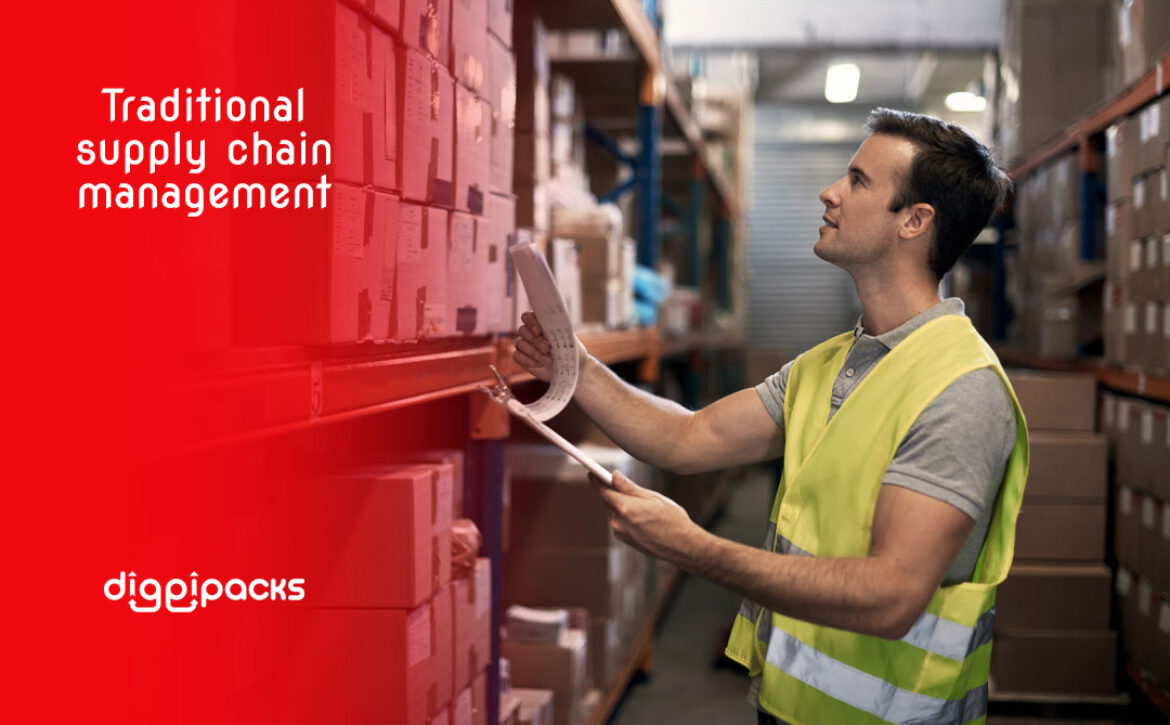
raditional Supply Chain Management

[et_pb_section fb_built=”1″ _builder_version=”4.16″ global_colors_info=”{}”][et_pb_row _builder_version=”4.16″ background_size=”initial” background_position=”top_left” background_repeat=”repeat” global_colors_info=”{}”][et_pb_column type=”4_4″ _builder_version=”4.16″ custom_padding=”|||” global_colors_info=”{}” custom_padding__hover=”|||”][et_pb_text _builder_version=”4.20.0″ header_2_text_color=”#E02B20″ header_2_font_size=”27px” header_3_text_color=”#E02B20″ header_3_font_size=”27px” header_4_text_color=”#E02B20″ header_4_font_size=”27px” background_size=”initial” background_position=”top_left” background_repeat=”repeat” hover_enabled=”0″ global_colors_info=”{}” sticky_enabled=”0″]

The concept of traditional supply chain is an old concept that has developed over the years with the difference and development of the surrounding environment and technology. Supply chain management has become indispensable due to continuous innovation in technology and rapidly changing customer expectations. The success and competitiveness of organizations has become dependent on effective supply chain management that is compatible with the ever-changing environment and technology. In this article, we will show you what the traditional supply chain is, the difference between it and modern supply chains, as well as the most important stages it goes through.

Definition of Traditional Supply Chain Management

traditional supply chain

Traditional supply chain management means designing, planning, implementing and controlling supply chain activities with the objective of achieving net value and building a competitive infrastructure.

This is in a way that ensures the exploitation of global logistics services, synchronizing supply with demand, and measuring performance globally.

Managing a traditional supply chain involves coordinating and cooperating with channel partners, who can be suppliers, intermediaries, third-party service providers and customers.

In essence, traditional supply chain management integrates the management of supply and demand within and across companies to help them compete in business.

get to know : Warehouse Expansion Decision-Making and Tips for Success

What is the difference between traditional and modern supply chain?

In fact, there is a big difference between traditional supply chain and modern supply chain, especially since the traditional methods mainly focus on the production process while dealing with the problems completely manually.

In contrast to modern methods of supply chain management, the modern supply chain relies primarily on the use of real-time data as well as sales metrics to predict which products will be in demand.

This is done through the use of automated systems and technological insights that help in better meeting customer needs, and thus making appropriate decisions.

Here are some points that explain to you in more detail the difference between traditional supply chain and modern supply chain:

Traditional supply chain

In the traditional supply chain the highest priority is for the production process so that huge quantities are manufactured and delivered to customers.

And that without relying on any of the modern technologies, which does not provide any amount of flexibility in work.

The modern supply chain

On the other hand, the modern supply chain uses real-time technology and data to meet the needs and expectations of consumers.

And that is by relying on modern tools that help in conducting operations smoothly and efficiently, which increases flexibility and work efficiency.

get to know : Cutting Down on Last Mile Delivery Cost

What are the stages of the traditional supply chain?

traditional supply chain

The traditional supply chain goes through a set of basic stages through which it processes business and customer orders. In the following, we will discuss the stages of the traditional supply chain in detail:

Stage 1 | Collection of raw materials

At that stage, all the raw materials required in the process of manufacturing and producing the final product are collected, and these raw materials may be composed of one element or a group of elements.

Stage 2 | Collection of material from the suppliers

The stage of Collection of material from the suppliers comes within the basic stages of the traditional supply chain.

Through which the required raw materials are obtained in the production or manufacturing process, through the appropriate suppliers.

Stage 3 | Manufacturing

At this stage, the products are manufactured, after identifying the raw materials required for work time, as well as collecting and obtaining them from suppliers.

In this process, more than one equipment may be used to finish the products and provide a final product suitable for direct distribution to customers.

Stage 4 | Distribution to the customers

It is part of the traditional supply chain, through which finished products that have been manufactured are distributed to customers or retailers.

Stage 5 | Consumption by the end customers

It is the last stage in that process in which the finished products are purchased from the manufacturer either by end customers or retailers.

[/et_pb_text][/et_pb_column][/et_pb_row][/et_pb_section]

Read More
admin مارس 2, 2023 0 Comments

Practices for achieving sustainable warehousing operations

[et_pb_section fb_built=”1″ _builder_version=”4.16″ global_colors_info=”{}”][et_pb_row _builder_version=”4.16″ background_size=”initial” background_position=”top_left” background_repeat=”repeat” global_colors_info=”{}”][et_pb_column type=”4_4″ _builder_version=”4.16″ custom_padding=”|||” global_colors_info=”{}” custom_padding__hover=”|||”][et_pb_text _builder_version=”4.19.0″ header_2_text_color=”#E02B20″ header_2_font_size=”27px” header_3_text_color=”#E02B20″ header_3_font_size=”27px” header_4_text_color=”#E02B20″ header_4_font_size=”27px” background_size=”initial” background_position=”top_left” background_repeat=”repeat” hover_enabled=”0″ global_colors_info=”{}” sticky_enabled=”0″]

Sustainable warehousing effectively helps reduce costs as well as enhance operational efficiency in warehouses, which makes many business owners turn to apply sustainable warehousing in their warehouses. Especially the huge problems arising from operations in warehouses, which would seriously affect the environment and the entire planet. There are many sustainable practices that can help you reduce these damages, by relying on sustainable methods in your warehouse operations. In this article, we will show you all the details about sustainable warehousing, and the most important practices that you need to follow.

What is sustainable warehousing?

Sustainable warehousing refers to the purchase of updates in warehouse operations that reduce the amounts of energy used.

As well as benefiting from sustainable energy sources and at the same time working to reduce the quantities of non-recyclable waste.

The end result is the existence of warehouses that are more environmentally friendly, as they preserve them from pollution and support sustainable procedures in their tasks.

are you know what is Scheduled Delivery?

What is the importance of sustainable warehousing?

sustainable warehousing

The reason for the importance of sustainable warehousing is that warehouses in general have a significant impact on the environment due to the unsustainable practices that take place within them.

Which in the long term will cause a negative impact on the environment and the entire planet, especially since the quantities of unsustainable waste that come out of warehouses daily are huge.

All in all, there are many benefits behind sustainable warehousing, which can help business owners grow larger and increase efficiency in their warehouses.

The following are the most important benefits of sustainable warehousing, which reflect the importance of sustainable warehousing in general:

    • Achieving a competitive advantage for businesses that apply sustainable warehousing.

    • Significantly reduce costs by consuming lower levels of energy and fuel.

    • Mitigating disruptions caused by traditional energy sources.

    • Improve your brand reputation by providing environmentally friendly services and thus increase customers.

    • Increasing efficiency in warehouses by decreasing reliance on traditional energy sources.

get to know: Vendor Managed Inventory 

How do you create a sustainable warehouse?

If you are considering setting up a sustainable warehouse and starting to take advantage of the huge advantages and benefits that sustainable warehousing can provide you for the environment as well,

There are a number of important things and practices that can help you with this. Such as:

1. Invest in renewable energy

One of the important and essential practices for a more sustainable warehouse is the use of renewable energy, through which it will affect harmful emissions to the environment.

It will also save you a lot of costs, as renewable energy sources are much less expensive in the long run compared to the costs of using electricity.

2. Use automated storage systems

Using automated warehousing systems can help you make your warehouse sustainable by automating most of the operations that take place in warehouses.

Thus reducing the use of equipment that consumes large amounts of fuel, and thus reducing emissions and polluting gasses to the environment.

Also, the use of automated warehousing systems and the activation of automation in your warehouse operations will help you in greatly enhancing the productivity in your warehouse.

3. Reduce, reuse, recycle

One of the important and basic practices regarding establishing a sustainable warehouse is the need to recycle waste while minimizing unsustainable waste in general.

This helps reduce the environmental impact of logistics services, thus protecting the environment and the entire planet from serious damage due to harmful emissions from waste.

4. Use of compact storage systems

One of the most important practices of sustainable warehousing is the use of compact warehousing systems, which reduce energy consumption for materials used in warehouses.

Integrated storage systems also help you effectively streamline operations in warehouses, which enhances productivity and business efficiency.

get to know: All you need to know about mis shipments

how to make a warehouse more sustainable

There are a number of basic tips that can help you implement sustainable warehousing and make your warehouse more sustainable. Here are the most important tips:

    • Recycle all the materials in your warehouse and try to make use of them.

    • Reduce electricity and gas consumption and replace it with renewable energy sources.

    • Use more sustainable packaging.

    • Automate processes and tasks in your warehouse.

    • Use pallets and other sustainable materials whenever possible.

Elements of sustainable warehousing

sustainable warehousing

In order to have a sustainable warehouse, there are a number of basic elements that must be present in your warehouse, which will help you reduce harmful gas emissions.

And one of those essential elements is the need to use electric cars with the use of clean fuels during transportation and charging.

Also, the storage facilities in your warehouse must be environmentally friendly, from the type of energy used in lighting to the materials used in storage.

It is always preferable to use LED lighting in warehouses, as it reduces heat generation and thus reduces total energy consumption.

Another important element of sustainable warehousing is the need to use non-toxic materials in your warehouse. like:

    • Non-toxic paints.

    • Sealants.

    • Adhesives.

All of these materials are environmentally friendly and at the same time help improve the overall air quality in the warehouse

[/et_pb_text][/et_pb_column][/et_pb_row][/et_pb_section][et_pb_section fb_built=”1″ _builder_version=”4.19.0″ _module_preset=”default” custom_margin=”||-100px||false|false” locked=”off” global_colors_info=”{}”][et_pb_row _builder_version=”4.17.4″ _module_preset=”default” global_colors_info=”{}”][et_pb_column type=”4_4″ _builder_version=”4.17.4″ _module_preset=”default” global_colors_info=”{}”][et_pb_button button_url=”http://diggipacks.com/3pl-fulfillment/” url_new_window=”on” button_text=”3PL FULFILLMENT” button_alignment=”center” _builder_version=”4.17.4″ _module_preset=”default” custom_button=”on” button_bg_use_color_gradient=”on” button_bg_color_gradient_direction=”270deg” button_bg_color_gradient_stops=”#e02b20 0%|#000000 100%” button_border_radius=”10px” button_icon_color=”#000000″ background_layout=”dark” custom_margin=”-80px||-80px||false|false” custom_padding=”||||false|false” global_colors_info=”{}”][/et_pb_button][/et_pb_column][/et_pb_row][/et_pb_section]

Read More
admin فبراير 21, 2023 0 Comments

Key warehouse order picking tips for SMEs

[et_pb_section fb_built=”1″ _builder_version=”4.16″ global_colors_info=”{}”][et_pb_row _builder_version=”4.16″ background_size=”initial” background_position=”top_left” background_repeat=”repeat” global_colors_info=”{}”][et_pb_column type=”4_4″ _builder_version=”4.16″ custom_padding=”|||” global_colors_info=”{}” custom_padding__hover=”|||”][et_pb_text _builder_version=”4.19.0″ header_2_text_color=”#E02B20″ header_2_font_size=”27px” header_3_text_color=”#E02B20″ header_3_font_size=”27px” header_4_text_color=”#E02B20″ header_4_font_size=”27px” background_size=”initial” background_position=”top_left” background_repeat=”repeat” hover_enabled=”0″ global_colors_info=”{}” sticky_enabled=”0″]

Warehouse Order Picking can be a very difficult and stressful process if the company does not have an optimized system that enables it to pick orders accurately and quickly. Especially since Warehouse Order Picking helps effectively in reducing the time it takes to fulfill orders, as well as the speed in picking and fulfilling orders.

This means increased customer satisfaction in return for faster fulfillment of their requests, which positively affects the sales and revenues of the company itself. In this article, we will talk about Warehouse Order Picking, and offer a set of important tips about it for SMEs.

What is Warehouse Order Picking?

Warehouse Order Picking

Warehouse order picking is the process of selecting a customer’s orders from the warehouse’s inventory to fulfill his or her order.

The warehouse order picking process requires more speed and accuracy, to pick and choose the customer’s order in the shortest possible time and with the highest level of accuracy available.

In order to adequately meet customer demands, you need to check your stock levels periodically, as well as ensure that the picking and selection processes are completed accurately and quickly.

get to know : Stock Availability Is a Key to Last Mile Performance

What are the order picking procedures?

Order picking procedures differ according to the method by which the orders themselves are selected, and each method has its advantages.

The following is an explanation of the most important order picking methods and procedures:

1. Single order picking

This method comes within warehouse order picking procedures and methods, through which one order is selected at a time until the customer’s order is completed.

This method is most appropriate for smaller warehouses that handle small order volumes.

2. Batch order picking

The second order picking method and procedure in warehouses is batch order picking, in which orders are picked multiple times.

That is, pick more than one order at the same time, and this is the most suitable method for companies that often have multiple orders with the same SKUs.

3. Pick and pass

Through this method, the warehouses are divided into parts, with a worker assigned to each part, and each worker specializes in selecting the item in the part he supervises.

Thus more than one order is fulfilled at a time, and then the combined orders are passed alternately to complete the customer’s order.

4. Cluster order picking

Through this method, it is possible to work on picking more than one order at the same time, using the picking cart or the collaborative mobile robot.

This ensures that the various orders are selected accurately, with error rates kept to a minimum.

are you know what is Scheduled Delivery?

Why is a warehouse order picking system important?

Optimizing your warehouse order picking can help you increase your warehouse’s overall ROI.

Which will positively affect the efficiency and productivity of your business, thus reducing your total costs and increasing your profit margin.

And when the warehouse order picking system is used properly, you can enjoy many distinct benefits.

Here are the main benefits of using the improved warehouse order picking system:

    • Reducing the time it takes to pick up orders.

    • Use the most suitable equipment for picking orders in your warehouse.

    • Process customer requests more accurately and quickly.

    • Save time and money and invest them in other profitable areas.

    • Automate part of your warehouse operations to save time.

get to know: Vendor Managed Inventory 

4 Key warehouse order picking tips for SMEs

Warehouse Order Picking

There are a few basic tips that can help small and medium business owners improve their warehouse order picking process. Here are the most important tips:

1. Optimize the layout of your warehouse

The first important piece of advice for small and medium businesses on improving their warehouse order picking is that they should improve their warehouse layout.

This will reduce the time spent in the selection process, and thus raise the efficiency of the selection process as much as possible.

2. Use a warehouse order-picking method that fits your business

There is no one-size-fits-all approach to optimizing warehouse order picking.

Therefore, you must choose the warehouse order picking method that is appropriate to the nature of your work and the judgment of your company itself.

Especially since choosing the appropriate method will, of course, affect your productivity and your ability and speed to meet customer requests.

There are a number of factors that you should consider when choosing the appropriate selection method for you, the most important of which are:

    • The time it takes to process the request.

    • Order size.

    • The time it takes to train employees.

    • Labor costs.

    • Warehouse size.

    • The total cost of the tools and technology needed for your business.

3. Increase picking efficiency with inventory management software

Choosing the right system can help you improve the picking process in your warehouse, especially since inventory management becomes more complex the more orders you handle.

So make sure you choose the right inventory management software for your business, which will help you improve order picking.

4. Take the time to properly train new employees

It is not just about using modern technologies and tools, you need to train your new employees appropriately.

Which will help you in enhancing the efficiency of warehouse picking, as well as reducing the time spent in the picking process and reducing errors that occur.

[/et_pb_text][/et_pb_column][/et_pb_row][/et_pb_section][et_pb_section fb_built=”1″ _builder_version=”4.19.0″ _module_preset=”default” custom_margin=”||-100px||false|false” locked=”off” global_colors_info=”{}”][et_pb_row _builder_version=”4.17.4″ _module_preset=”default” global_colors_info=”{}”][et_pb_column type=”4_4″ _builder_version=”4.17.4″ _module_preset=”default” global_colors_info=”{}”][et_pb_button button_url=”http://diggipacks.com/3pl-fulfillment/” url_new_window=”on” button_text=”3PL FULFILLMENT” button_alignment=”center” _builder_version=”4.17.4″ _module_preset=”default” custom_button=”on” button_bg_use_color_gradient=”on” button_bg_color_gradient_direction=”270deg” button_bg_color_gradient_stops=”#e02b20 0%|#000000 100%” button_border_radius=”10px” button_icon_color=”#000000″ background_layout=”dark” custom_margin=”-80px||-80px||false|false” custom_padding=”||||false|false” global_colors_info=”{}”][/et_pb_button][/et_pb_column][/et_pb_row][/et_pb_section]

Read More
admin يناير 30, 2023 0 Comments

Cutting Down on Last Mile Delivery Cost

[et_pb_section fb_built=”1″ _builder_version=”4.16″ global_colors_info=”{}”][et_pb_row _builder_version=”4.16″ background_size=”initial” background_position=”top_left” background_repeat=”repeat” global_colors_info=”{}”][et_pb_column type=”4_4″ _builder_version=”4.16″ custom_padding=”|||” global_colors_info=”{}” custom_padding__hover=”|||”][et_pb_text _builder_version=”4.19.0″ header_2_text_color=”#E02B20″ header_2_font_size=”27px” header_3_text_color=”#E02B20″ header_3_font_size=”27px” background_size=”initial” background_position=”top_left” background_repeat=”repeat” hover_enabled=”0″ global_colors_info=”{}” sticky_enabled=”0″]

One of the most pressing issues for delivery and e-commerce companies is the last mile delivery cost, which has become one of the most important challenges. The last mile delivery process is considered one of the most important and accurate operations, which e-store owners need in particular.

Through which the best services can be provided to customers, thus maintaining their satisfaction and doubling the profits achieved. Today, delivery and e-commerce companies are experiencing an unprecedented boom in their business. In this article, we will address the problem of last mile delivery cost, with some solutions to reduce that cost.

How much of the total shipping costs go to the last mile?

Last mile delivery is defined as the movement of goods from warehouses or fulfillment centers to the final delivery destination.

And is the final step in the shipping process, which ends with the package reaching the customer’s hand.

The goal of last mile logistics is to get packages to the buyer as quickly and inexpensively as possible.

So last mile delivery cost accounts for a large percentage of shipping costs in general.

That amounts to more than 50% of the total shipping cost, which can cost businesses significant expenses.

get to know : Stock Availability Is a Key to Last Mile Performance

What is the last mile delivery problem?

last mile delivery cost

The last mile delivery problem is very costly and can have a huge impact on customer satisfaction and retention.

This makes companies incur more costs for its application, and at the same time bear a greater risk of not using it in their business.

Especially since last mile delivery affects the customer’s final experience and impressions of the store they dealt with.

Recently, customers who do not receive their products quickly enough are looking for their products elsewhere that offer better delivery options.

What makes last mile delivery so costly?

The problem of high last mile delivery cost hinders many companies from starting its application and use, especially since it greatly affects customer satisfaction.

Last mile delivery builds a solid relationship of trust between the customer and the online store that deals with it and maintains its survival.

But due to the high last mile delivery cost, it has become difficult for many stores to implement it in their business.

There are many reasons and factors that increase the last mile delivery cost. And the following are the most important points that explain the reasons for the high last mile delivery cost:

1. High shipping costs

One of the reasons for the high last mile delivery cost is the high shipping costs in general, especially as companies compete to provide the best customer service in terms of delivery.

Urging companies to use technology, infrastructure and manpower to meet customer demands,

To compete with large retailers, brands try to invest in technology and infrastructure and ship quickly while also keeping costs low.

This is in order to maintain gross profit margins, which makes last mile delivery cost an obstacle for companies and retailers.

are you know what is Scheduled Delivery?

2. Difficulty implementing same-day delivery

It is difficult to control the speed of delivery once the package has left the warehouse for delivery.

As the efficiency of last-mile delivery depends on several factors that may be outside the company’s control.

These factors can include many variables, such as the number of orders that are categorized and packed each day, and the number of times that packages are received.

As well as the proximity of delivery points to the warehouse and fulfillment centers, in addition to the location of the warehouse itself.

3. Reliance on traditional guidance models

Without highly efficient routing tools and strategies, it is difficult or even impossible to ensure the effective implementation of last mile deliveries.

Traditional routing models rely heavily on manual processes, which makes it difficult to understand and take into account all the factors that affect the selection of highly productive routes.

4. Weak and rigid logistical vision

Outdated supply chain architecture and traditional delivery processes with poor interoperability are major reasons why logistics operations are poorly visible and time consuming.

It also results in a clear increase in last mile delivery cost, which makes it difficult to implement in e-commerce companies.

3 Strategies for Cutting Last Mile Delivery Costs

last mile delivery cost

Companies are trying to overcome these difficulties that cause the high last mile delivery cost, through the use of modern technology.

Here are 3 effective strategies that can make a difference in last mile delivery cost, and reduce it by some percentage:

1. Reduce fuel consumption

Reducing fuel consumption can help reduce the cost associated with it, thus reducing the last mile delivery cost.

The best way you can reduce this consumption is to follow improved delivery methods, through the use of modern technology.

2. Prevent failed deliveries

One of the effective ways that will save a lot of expenses on retailers is through the use of modern technologies to track orders and communicate with customers.

get to know : Multichannel inventory management in ‎‎2023‎

Proper management of customer expectations effectively reduces the incidence of failed deliveries, thus significantly lowering the cost of last mile delivery.

3. Explore new delivery models

Discovering new paradigms in the delivery process can help you reduce the cost of last-mile delivery by working with delivery service providers.

Who will help you provide last mile deliveries at lower prices and also promote the delivery process more effectively.

[/et_pb_text][/et_pb_column][/et_pb_row][/et_pb_section][et_pb_section fb_built=”1″ _builder_version=”4.19.0″ _module_preset=”default” custom_margin=”||-100px||false|false” locked=”off” global_colors_info=”{}”][et_pb_row _builder_version=”4.17.4″ _module_preset=”default” global_colors_info=”{}”][et_pb_column type=”4_4″ _builder_version=”4.17.4″ _module_preset=”default” global_colors_info=”{}”][et_pb_button button_url=”http://diggipacks.com/3pl-fulfillment/” url_new_window=”on” button_text=”3PL FULFILLMENT” button_alignment=”center” _builder_version=”4.17.4″ _module_preset=”default” custom_button=”on” button_bg_use_color_gradient=”on” button_bg_color_gradient_direction=”270deg” button_bg_color_gradient_stops=”#e02b20 0%|#000000 100%” button_border_radius=”10px” button_icon_color=”#000000″ background_layout=”dark” custom_margin=”-80px||-80px||false|false” custom_padding=”||||false|false” global_colors_info=”{}”][/et_pb_button][/et_pb_column][/et_pb_row][/et_pb_section]

Read More
admin يناير 28, 2023 0 Comments