Category: غير مصنف

How to optimize your e-commerce Warehouse layout

The storage and shipping operations are one of the most important things in e-commerce, especially since the accuracy of orders and timely delivery is important to maintain customer satisfaction, and efficiency in storage affects the space you will need for storage as well as insurance and maintenance operations, so taking care of your warehouse, whether your trade is electronic or physical It is very necessary, and in this article we will show you How To Optimize your ecommerce Warehouse layout.

E-commerce Warehouse layout 

Warehouse layout is of great importance in your business, because creating the right layout inside and out will help you improve traffic flow in your warehouse, thus reducing your inventory losses and improving efficiency in your warehouse, so you need a fully optimized warehouse design.

Ways to help you optimize your ecommerce Warehouse layout

Optimize Warehouse Layout and Storage

The improvement of Warehouse Layout and Storage starts from determining the most appropriate storage locations for each product you have in your inventory, which will help warehouse workers to find orders quickly and thus speed and accuracy in choosing them, which positively affects the delivery process, so orders are delivered on the second day, perhaps in the same Today too, so you get the most out of your warehouse storage space. 

Why you should choose a WMS?

WMS helps you save time and effort as well as money, it is possible to manually improve warehouses, but this matter requires a lot of time as well as a huge collection of data that may be unable to collect as required, and here appears the importance of WMS, which can explain to you everything you want Knowing about your warehouse as well as the expected stock growth, this will make you spend your time on other things of importance.

Packing and Shipping Equipment

One of the most important things that can improve your warehouse design is to focus on the basic equipment you need. All e-stores share the same goal of warehouse which is to increase warehouse space with efficient order flow.

So you really need to have the packing and shipping equipment you need, which you will use to collect your customers’ orders and then package them and prepare them for shipment.

Optimize Pick Paths

WMS can help you determine the optimal picking paths in your warehouse, because it is all based on automation that saves time and effort and helps achieve accurate selection and picking as well.

Before the emergence of e-commerce, warehouses used to take out orders in bulk and in large quantities, but now there is an individual order, and thus Picking has become very important, there are many methods for selecting orders, where:

  • Wave picking.
  • Batch picking.
  • Zone picking.

Using the right warehouse management software provided by Diggipacks

WMS will help you a lot in getting more of your work done accurately and efficiently, and it will save you a lot of time that you can direct to do more important work.

WMS is also important and an advantage in its ability to optimally select the individual, which is what anyone working in e-commerce might want, and Diggipacks provides you with the best warehouse management services that will provide you with all the basics you may want.

By using the WMS technology provided by Diggipacks, the products will be updated at the highest speed, as well as moving the stock from one place to another with ease and ease, as well as providing you with the latest news about the movement of your stock periodically and determining the spaces needed to store them without any human intervention.

Integrate your systems

Integration in business systems helps you share and transfer data easily, which positively affects the reduction of costs and errors, and thus significantly increases efficiency. The following are the most prominent systems that need to activate the integration:

  • Shopping cart software
  • Systems arrangement
  • Accounting systems

Optimize Your Reverse Logistics Process

One of the things that will help you in improving your warehouse is improving your reverse logistics process, which will help in managing returns efficiently and in a reasonable cost, as well as gain customer satisfaction by providing an easy and comfortable return experience.

Stay Technologically Savvy

You must be constantly up-to-date with the latest technologies and updates, technology is in constant progress, so new products and regularly updated business models are very important in your business, and you also need to develop your interaction with your customers, you need to be prepared to deal with changes Snap in demand and interface with new technologies as they arise.

Read More
admin يناير 13, 2026 0 Comments

THINGS TO KNOW ABOUT 3PL DISTRIBUTION SERVICE

[et_pb_section fb_built=”1″ _builder_version=”4.16″ global_colors_info=”{}”][et_pb_row _builder_version=”4.16″ background_size=”initial” background_position=”top_left” background_repeat=”repeat” global_colors_info=”{}”][et_pb_column type=”4_4″ _builder_version=”4.16″ custom_padding=”|||” global_colors_info=”{}” custom_padding__hover=”|||”][et_pb_text _builder_version=”4.17.4″ header_2_text_color=”#E02B20″ header_2_font_size=”27px” header_3_text_color=”#E02B20″ header_3_font_size=”27px” background_size=”initial” background_position=”top_left” background_repeat=”repeat” hover_enabled=”0″ global_colors_info=”{}” sticky_enabled=”0″]

If you own an e-commerce business, order fulfillment is an essential part of your day-to-day operations and this means that you will need to deal with 3pl distribution. Especially as your company grows you will discover that fulfilling customer orders in-house is no longer a viable option, so you will need to expand your fulfillment strategy at this point, which for many companies means outsourcing fulfillment to a third party logistics company (3PL) i.e. Using 3pl distribution, and in this article we will show you all the details you need to know about 3pl distribution, its benefits, and its role.

What is 3PL distribution?

3pl distribution means use the distribution of external sources for logistical operations in ecommerce.

Through which customer requests are addressed and implemented and then shipped to a logistical company belonging to an external authority. Such as:

  • Inventory Management.
  • Shipping and receiving.
  • Equipment and customization.
  • Storage.
  • Selection and mobilization.
  • Reverse logistical services (returns).

The Benefits of Strategic 3PL Distribution

3PL DISTRIBUTION

The benefits of using 3pl distribution are manifold, and it will clearly benefit your business as it will give you a better chance to grow in the market and focus on other more important tasks.

Here are a number of points that explain the benefits of the strategic 3pl distribution in some detail:

1. Reduce costs for your organization

Companies that provide 3pl distribution services will help you reduce the percentage of expenses that they incur, because these companies are by nature highly specialized in the field.

They therefore have a more comprehensive network than your company’s supply chain function, i.e. they have exclusive relationships within the logistics sector.

This means that their influence in negotiations and getting discounts is much greater than what you can do on your own, thus helping you reduce a lot of costs.

2. Helping you grow and reduce delays

The companies that provide 3pl distribution services have enough experience and expertise that can help you grow and significantly reduce delays.

Through its practical experience in matters related to transport, import and export documents, international compliance and economic regulations, thus helping you to expand locally and internationally easily.

By utilizing the logistical support and knowledge your third party partner can provide, this will impact the reduction of delays and turnaround time.

3. Focus on the core competencies of your organization

3pl distribution service providers will give your organization the opportunity to focus on its core competencies rather than getting involved in managing non-core functions related to logistics.

4. Flexibility and market scalability

The advantage of third-party logistics is that it provides organizations with the flexibility and scalability to use supply and distribution resources based on current business needs.

Thus when sales are low, there are no redundant investments and unused resources.

And when there is an increase in demand, organizations can scale up and cover that increase easily and quickly.

diggitrack

 5. Enable business growth and market expansion

The role of 3pl distribution service providers is to enable business growth by giving companies access to markets where they do not have a fixed presence.

In addition, it manages inventory in a new market without spending money on warehousing, equipment and labor.

6. Significantly improve customer satisfaction

Relying on 3pl distribution services will improve services, response time, and timely delivery.

Thus, increasing brand reliability, and this translates into customer satisfaction, which is a primary goal for all companies.

What role do fulfillment centers play in logistics?

The fulfillment center is no different from the 3pl distribution, as both are essentially a form of fulfillment centers and the execution of orders in e-commerce.

Fulfillment centers are an important part of the supply chain, which represents the main hub of all logistics operations that take place until the completion of the order fulfillment process, starting from the selection of orders to shipping and delivery options to the customer.

So fulfillment centers are warehouses that are designed and used in order to fulfill e-commerce orders, so that orders are prepared and then fulfilled for customers.

Fulfillment centers play an important role in e-commerce and logistics services in general, through which the orders that customers need are executed quickly and accurately.

And professional Distribution centers are those that are able to implement orders accurately and quickly.

So that they meet the expectations of customers and achieve their satisfaction with the services provided.

Therefore, these centers play a large role in logistics services, as they help in inventory control and shipping items quickly and accurately.

As well as performing other functions such as packaging, solving shipping problems and many more..

Why do companies choose to work with a 3PL provider?

3PL DISTRIBUTION

Many companies have started preferring to deal with third-party service providers 3pl to take advantage of the huge services provided by such parties.

The most important of which is to improve the services provided and fulfill customer requests, reduce response time and work on timely delivery, thus increasing the brand’s reliability.

Diggipacks can help you provide the best in logistics, which can help you run your business efficiently.

Especially as it is one of the first companies that designed a smart system to deal with all customer problems, and it also solved through its smart systems the problems of customers who were suffering from poor storage and delivery.

Diggipacks has succeeded in finding integrated solutions to suit the region, and the following are the most important features of Diggipacks in providing logistics services:

  • Receiving products, where Diggipacks has a special system for receiving shipments and storing them in its warehouses, and providing all updates through the customer control panel or the customer application
  • Shipping and delivery, Diggipacks systems are connected with all shipping companies in the Kingdom of Saudi Arabia for more than 30 companies.
  • Using artificial intelligence to distribute shipments to shipping companies and perform all functions.
  • Choosing the best performing shipping and delivery company automatically to raise the quality efficiency of each customer and improve his reputation in the market.
  • Providing all the spaces needed by customers’ products with an economical plan.
  • Guarantee of high quality storage with complete packaging.
  • Provide daily reports of your stock movement through the customer control panel.
  • Providing all linking tools by programming add-ons and modules for most e-commerce sites.
  • Design strong systems that do not allow the return of any shipment without your consent or for a valid reason such as refusal or failure to respond to our communications.
  • Providing more than 10,000 square meters of space to store customers’ products, whether they are for regular stock or heavy stock.
  • Providing logistical support, an integrated logistical solution, importing and customs clearance of products and preparing them for distribution
  • The ability to store products safely and with the best standards of storage, whether they are refrigerated or regular products.
  • Manage shipments with ease using the customer control panel.

[/et_pb_text][/et_pb_column][/et_pb_row][/et_pb_section]

Read More
admin يناير 13, 2026 0 Comments

What’s the difference between AGV and AMR? 

[et_pb_section fb_built=”1″ _builder_version=”4.16″ custom_padding=”||2px|||” global_colors_info=”{}”][et_pb_row _builder_version=”4.16″ background_size=”initial” background_position=”top_left” background_repeat=”repeat” global_colors_info=”{}”][et_pb_column type=”4_4″ _builder_version=”4.16″ custom_padding=”|||” global_colors_info=”{}” custom_padding__hover=”|||”][et_pb_text _builder_version=”4.19.0″ header_2_text_color=”#E02B20″ header_3_text_color=”#E02B20″ header_3_font_size=”27px” header_4_text_color=”#E02B20″ header_4_font_size=”27px” background_size=”initial” background_position=”top_left” background_repeat=”repeat” hover_enabled=”0″ global_colors_info=”{}” sticky_enabled=”0″]

Many believe that there is no difference between agv and amr, due to the great similarity between both terms. But even though there is indeed a similarity between them, the difference between agv and amr is clear and important. Whereas AGV is not really a robot but an automated device, while AMR can navigate without external guidance like the first. In this article, we will talk in detail about the difference between agv and amr, as well as which one is best for your system and business to use.

What is an AMR?

Before we get to know the difference between AGV and AMR, we will first need to know what AMR is. AMR (Autonomous Mobile Robot) is a vehicle that uses processors and sensors to be able to transport and move materials without the need for any physical assistance, i.e. it is autonomous.

What is an AGV? 

Now that we know about AMR and in the context of our talk about the difference between AGV and AMR, we will move on to find out what AGV is.

As for AGV (Automated Guided Vehicle), they are vehicles that can transport and move materials, but are based on automatic guidance. That is, in contrast to the first, it follows lines and marks during its movement.

What Is on Demand Warehousing?

Where are AGVs and AMR used?

difference between agv and amr

In the context of our talk about the difference between agv and amr, you will need to know where each is used as well. Especially in complex environments, it is critical to ensure the safety of your operators.

Especially since both AGVs and AMRs have different navigation systems, and therefore each can behave completely differently from the other. So the difference between agv and amr has to be realized and how to deal with it.

In general, you can use AGV in workspaces that need to handle a lot of static tasks. In collaborative work environments, using AMR will be your best option, because these systems are able to deal with and adapt to changing environments.

get to know : Stock Availability Is a Key to Last Mile Performance

What’s the fundamental difference between AGV and AMR?

Despite the similarities between an AGV and an AMR, there are distinct differences between the two terms. Here are the most important difference between AGV and AMR:

  • AMR does not need paths for movement, while AGV needs wire or marked paths for movement.
  • The AMR can move freely even during obstacles, while the AGV, on the contrary, stops as soon as it hits any obstacle in motion.
  • The AMR can travel between people safely, while the AGV travels in designated lanes due to safety measures.
  • The path can easily be widened in AMRs but not in AGVs.
  • AMRs are more agile and agile, while AGVs are less agile.
  • The cost of AGVs is much higher than AMRs.

So these are the most important difference between AGV and AMR, so choosing the right system for you depends on your work environment and the nature of your use of each.

In the next paragraph, we will move on to find out how to choose the right method for you, after we got to know the difference between AGV and AMR.

are you know what is Scheduled Delivery?

Should I Implement AMRs or AGVs?

difference between agv and amr

As for which of the two solutions you should use, after knowing the difference between agv and amr, you must decide which of the two systems is best for you.

But in general, the process of choosing the best system for you depends on your evaluation of the work environment as well as the tasks that will be performed in your business.

This is because there is a difference between agv and amr, and as we have indicated, they have different applications from each other, although there are some similarities between them.

But if your business has less complex tasks, such as packaging, transporting raw materials or sorting and there are specific methods and tasks to follow, then AGVs are for you.

But if your business requires artificial intelligence and deals with more complex tasks, then the use of AMRs will be more suitable for you.

[/et_pb_text][/et_pb_column][/et_pb_row][/et_pb_section][et_pb_section fb_built=”1″ _builder_version=”4.19.0″ _module_preset=”default” custom_margin=”||-100px||false|false” locked=”off” global_colors_info=”{}”][et_pb_row _builder_version=”4.17.4″ _module_preset=”default” global_colors_info=”{}”][et_pb_column type=”4_4″ _builder_version=”4.17.4″ _module_preset=”default” global_colors_info=”{}”][et_pb_button button_url=”http://diggipacks.com/3pl-fulfillment/” url_new_window=”on” button_text=”3PL FULFILLMENT” button_alignment=”center” _builder_version=”4.17.4″ _module_preset=”default” custom_button=”on” button_bg_use_color_gradient=”on” button_bg_color_gradient_direction=”270deg” button_bg_color_gradient_stops=”#e02b20 0%|#000000 100%” button_border_radius=”10px” button_icon_color=”#000000″ background_layout=”dark” custom_margin=”-80px||-80px||false|false” custom_padding=”||||false|false” global_colors_info=”{}”][/et_pb_button][/et_pb_column][/et_pb_row][/et_pb_section]

Read More
admin يناير 13, 2026 0 Comments

Retail stores: optimizing Inventory Management, Eases Ecommerce Implementations

[et_pb_section fb_built=”1″ _builder_version=”3.22″][et_pb_row _builder_version=”3.25″ background_size=”initial” background_position=”top_left” background_repeat=”repeat”][et_pb_column type=”4_4″ _builder_version=”3.25″ custom_padding=”|||” custom_padding__hover=”|||”][et_pb_text _builder_version=”4.9.4″ header_2_text_color=”#E02B20″ header_2_font_size=”24px” header_3_text_color=”#E02B20″ header_3_font_size=”24px” header_4_text_color=”#E02B20″ header_4_font_size=”24px” background_size=”initial” background_position=”top_left” background_repeat=”repeat” hover_enabled=”0″ sticky_enabled=”0″]

Retail trade is a set of business processes that help a buyer to purchase a service or a commodity; In order to use it personally, it also sells services and goods to individuals in the form of certain units, and retail trade has become very popular in the recent period, and there has become a large number of retail stores, and in this article we will talk about what retail trade is and its types of business, and what are Retail Stores And How To Manage Inventory Frictionless.

What is Retail trade?

Retail stores

Retail stores It is a trade that sells goods and products to people in the form of certain units or pieces, at low prices with many offers in front of customers, as huge quantities of products are stored inside specialized Retail stores.

And then retail trade witnessed a spread with itinerant traders, and developments with the emergence of the initial form of commercial markets, retail trade relied on several principles, the most important of which are:

So we can say that retail trade is the sale of goods to end users, not for resale, but for use and consumption by the buyer.

Retail Stores

Retail stores are defined as stores that sell goods and merchandise in limited quantities suitable for direct consumption by individuals, through special outlets for these stores or by mail.

The suppliers to Retail stores are usually also individuals or companies, so that the owner of the store obtains the goods and products in very large quantities from the producers or wholesalers,

And then begins to sell them in small quantities to customers in order to obtain the largest possible financial profit.

Why are physical stores still more vital for retail stores?

Although e-commerce sales have grown exponentially recently, especially during the Covid-19 pandemic, the proportion of e-commerce in total sales has not exceeded 15%. and you can increase this percentage through e-commerce services

This means that approximately 85% of retail sales occur through physical stores, which prompt merchants to continue their investments in Physical stores, and the following are the most prominent of those reasons:

1. Physical stores can reduce the cost of return

In fact, physical stores help reduce return costs more than what online stores can provide, as the return of products purchased from physical stores is lower compared to those purchased online.

The reason behind this is that in physical stores they inspect the product well before buying it, but in the case of online purchase, the buyer is not able to inspect and verify the product until after purchasing it and reaching it.

2. You can use stores as part of your supply chain

By using physical stores as warehouses, retailers can generate significant savings, helping to support and enhance their Supply Chain Resilience.

This is in contrast to online stores, which can lead to reduced profit margins due to logistics costs getting out of control at times. Diggipacks offers you logistics 3pl. to avoid logistical costs out of control

Types of Retail Businesses

Retail stores

There are many stores that adopt and use the retail system in their business, and that are concerned with providing products to consumers, the following are the types of retail business:

  • Supermarkets: They are stores that sell a wide range of products divided according to specific branches, such as household appliances and clothes.
  • Grocery Stores: The supermarket contains a range of food and miscellaneous goods.
  • Specialized stores: They are stores specialized in selling a specific type of products and goods, such as selling clothes only.
  • Discount Retail: Selling multiple products and merchandise of various brands at prices below retail.
  • Convenient retail: for example selling fuel to customers and providing a service for filling it into their vehicles.
  • Mobile retail: It is the marketing and promotion of products by phone.
  • Online Retail: Marketing of products via trusted websites.
  • Retailers: Most retailers have multiple stores; In order to save and store huge quantities of products to be sold.

Frictionless Inventory Management

After the Covid-19 pandemic, buyers are looking for a way to make them shop without friction, and here the use of electronic stores has become more common than in the past,

And Frictionless Inventory Management systems help to achieve this, and these systems help in improving inventory significantly.

[/et_pb_text][/et_pb_column][/et_pb_row][/et_pb_section]

Read More
admin يناير 13, 2026 0 Comments

Terms and conditions of sales, delivery, and payment

[et_pb_section fb_built=”1″ _builder_version=”4.16″ global_colors_info=”{}”][et_pb_row _builder_version=”4.16″ background_size=”initial” background_position=”top_left” background_repeat=”repeat” global_colors_info=”{}”][et_pb_column type=”4_4″ _builder_version=”4.16″ custom_padding=”|||” global_colors_info=”{}” custom_padding__hover=”|||”][et_pb_text _builder_version=”4.17.4″ header_2_text_color=”#E02B20″ header_2_font_size=”24px” header_3_text_color=”#E02B20″ header_3_font_size=”24px” header_4_text_color=”#E02B20″ header_4_font_size=”24px” background_size=”initial” background_position=”top_left” background_repeat=”repeat” hover_enabled=”0″ global_colors_info=”{}” sticky_enabled=”0″]

There are many Shipping Terms of delivery and payment, and there are Shipping Terms and conditions for sale. When the product is shipped or transferred from the country of origin to the country of the importer, but from the source’s store to the place of the importer, so you must be aware of all kinds of conditions, and this is not enough either, but you must know what your responsibilities are As an exporter in each of these Shipping Terms, so that you can negotiate properly and include the payments that you will pay in the quote submitted to the importer so that you do not discover that you paid the profit in shipping the product and you have nothing left, and in this article we will show you the Shipping Terms and conditions of sale, delivery and payment .

Shipping Terms Explained

Shipping Terms are a set of provisions recognized around the world, which outline the things to expect from each party in the sales process and contract negotiations.

In general, and in all international transactions, the costs of shipping can be paid from the shipper or the consignee

There are also many of those conditions that govern international trade, which we will learn about in some detail in the next section.

International Commercial Terms

Shipping Terms

Incoterms are a set of trade rules established by the International Chamber of Commerce used in international sales contracts. You can try e-commerce services at Diggipacks

International trade Shipping Terms are divided into four main categories: E – F – C – D, and the following are those categories, which we will discuss in detail later:

Class E – This contains only one trade term which is EXW

Class F (main carriage unpaid) – which contains three commercial terms for Shipping Terms :

  • FCA
  • FAS
  • FOB

Class C – This contains four commercial terms:

  • CPT
  • CIP
  • CFR
  • CIF

Class D (Access) – which contains three commercial terms:

  • DAP
  • DPU
  • DDP

The above four categories can be classified according to the mode of transport:

  • Incoterms for any means of transport: EXW, FCA, CPT, CIP, DPU, DAP and DDP;
  • Incoterms only for shipping and inland waterways: FAS, FOB, CFR and CIF.

Incoterms – what each term means 

Incoterms are the abbreviations that represent shipping terms during international trade, which were created by the International Chamber of Commerce for overseas sales and export operations.

And the following is the interpretation of those abbreviations:

EXW:

In this condition, the exporter commits to the contract, by delivering the goods to a point within the agreed-upon place, according to the type of goods ordered and the place of delivery,

Under this condition, the buyer shall bear the responsibility of the carriers sent by him to his warehouse or factory. In this method of delivery, the importer bears the duties, licenses, taxes, all damages and all expenses associated with receiving the goods from the source location.

 FAS:

In this condition, the exporter is bound by the concluded contract when he delivers the goods according to the Shipping Terms of the contract to the berth of the sea loading port next to the ship or the Shipping Terms line named in the contract, with customs clearance to be the goods ready for export.

Thus, the exporter bears the licensing fees and taxes in his country, and also bears the fees and risks of the loading process from his factory to the beginning of the intended journey in the contract.

The responsibilities of the importer begin from loading the goods on the ship until it reaches the desired destination, and he bears all costs, losses, defects and risks of damage.

diggitrack

FOB:

During this condition, the exporter’s responsibility for the risk of loss or damage to the goods ends when the goods pass the ship’s edge at the port of loading, and the exporter pays the fees for loading the goods until they enter the ship’s land.

From this point, the importer is responsible for the goods and all costs, losses and damages that may occur during the transportation process.

CFR:

It is a condition that indicates the exporter’s obligation to be responsible for the risk of loss until the ship passes the edge of the ship at the port of loading as in the FOB condition and the exporter pays the Freight Shipping charges Pre Carriage & Main Carriage until the ship reaches the port of discharge agreed upon in the contract of sale.

The exporter is not responsible for unloading the goods from the ship, and the responsibility for customs duties is borne by the exporter in this way, the CFR clause is used for sea carriage only.

FCA:

In this condition, the exporter fulfills the obligation agreed upon in the contract by delivering the goods to the carrier (to be determined by the buyer) at the place or point specified in the contract, and the goods are ready for export.

This clause is used by all modes of transport, such as air transport, rail transport, road transport and various modes of transport.

CPT:

The exporter bears the costs of the cargo to the port point mentioned in the contract, but the risks are transferred to the buyer once the goods are delivered to the first carrier, which is chosen by the exporter.

Carrier refers to any person who undertakes to carry goods by rail, land, sea, air, inland waters or various modes of transport within the framework of a contract of carriage.

CIP:

In this condition, the goods are delivered to the transport company chosen by the exporter, and the exporter must also pay the transportation costs to the specified point or destination, and therefore the importer bears the risks and other costs that may arise after the goods are delivered at the specified destination.

In this condition, the exporter must also provide insurance against the risk of loss, shortage and damage to the goods during the importer’s journey after receiving the goods.

DAF:

In this condition, the seller delivers the goods to the importer through the means of transport agreed upon within the contract, to the designated point or place before the customs area, the borders of the country of destination, without unloading them from the means of transport, where the goods are clear for export but not for import.

DEQ:

This condition means that the exporter satisfies the delivery in accordance with the contract, when he places the goods at the disposal of the importer, unfavorable for import, on the quay at the appointed port of destination.

The exporter must bear all fees and expenses resulting from the delivery of the goods to the port concerned in the contract, and also from unloading the goods to the berth.

DDU:

This condition means that the exporter must deliver the goods to the importer unpurified for importation and unloaded from the means of transport arriving at the appointed place of destination.

The seller shall bear the expenses and risks arising from the delivery of the goods to the appointed place, with the exception of the fees for delivering the goods to the country of destination.

DDP:

In this condition, the exporter delivers the goods to the buyer, cleared for import, without unloading from the means of transport arriving at the specified destination or point.

The exporter must bear all expenses and risks resulting from the delivery of goods to the mentioned place.

Rules for any mode of transport

There are a number of rules for any means of transport, which are the same as the rules of international trade, where:

  • In EXW the seller fulfills his obligations by providing the goods to the buyer for pick-up at his premises or other specified place
  • In FCA, the exported goods are delivered to the carrier specified by the buyer or another party authorized to receive the goods at the seller’s premises or at another specified location.
  • At CPT, the seller will clear the goods for falsification and then deliver them to the carrier or other person specified by the seller, and the seller is responsible for the transportation costs associated with delivering the goods to the specified destination but is not responsible for purchasing insurance
  • In the case of DAT, the seller clears the goods for export and bears all risks and costs associated with the delivery and unloading of the goods at the terminal at the specified port or place of destination, while the remaining costs will be borne by the buyer.
  • At DAP, the seller clears all the goods for export to the place of destination, but does not bear the responsibility and costs of unloading, and the buyer undertakes the rest of the other tasks.

you may like:

5 Reasons to use a Freight Broker for Sending Freight

Incoterms – what you need to know

Shipping Terms

We explained and clarified all incoterms for Shipping Terms in the previous part, but there are a number of things that you also need to know about incoterms for Shipping Terms other than their own terms, as:

The rules for incoterms for Shipping Terms are renewed every decade and were first developed in 1936 by the International Chamber of Commerce.

These rules are the solution to all international trade problems, which lay the foundations for transport agreements in more than one way.

Therefore incoterms for Shipping Terms are used as the basis for agreeing all contractual obligations of trade, including export, import and transit of goods.

We can say that incoterms for Shipping Terms allocate the cost by defining who will bear the costs, it also divides the obligations between the parties, as well as clarifying which party will cover the potential risks.

[/et_pb_text][/et_pb_column][/et_pb_row][/et_pb_section]

Read More
admin يناير 11, 2026 0 Comments

What is a Bonded Warehouse? Our Guide in logistics

[et_pb_section fb_built=”1″ _builder_version=”3.22″][et_pb_row _builder_version=”3.25″ background_size=”initial” background_position=”top_left” background_repeat=”repeat”][et_pb_column type=”4_4″ _builder_version=”3.25″ custom_padding=”|||” custom_padding__hover=”|||”][et_pb_text _builder_version=”4.9.4″ background_size=”initial” background_position=”top_left” background_repeat=”repeat” hover_enabled=”0″ header_2_text_color=”#E02B20″ header_2_font_size=”24px” header_3_text_color=”#E02B20″ header_3_font_size=”24px” header_4_text_color=”#E02B20″ header_4_font_size=”24px” sticky_enabled=”0″]

Bonded Warehouse is one of the types of warehouses, in which imported goods that have not yet been processed by taxes are stored, that is, the taxes and customs duties are still on them, and there is a customs authority that controls this type of warehouse, and there are many advantages provided by Bonded Warehouse, the most prominent of which is the possibility of postponing Paying due taxes or any other fees until those imported goods are distributed for sale, and in this article we will learn together in some detail what is a Bonded Warehouse and what are its advantages and most important disadvantages, and we will also show you what is meant by a private bonded warehouse.

Bonded warehouse

It is a building or secured area used to hold imported goods awaiting customs clearance, and in most cases they are close to commercial ports.

These warehouses are licensed by the country’s government to hold goods until customs duties are paid and a clearance document is issued to them.

When the goods enter the Bonded Warehouse, the importer and the warehouse manager bear the responsibility of the goods under a document signed between the two parties, and this responsibility is canceled in the following cases:

  • When the goods are exported or considered to be exported;
  • When the goods are to be withdrawn for the purpose of transporting them to a cargo ship or aircraft; You can track shipments through the tracking service provided by diggipacks.
  • When the goods are destroyed by a decision of the Customs;
  • Upon obtaining the clearance document and withdrawing the goods.

Diggipacks offers you the service of warehouse rental and managing a warehouse, and diggipacks owns many warehouses throughout the Kingdom of Saudi Arabia.

Importance of Bonded Warehouse

Bonded Warehouse

It is of great importance, and here are a number of points that illustrate this importance :

  • Goods kept in the warehouse are safe, so the importer gets time to pay customs duties;
  • It is possible for the importer to keep the goods in the customs warehouse if the goods are not required immediately and does not wish to pay storage costs, by delaying the payment of clearance fees;
  • Importers are allowed to sort, divide and reclassify the goods within the bonded warehouse, making them ready for sale after clearance is obtained;
  • If the importer does not own a private warehouse, he can transfer the ownership of the goods to another person while the goods are still in the warehouse.The advantages of a bonded warehouse

The advantages of a bonded warehouse

there are a number of benefits to users, and the following are the advantages :

1. Postponing the payment of duties and taxes

One of the most prominent benefits is the possibility of postponing the payment of taxes and duties on imported goods.

This is until these goods are taken out of the warehouse for sale, which allows importers to engage in other activities before selling them.

There are also some countries that impose savings and deductions in tax costs of up to 30% when importers use bonded warehouses.

2. Possibility to store for a long time

Bonded warehouses allow the possibility of storing imported goods for a long period, so this type of warehouse is called long-term storage warehouses.

If the imported goods do not meet some requirements, they can be stored in a bonded warehouse until all requirements are met.

3. Provide a better customer experience

Bonded warehouses allow imported goods to be stored ready to order, which will provide customers with better service and thus provide a better customer experience.

4. Maintain the quality of the stored goods

Bonded warehouses are equipped to the highest level, so that they can store any type of goods. They are equipped with facilities that can control their temperature, in addition to the presence of dry and refrigerated containers.

5. Maintain the security and safety of the goods

shall be equipped with all security and safety devices to provide security and safety for all goods stored therein. are also subject to many regular reviews by the competent authorities.

6. Proximity to ports

Most bonded warehouses are located near the nearest ports and airports, thus allowing companies to store their goods at the port of entry and ready for distribution.

Thus, saving a lot of costs, as well as reducing the time taken, and reducing the possibility of any damages, in addition to reducing transportation costs.

7. Provide additional logistics services

Most bonded warehouses can provide additional fast logistics services, as a large number are associated with distinguished Freight Broker who can provide end-to-end logistics solutions to users.

This contributes to maintaining the movement of corporate puns, as well as saving time and effort in searching and dealing with suppliers.

The disadvantages of a bonded warehouse

Despite the many advantages, there are a number of disadvantages that occur in bonded warehouses, and the following are the most important of those disadvantages:

1. Goods must be paid and removed from the warehouse within two years at most

On the figure that bonded warehouses are a place for long-term storage, but the period is not infinite, so this type of warehouse requires importers to pay the goods and remove them from the warehouse in two years at most.

This will cause a problem for importers with goods that need a long time to find the right market, which makes the importer have to sell at a loss, so this type of warehouse is not the best place to store goods.

2. The length of time in the clearing process

Bonded warehouses do not allow the exit of any goods from them except after following all the procedures for clearing those goods, and sometimes that process takes a great deal of time and is very cumbersome.

3. The need for a license to establish bonded warehouses

Bonded warehouses can only be operated or established with the approval of the competent customs authorities in that area, and therefore are not always readily available.

What is a private bonded warehouse?

Bonded Warehouse

is divided into two types, the private and the public, and the following is what is meant:

It is the place or building in which goods are deposited for the account of the owner of the private warehouse under the supervision of the competent customs department in a suspended situation for taxes and customs duties in accordance with the provisions of the customs system and law.

Type of person or business uses a bonded warehouse

is used by individuals or companies, and is frequently used by companies or importers who move goods in bulk.

This type of warehouse provides many benefits to companies and importers, in terms of inventory efficiency and cash flow.

Bonded warehouses take one of the following forms:

  • Public bonded warehouses, which are owned by a party and used by individuals in return for payment of a certain fee.
  • Private bonded warehouses, which are owned by their employees under the supervision of the customs authority.

[/et_pb_text][/et_pb_column][/et_pb_row][/et_pb_section]

Read More
admin يناير 11, 2026 0 Comments

What are 5s in warehouse Management

[et_pb_section fb_built=”1″ _builder_version=”3.22″][et_pb_row _builder_version=”3.25″ background_size=”initial” background_position=”top_left” background_repeat=”repeat”][et_pb_column type=”4_4″ _builder_version=”3.25″ custom_padding=”|||” custom_padding__hover=”|||”][et_pb_text _builder_version=”4.9.4″ background_size=”initial” background_position=”top_left” background_repeat=”repeat” hover_enabled=”0″ header_2_text_color=”#E02B20″ header_2_font_size=”27px” header_3_text_color=”#E02B20″ header_3_font_size=”27px” header_4_text_color=”#E02B20″ header_4_font_size=”27px” sticky_enabled=”0″]

There is more than one way through which you can upgrade and improve the performance of your warehouse, and one of the most important of these methods is 5s in warehouse, which is one of the most common practices in a large number of Japanese companies, and Alts helps effectively and clearly in achieving the main objectives in any warehouse, which provides an organized warehouse with more efficient storage operations, 5s in warehouse also helps to quickly identify problems in warehouses and work to address the root causes to solve those problems in the short term as well as prevent their recurrence, and in this article we will show you in detail all the information about 5s in warehouse and the most important benefits behind its application in your company.

What is 5s in warehouse?

5s in warehouse is a Japanese system for factories, warehouses, and the like, based on the application of five basic principles in any factory.

The goal of 5s in warehouse is to use the places in a proper manner, organize the places and production lines, and take advantage of the narrow spaces in a proper manner.

All users have found that 5s in warehouse leads to an increase in productivity and a noticeable reduction in waste and breakdowns.

5s in warehouse Explained in Detail

5s in warehouse

5s in warehouse is considered one of the successful Japanese systems that contributed to increasing the productivity of factories and warehouses, as well as reducing the waste of resources clearly.

Toyota has applied 5s in warehouse and then spread globally, and in the recent period it has achieved tangible and impressive results.

Perhaps the most prominent characteristic of 5s in warehouse is that it creates the ideal work environment in any factory, which is the beginning of success and vice versa.

No successful factory can be based on a wrong working environment, or have chaos or technical disorganization, and that’s what 5s provides to its users.

So we can define 5S as one of the organized ways in which a suitable and organized work environment can be created according to five criteria.

General Benefit by implementing 5s in warehouse

As we mentioned in the previous paragraphs, 5S is one of the organizational methods through which an organized work environment can be created according to five criteria.

There are a number of benefits that 5S in warehouse can provide when it is properly implemented, and the following are the most important of those benefits:

  • It makes your warehouse organized and neat.
  • It significantly and clearly enhances warehouse productivity.
  • Improving the quality of work in warehouses.
  • Reduce your warehouse operating costs.
  • Enhance the delivery options by improving its performance.
  • Not wasting resources and optimizing them.
  • Raising the morale of employees in warehouses.

WHY 5s in warehouse?

Since the application of 5S began in the seventies of the last century, this method is reaping a lot of success, which has helped a large number of companies achieve efficiency in their warehouses.

This makes 5S so important, especially as it also enhances warehouse operations in the least possible time and through the least wasted resources.

5S also reduces potential wasted time searching for resources in warehouses and enhances the company’s overall bottom line, by improving the products and fast logistics services offered.

5S also helps free up space that can be used more efficiently, by eliminating unnecessary items from production facilities.

Therefore, 5S standards make production environments more flexible and efficient, so they are used by those who want to improve their productivity.

WAREHOUSE SAFETY & STRATEGY WITH THE 5S STANDARD

5s in warehouse

5S Standards can help you with the safety stock and strategy of your warehouse, and create a better and more productive work environment.

Here are the most important 5S Standards that you can benefit from in your warehouse:

1. Sorting

Which aims to reduce materials that do not belong in the workplace, and is an excellent way to free up space consumed by unnecessary materials.

2. Set in order

It works efficiently in reducing the time needed to search for things, by determining the appropriate storage places, as well as defining a logical storage strategy,which is based on the principle of “a place for everything and everything in its place”.

3. Shining

That is, the continuous inspection for the purpose of arranging and cleaning the materials in the warehouses,

through daily follow-up for a clean working environment that makes workers feel proud to work in it.

This criterion also helps to ensure that all the tools used are the tools required for work, in order to get rid of unused tools that hinder the workflow.

4. Standardizing

This standard works to standardize all workplaces in order to make the essential work steps and abnormal processes clear, and helps in applying best practices in the workplace.

5. Sustaining

 In this criterion, the focus is on applying the laws and integrating them into the company’s work so that they become habits,

and we can say that this step is considered the most difficult to implement and reach its desired result.

As human nature resists change, but this criterion focuses on defining the new work environment, standardizing processes and establishing new rules.

[/et_pb_text][/et_pb_column][/et_pb_row][/et_pb_section]

Read More
admin يناير 11, 2026 0 Comments

Using Multichannel Retailing to unleash the potential of e-commerce

[et_pb_section fb_built=”1″ _builder_version=”4.16″ global_colors_info=”{}”][et_pb_row _builder_version=”4.16″ background_size=”initial” background_position=”top_left” background_repeat=”repeat” global_colors_info=”{}”][et_pb_column type=”4_4″ _builder_version=”4.16″ custom_padding=”|||” global_colors_info=”{}” custom_padding__hover=”|||”][et_pb_text _builder_version=”4.17.4″ header_2_text_color=”#E02B20″ header_2_font_size=”27px” header_3_text_color=”#E02B20″ header_3_font_size=”27px” header_4_text_color=”#E02B20″ header_4_font_size=”27px” background_size=”initial” background_position=”top_left” background_repeat=”repeat” hover_enabled=”0″ global_colors_info=”{}” sticky_enabled=”0″]

One of the most effective sales strategies is multichannel retailing, especially since sales will not work if you rely on a single channel for your retail store. So you need to diversify by finding different ways to present your product or service in front of your target audience. One of the most important of these is multichannel retailing.

Through which you will be able to increase your visibility and presence in the market and thus achieve more sales. It will also give you a comparative advantage in the market and allow you to earn more profits. In this article, we will provide you with all the details about multichannel retailing and how you can benefit from it as well as the most important types.

What is multichannel retailing? 

multichannel retailing

is an approach that gives consumers a unified shopping experience through multiple sales channels.

Apart from the e-commerce store and the physical store, you can make a sale from social media, customer support, mobile apps, and more. Also, all channels work together to make it easier for people to purchase from your store.

And since the multichannel retailing approach requires you to present your business across multiple platforms, you need to better manage your inventory.

That is, you cannot continue to rely solely on lists and schedule sheets that are handwritten by your employee.

How businesses can benefit from multichannel retailing

Companies, e-stores, and businesses in general can now benefit greatly from multichannel retailing. Especially since there are many factors and reasons that contributed to the tendency of a large number of merchants to move to multichannel retailing.

The following are the most important advantages that can accrue to your business from using multichannel retailing:

  • Increasing productivity, and thus obtaining a greater amount of net profit.
  • Increase profits and income for each worker.
  • Improving the customer’s experience with Product Diversification.
  • Increasing the quantity of the product in the market.
  • Increase the number of employment opportunities.
  • Expanding customer base.
  • Improving client expectations, thus gaining his trust and satisfaction.
  • Providing a unified identity for the product through all channels, which helps the customer to access it from anywhere.
  • Standardization of prices and promotions across all sales channels.
  • Collect customer information for use in the marketing process.
  • Strengthen the targeting of each category of customers when marketing the product they need.

diggitrack

Difficulty coordinating inventory across sales channels

Despite the tremendous advantages that multichannel retailing offers, there are a number of primary challenges that it faces.

One of the biggest challenges facing multichannel retailing today is the difficulty of inventory control across all the different sales channels.

The reason for this is that the channels are independent of each other, and therefore if the channels are not manually updated, any change in one of the channels will not be reflected in the other channels.

And the problem of the difficulty of coordinating inventory across sales channels can be solved by automating the update process.

Types of multichannel retailing

multichannel retailing

There are many types of multichannel retailing, and this is because, in fact, it is not a new strategy. But rather it is old and has been updated and developed with the huge technological development.

Also, as we mentioned earlier, the use of multichannel retailing will help you effectively in changing the expectations of consumers and increasing the opportunities available to them.

Here are the main types of multichannel retailing:

  1. Brick-and-mortar, the traditional retail commerce model, which takes place in a physical location with face-to-face contact with customers.
  2. Direct-to-consumer e-commerce, a model that allows companies to sell products online to consumers without using retailers or wholesalers.
  3. Social media channels, this modern commerce model that allows in-app purchases so consumers can easily buy without leaving the platform.
  4. Telephone orders, in which orders are made through phones, that is, when a customer calls and places an order for a product via telephone, and it is one of the important parts of modern multichannel retailing.
  5. Online marketplaces, which is one of the most popular trade routes in those days, which has proven its worth and suitability for a large segment of consumers. Therefore, it is one of the most important types of modern multichannel retailing.

[/et_pb_text][/et_pb_column][/et_pb_row][/et_pb_section]

Read More
admin يناير 11, 2026 0 Comments

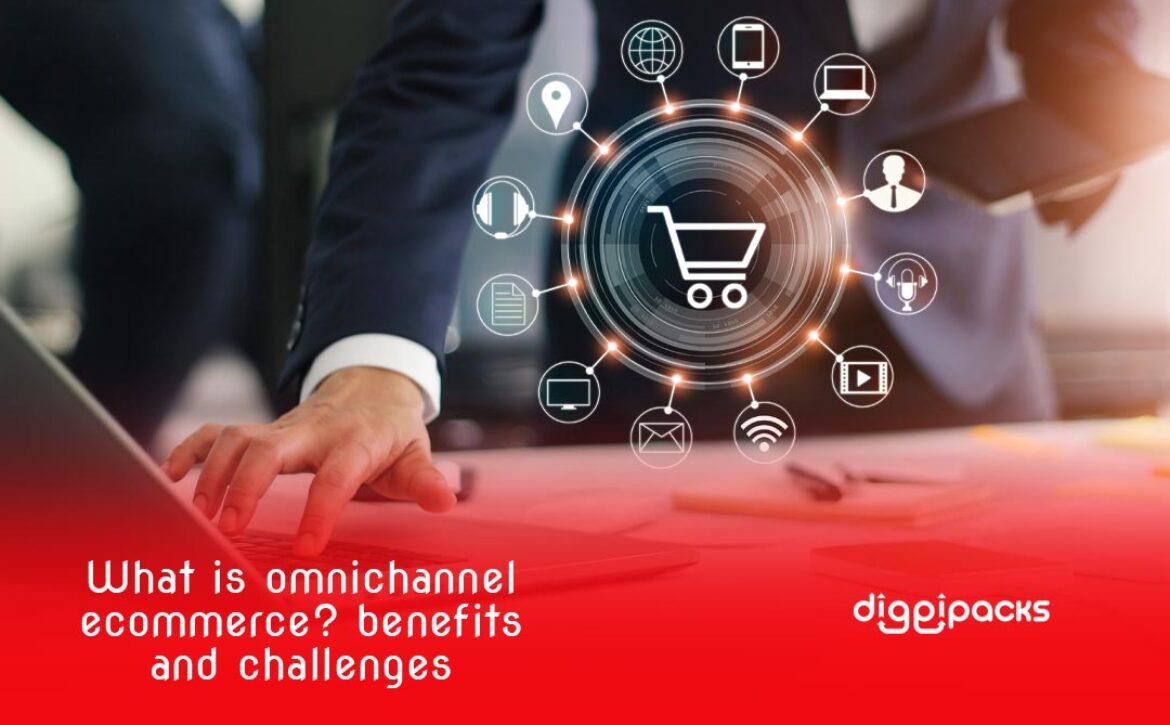
What is Omnichannel eCommerce? Benefits & challenges

[et_pb_section fb_built=”1″ _builder_version=”4.16″ global_colors_info=”{}”][et_pb_row _builder_version=”4.16″ background_size=”initial” background_position=”top_left” background_repeat=”repeat” global_colors_info=”{}”][et_pb_column type=”4_4″ _builder_version=”4.16″ custom_padding=”|||” global_colors_info=”{}” custom_padding__hover=”|||”][et_pb_text _builder_version=”4.17.4″ header_2_text_color=”#E02B20″ header_2_font_size=”27px” header_3_text_color=”#E02B20″ header_3_font_size=”27px” background_size=”initial” background_position=”top_left” background_repeat=”repeat” hover_enabled=”0″ global_colors_info=”{}” sticky_enabled=”0″]

Omnichannel eCommerce is one of the most used terms in the world of e-commerce and marketing. This is because it focuses specifically on customers, ensuring that they have a unique and seamless user experience. So it is the most appropriate way to achieve more sales by providing a pleasant and satisfying buying experience to the customer, no matter what method of shopping the customers use. Omnichannel eCommerce also enhances the customer’s ability to reach you and do whatever the customer wants through all available means, and in this article we will provide you with all the details about Omnichannel. We will also discuss its benefits and the most important challenges, and why it is so important in the world of e-commerce at the present time.

What is omnichannel eCommerce?

It is the way in which the customer is focused in particular, through a number of integrated strategies and tools.

Which will ultimately result in providing a seamless approach to customer experience on all available shopping channels.

Thus achieving more sales by providing a satisfying buying experience to customers.

And Omnichannel eCommerce is the logical evolution of multi-channel retail, which helps enhance customers’ ability to reach you.

This is done through the various means that Omnichannel eCommerce can make available to customers, thus providing a more seamless and integrated user experience.

get to know : Innovative Logistics in Supply Chain Management

Why is omnichannel eCommerce important?

Omnichannel eCommerce

The inclusion of omnichannel eCommerce into mechanics and strategies is very important today, as it is a customer-centric approach that improves their shopping experience.

So there is a huge role for omnichannel eCommerce today, especially with the increasing number of online shopping and customer demands and expectations.

It will also help you in increasing the productivity of your store by doubling the sales and thus increasing the total revenue margin.

Improving customer experience by providing them with a satisfactory user experience, as well as expanding customers significantly as a result of the unique experience that you will provide while shopping.

Also, omnichannel eCommerce will effectively help you to increase your market share among other competitors.

get to know: What Is Distribution Management and the difference between it and transportation?

The benefits of omnichannel eCommerce

Now that we’ve learned the importance of omnichannel eCommerce, we’ll now go over the benefits it offers, and in fact, this approach offers a lot of benefits for your business. Here are the main benefits of omnichannel that you can reap:

1. Increase the efficiency of your store

This is because omnichannel will provide you with an integrated system that integrates all your existing platforms. Thus providing you with databases related to customers, products and prices.

This will inevitably achieve higher efficiency in all matters related to your e-commerce.

And at the same time will make the customer’s purchasing experience harmonious on all platforms.

2. Collect more information about your customers

When you provide a presence on all possible platforms for a customer, you will have the ability to listen to your customer more and thus learn more about them and what they expect from you.

The more you know your customer, the more you will succeed in providing him with the service he needs.

And allocating offers and discounts to him to a greater degree will achieve better results for you in the volume of sales.

Thus, omnichannel eCommerce greatly affects customer satisfaction with your store and the services you provide.

diggitrack

3. Provide a unique user experience to your customers

Each client prefers a different means of communication, and therefore the different means of communication are harmonious and achieve what any client wants easily and without any problems, this is definitely an excellent thing.

This is what omnichannel eCommerce provides to you, which will make your customers satisfied with the level of service provided.

It will also give them the feeling that you are a professional merchant who knows how to run your business, and this in the end makes him happy to deal with you, and make sure that your online store is distinguished from many competitors.

4. Increase your store visits and sales

Although the omnichannel eCommerce system takes a lot of time and effort, it will eventually come to you with a clear financial return.

As you will notice its effective fruits in increasing your store visits and sales, compared to the amount of investment in it.

The challenges of omnichannel eCommerce

Omnichannel eCommerce

Despite the huge benefits that omnichannel eCommerce provides, and its great role in improving customer expectations, there are many challenges standing in its way.

Here are a number of points that illustrate the main challenges facing omnichannel:

  • Difficulty in tracking inventory and its status, especially during holidays and seasons, and this can be faced through the use of an accurate warehouse management system (WMS).
  • The existence of fragmented supply chain processes, which can affect customer satisfaction for large companies. To counter this, large companies need to use different tactics to ensure their supply chain runs smoothly.
  • There are shipping delays due to unreliable order fulfillments, and to meet this challenge appropriate technology must be used to help predict future delays in shipments.
  • Finding the most effective and efficient transportation solution that ensures that customers remain happy without increasing the costs of the products purchased, this can be countered by the appropriate shipping method for the customer’s case.
  • Problems with returns and reverse logistics, and this challenge can be addressed by implementing a sound reverse logistics infrastructure.

[/et_pb_text][/et_pb_column][/et_pb_row][/et_pb_section]

Read More
admin يناير 11, 2026 0 Comments