ديجيباكس تغيّرت… وأصبحت Fastcoo Network by Diggipacks — اكتشف النموذج الجديد 🚀 التفاصيل ←

Category: Company News

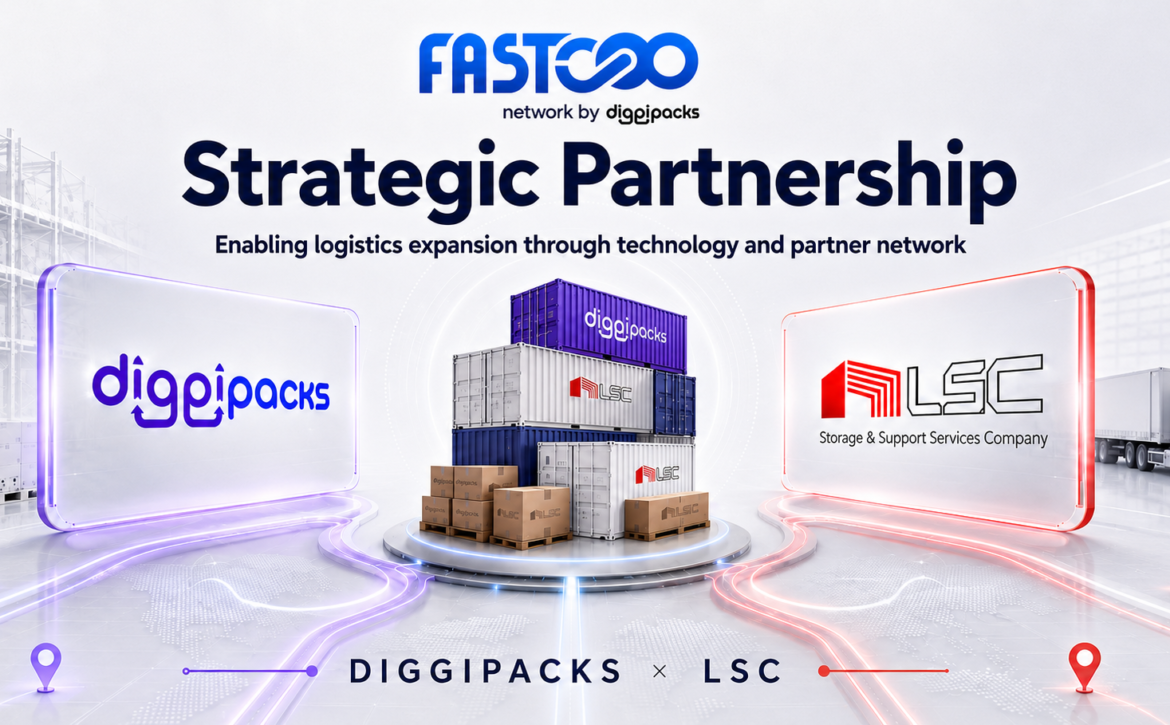
DIGGIPACKS and LSC Announce a Strategic Partnership to Expand Logistics Capabilities Through Fastcoo Network

DIGGIPACKS continues to expand the Fastcoo Network through strategic logistics and technology partnerships designed to strengthen operational coverage, increase service flexibility, and support companies looking for scalable logistics solutions across Saudi Arabia.

As part of this direction, DIGGIPACKS is pleased to announce its strategic partnership with LSC – Storage & Support Services Company, one of the Saudi logistics companies providing integrated storage, transportation, distribution, and supply chain support services.

This partnership represents an important step in building a stronger logistics network powered by technology, operational partners, and scalable infrastructure. It allows businesses to access wider logistics capabilities without the need to build their own warehouses, fleets, systems, or operational teams from scratch.

A New Step in Expanding Fastcoo Network

Fastcoo Network was built to connect businesses with reliable logistics capabilities through a unified technology layer. Instead of depending on one warehouse, one carrier, or one service provider, the network gives companies access to multiple logistics partners, fulfillment centers, storage options, and delivery solutions through one connected ecosystem.

Through the partnership with LSC, the network becomes stronger by adding additional logistics capacity, operational expertise, and physical infrastructure that can support different business needs, including B2B, B2C, storage, fulfillment, transportation, and distribution.

The goal is clear: to give merchants, retailers, manufacturers, and logistics providers a more flexible way to grow without being limited by infrastructure, location, or internal operational capacity.

Why This Partnership Matters

The logistics market is changing fast. Companies today need more than basic storage or delivery. They need flexible capacity, fast activation, reliable execution, clear tracking, and integrated systems that help them manage operations with less complexity.

Many businesses face the same challenge: they want to scale, but they do not want to carry the cost of building warehouses, hiring large teams, signing long-term facility contracts, managing multiple providers, or developing logistics technology from scratch.

This is where the DIGGIPACKS and LSC partnership creates real value.

By combining DIGGIPACKS’ technology and logistics network with LSC’s operational infrastructure, the partnership gives businesses access to a stronger logistics backbone that can support growth, reduce operational complexity, and improve service coverage.

What This Means for DIGGIPACKS and Fastcoo Network

This partnership strengthens the Fastcoo Network across several key areas.

First, it expands the available logistics capacity within the network. More storage and operational options mean companies can scale faster and handle larger volumes without waiting months to build their own infrastructure.

Second, it supports wider service coverage. Businesses can use the network to manage storage, order fulfillment, distribution, transportation, and other logistics requirements through connected partners.

Third, it improves flexibility. Companies no longer need to commit to one fixed logistics model. They can use the right storage, fulfillment, or distribution solution based on their product type, city, volume, and operational requirements.

Fourth, it enhances the role of technology in logistics operations. Through Fastcoo systems, logistics activities can be connected, monitored, tracked, and managed more efficiently from order creation to final delivery.

A Stronger Model for B2B and B2C Logistics

The partnership supports both B2B and B2C businesses.

For B2C and e-commerce companies, the combined solution can support storage, picking, packing, order fulfillment, shipping, returns management, and last-mile distribution.

For B2B businesses, the partnership can support pallet storage, bulk movement, inventory distribution, business-to-business deliveries, and supply chain execution.

This makes the partnership relevant for different sectors, including e-commerce, retail, FMCG, cosmetics, medical supplies, food products, electronics, and companies that need reliable logistics support without building everything internally.

Technology as the Main Enabler

The strength of this partnership is not only in physical infrastructure. The real advantage comes from connecting logistics operations through technology.

Fastcoo provides the technology layer that enables businesses to manage logistics processes more efficiently. This includes warehouse management, order management, delivery management, tracking, reporting, integrations, and operational visibility.

When physical logistics capabilities are connected to a strong technology platform, businesses gain better control over their operations. They can track orders, monitor performance, manage inventory, reduce manual work, and make faster decisions based on real data.

This is exactly the direction of Fastcoo Network: combining logistics infrastructure with technology to create a more scalable and connected operating model.

Supporting Companies Without Heavy Fixed Costs

One of the biggest advantages of this partnership is that it gives companies access to logistics infrastructure without forcing them to carry heavy fixed costs.

A business does not need to rent a full warehouse, hire a large operations team, build delivery capacity, or integrate with several logistics providers separately. Instead, it can access these capabilities through the network based on actual operational needs.

This model is especially valuable for growing companies, seasonal businesses, new market entrants, and logistics providers that want to expand their service offering without increasing fixed assets.

It also supports companies that want to move from an asset-heavy logistics model to a more flexible asset-light model.

Building a More Connected Logistics Ecosystem

The partnership between DIGGIPACKS and LSC is part of a larger vision: building a connected logistics ecosystem where companies can access services, technology, partners, and infrastructure from one network.

This is not just a partnership announcement. It is a practical move toward a stronger logistics network in Saudi Arabia.

By bringing together technology, operational partners, and scalable infrastructure, Fastcoo Network aims to make logistics expansion easier, faster, and more efficient for companies of all sizes.

The Value for the Market

For merchants, the value is clear: faster access to logistics capacity.

For retailers, it means better storage and distribution options.

For manufacturers, it means stronger support for movement, warehousing, and supply chain execution.

For logistics companies, it means the ability to expand services without building every capability internally.

For the wider market, it means more collaboration between technology platforms and operational logistics companies, which is exactly what the sector needs to scale efficiently.

Conclusion

The strategic partnership between DIGGIPACKS and LSC strengthens Fastcoo Network and adds more operational depth to its logistics ecosystem.

It combines DIGGIPACKS’ technology-driven logistics model with LSC’s infrastructure and operational capabilities to provide companies with flexible, scalable, and connected logistics solutions.

Through this partnership, DIGGIPACKS continues to move toward its larger goal: enabling logistics expansion through technology, partners, and a unified network that supports businesses across Saudi Arabia and beyond.
Read More
admin June 16, 2026 0 Comments

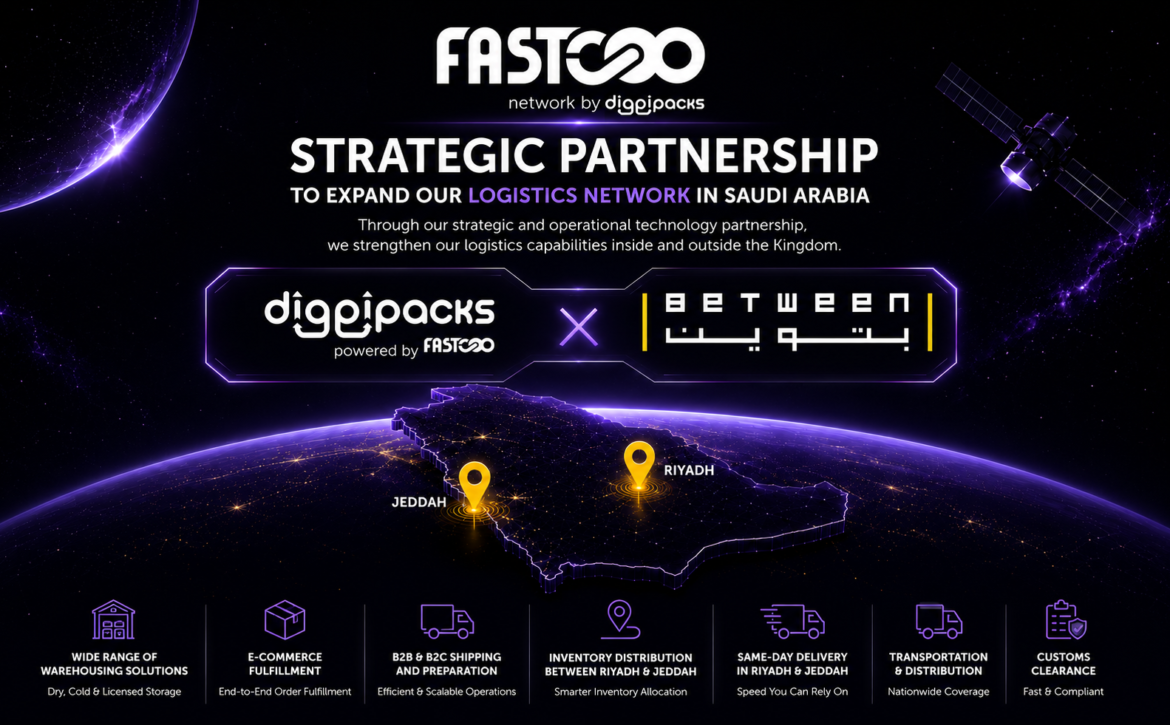
DIGGIPACKS and Fastcoo Expand Their Logistics Network Through a Strategic Partnership with Between Logistics

A Strategic Partnership to Strengthen Warehousing, Fulfillment, and Distribution in Riyadh and Jeddah

DIGGIPACKS powered by Fastcoo continues to expand its strategic and operational partnership network across Saudi Arabia by working with specialized logistics providers that bring real operational capabilities, strong market experience, and scalable infrastructure to serve companies, merchants, distributors, and logistics service providers.

Our strategic partnership with Between Logistics marks a new step in strengthening the presence of Fastcoo Network by Diggipacks in Riyadh and Jeddah, while expanding access to integrated logistics solutions through a model that combines operational spaces, specialized expertise, and technology connectivity.

This partnership is not a traditional business collaboration. It is a practical extension of a network-based logistics model designed to empower partners, expand operational capabilities, and provide companies with more flexible logistics solutions across the Kingdom.

Why Between Logistics?

Between Logistics is a Saudi logistics company that provides integrated logistics solutions covering warehousing, inventory management, order preparation and packaging, local and international shipping, customs clearance, transportation, and distribution.

What makes Between Logistics a strong addition to the network is the diversity of its services and its ability to serve different operating models, whether for companies that require B2B logistics solutions, e-commerce businesses that need B2C fulfillment, or organizations looking for flexible storage options in key cities such as Riyadh and Jeddah.

Having a partner with this level of service diversity strengthens the ability of DIGGIPACKS and Fastcoo to offer broader and more integrated logistics solutions, especially for clients that need multiple services across the supply chain under one connected network.

Strengthening the Network Model

The Fastcoo Network by Diggipacks model is built on a clear principle: creating a flexible logistics network that does not rely only on owned assets, but instead connects strong operational partners within one technology-enabled ecosystem.

Through this model, coverage can be expanded, operational readiness can be improved, and customers can access multiple logistics solutions without unnecessary complexity. This is what makes the partnership with Between Logistics important. It adds real operational capabilities in warehousing, fulfillment, shipping, and distribution, with a presence in key cities that serve a major part of commercial activity in Saudi Arabia.

This partnership helps strengthen the network by connecting operational services with technology systems, allowing customers to benefit from logistics solutions that are clearer, faster, and more scalable.

Integrated Solutions for Companies and E-Commerce Businesses

Through this partnership, DIGGIPACKS and Fastcoo, together with Between Logistics, provide a wide range of logistics solutions that serve companies and e-commerce businesses across different sectors, including:

  • Dry storage.
  • Cold storage.
  • Licensed storage.
  • Inventory management.
  • Order preparation and packaging.
  • E-commerce fulfillment.
  • B2B and B2C order handling and shipping.
  • Local shipping.
  • International shipping.
  • Customs clearance.
  • Transportation and distribution.
  • Inventory distribution between Riyadh and Jeddah.
  • Same-day delivery within Riyadh and Jeddah.

This level of integration gives customers a stronger ability to manage their logistics operations through one connected network instead of dealing with multiple providers for each stage of the process.

Supporting B2B and B2C Requirements

One of the most important aspects of this partnership is its ability to support two different customer models: B2B and B2C.

On the B2B side, companies usually require larger storage capacity, inventory management, bulk order preparation, intercity transportation, and distribution to branches, business clients, or retail points. These operations require high operational readiness, flexible storage spaces, and the ability to manage different volumes of products and shipments.

On the B2C side, e-commerce businesses require speed in order fulfillment, accuracy in packaging, returns handling, and effective connectivity with delivery services. This is where the combination of operational expertise and technology-enabled network capabilities creates real value.

The addition of Between Logistics to the network enables more flexible service delivery for different customer types, whether the client is an emerging e-commerce store, a distributor, a manufacturer, or a company that needs integrated logistics operations.

Expanding Coverage in Riyadh and Jeddah

Riyadh and Jeddah are two of the most important logistics and commercial hubs in Saudi Arabia.

Riyadh represents a central demand and distribution hub within the Saudi market, serving a wide range of companies, retailers, merchants, and consumers. Jeddah, on the other hand, plays a major role as a commercial gateway due to its location and its importance in import, shipping, and distribution activities.

Through the partnership with Between Logistics, the network’s ability to serve both cities is strengthened across warehousing, order fulfillment, transportation, and distribution. It also allows customers to distribute inventory across more than one city, helping improve service speed and reduce operational pressure on a single location.

The Value of Flexible Storage

Flexible storage has become a key factor in business growth, especially as demand patterns, seasons, and sales channels continue to change.

Companies do not always need the same storage capacity throughout the year. Some businesses need seasonal expansion, some need inventory distribution across multiple cities, and others require cold or licensed storage depending on the nature of their products.

Through this partnership, customers gain access to more flexible storage options, including dry, cold, and licensed storage. This allows companies to choose the operating model that best fits their product type, business size, and growth stage.

This flexibility is not only about space. It is about having operational capacity that can support business growth, changing demand, and market expansion.

Connecting Operations with Technology

The real strength of this partnership is not only in warehouses or shipping services. It is in connecting these operational capabilities to a technology-enabled logistics network.

Through Fastcoo, operations can be supported by systems that help manage orders, track shipments, organize workflows, and connect different parties across the supply chain. Through DIGGIPACKS, the network model connects warehouses, fulfillment centers, transportation providers, merchants, and companies within one scalable logistics ecosystem.

This connection between technology and operations helps reduce complexity, improve operational visibility, and enhance the quality of service delivered to customers.

A Model That Supports Partners and Customers

The goal of Fastcoo Network by Diggipacks is to create value for both partners and customers.

For partners, the model opens new growth opportunities by connecting them to a wider network and increasing their visibility to customers that need reliable logistics services. It also enables them to benefit from technology systems and operational connectivity within a larger ecosystem.

For customers, the model provides faster access to multiple logistics solutions, wider coverage, and more flexible operating options without the need to build everything from scratch or manage too many providers separately.

This is what makes the partnership with Between Logistics a practical step toward building a more connected and more capable logistics market.

Impact on the Saudi Logistics Market

The Saudi market continues to grow across e-commerce, distribution, manufacturing, imports, and multi-city business expansion. This growth requires logistics infrastructure that is flexible, scalable, and ready to support different types of businesses.

Operational partnerships like this help close the gap between rising demand for logistics services and the available operational capacity in the market.

Instead of each provider working in isolation, this model creates a more integrated logistics network that connects service providers, customers, and technology systems. This leads to faster service, better operational quality, and more options for businesses.

A Step Within a Broader Strategy

This partnership comes as part of a broader strategy by DIGGIPACKS and Fastcoo to build a partner-led logistics network that covers different service categories, from warehousing and fulfillment to delivery, distribution, technology connectivity, and supporting logistics services.

This approach reflects a practical understanding of the market. Growth does not come only from adding a new service. It comes from building a network that can scale, adapt, and connect different capabilities within one operating model.

With partners like Between Logistics joining the network, the ability to serve customers becomes stronger, the available solutions become more diverse, and the operational coverage becomes more ready for market demand.

The partnership between DIGGIPACKS powered by Fastcoo and Between Logistics represents an important step in expanding logistics services across Saudi Arabia, particularly in Riyadh and Jeddah.

Through this partnership, the network strengthens its capabilities in dry, cold, and licensed storage, e-commerce fulfillment, B2B and B2C order handling, transportation and distribution, local and international shipping, and customs clearance.

The strength of this partnership lies in combining the operational expertise of Between Logistics with the network and technology model of DIGGIPACKS and Fastcoo, creating more flexible and scalable logistics solutions for companies and e-commerce businesses.

Fastcoo Network by Diggipacks
Wider network. More partners. Multiple solutions. Practical expansion for real market needs.

Read More
admin June 13, 2026 0 Comments

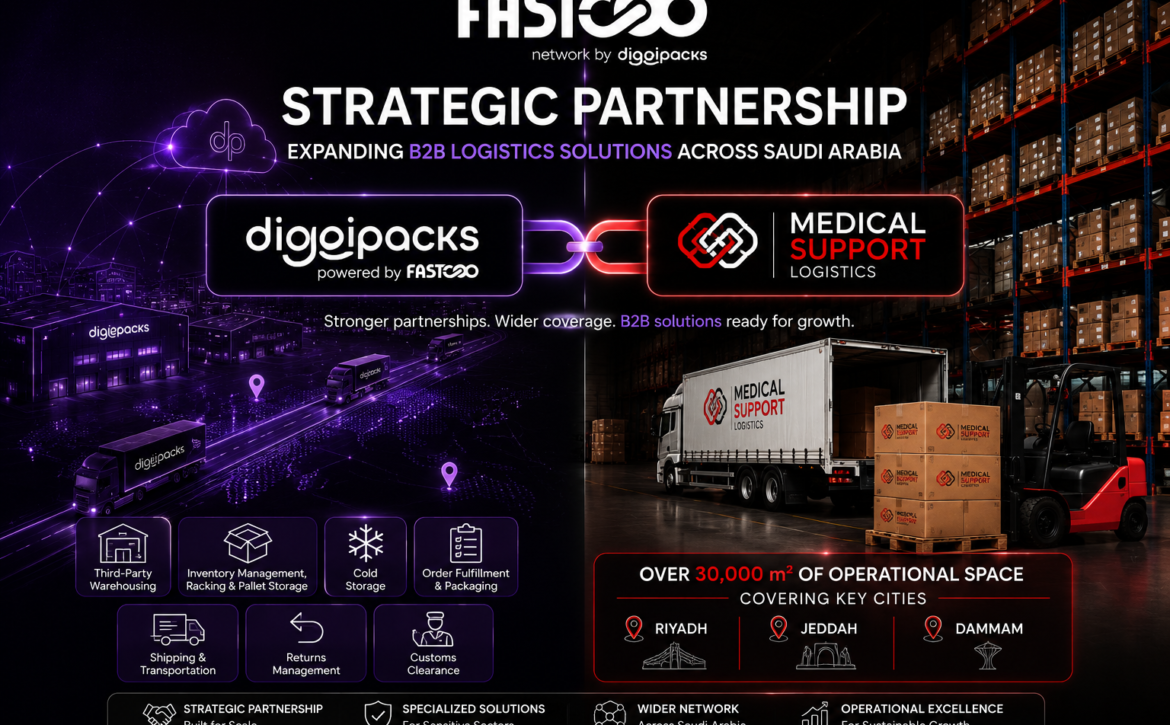
A Strategic Partnership to Strengthen B2B Logistics Solutions in Saudi Arabia

A Strategic Partnership to Strengthen B2B Logistics Solutions in Saudi Arabia

DIGGIPACKS powered by Fastcoo continues to expand its operational network across Saudi Arabia by building strategic partnerships with specialized logistics providers. The objective is clear: to deliver more flexible, scalable, and efficient solutions for the B2B Logistics sector.

Our partnership with Medical Support Logistics represents an important step in this direction, given the company’s specialized operational capabilities across warehousing, third-party storage, inventory management, racking and pallet storage, cold storage, order fulfillment, packaging, shipping, transportation, returns management, and customs clearance.

This partnership is not simply about adding more storage space. It reflects a broader strategy to build an integrated logistics network capable of serving companies across different sizes, industries, and operational requirements, especially businesses that need ready-to-operate, organized, and scalable B2B logistics solutions in key cities across the Kingdom.

Why This Partnership Matters

The B2B logistics sector in Saudi Arabia is changing rapidly. Companies are no longer looking only for warehouse space to store goods. They increasingly need an integrated operating model that includes warehousing, inventory management, order preparation, transportation, distribution, technology connectivity, and performance visibility.

This is where the partnership between DIGGIPACKS and Fastcoo on one side, and Medical Support Logistics on the other, creates real value.

DIGGIPACKS and Fastcoo represent the technology and network orchestration layer, connecting warehousing, fulfillment, delivery, tracking, returns management, and logistics service providers within one wider ecosystem. Medical Support Logistics adds specialized ground-level operational capabilities, particularly for sectors that require higher standards of organization, compliance, and operational discipline.

The result is a stronger model for serving businesses: one that combines operational infrastructure, storage capacity, specialized expertise, and a technology layer that enables more efficient logistics management.

Broader B2B Warehousing and Logistics Solutions

This partnership focuses on expanding B2B warehousing and logistics solutions through more than 30,000 m² of operational space across Riyadh, Jeddah, and Dammam.

These solutions include several types of storage and logistics services, such as:

  • Dry storage for commercial goods and general products.
  • Cold storage for products requiring controlled temperature conditions.
  • Licensed storage for sectors with higher regulatory requirements.
  • Pallet storage and bulk goods handling.
  • Racking storage based on product type and operational needs.
  • Inventory management and stock movement tracking.
  • Order fulfillment and packaging.
  • Transportation and distribution across Saudi Arabia.

This variety gives companies greater flexibility in choosing the right operating model based on their product category, storage needs, and distribution requirements, instead of relying on generic logistics solutions that may not fit the specific nature of their business.

Supporting Sensitive and Specialized Sectors

One of the key strengths of Medical Support Logistics is its ability to serve sectors that require higher levels of care and operational accuracy, including medical products, food products, cosmetics, and e-commerce products.

These sectors do not only require storage space. They require organized handling, operational discipline, readiness in warehousing and movement, and stronger control across storage and transportation processes.

By combining these capabilities with the DIGGIPACKS powered by Fastcoo network, this partnership enables more integrated logistics solutions for businesses operating in sectors that demand higher operational standards, whether in storage, fulfillment, or distribution.

Connecting Technology with Operations

The real value of this partnership is not limited to space. It lies in connecting these operational spaces to a wider technology-driven logistics network.

Through Fastcoo, operations can be supported by systems that help manage orders, inventory, tracking, service providers, and operational visibility. Through DIGGIPACKS, the network model is strengthened by connecting storage centers, fulfillment providers, transportation partners, merchants, and companies into one scalable ecosystem.

This connection between technology and operations is what makes the partnership more valuable. It does not offer a standalone service only; it becomes part of a wider logistics network built for scale.

Stronger Coverage in Key Cities

The partnership strengthens operational coverage across three key cities: Riyadh, Jeddah, and Dammam.

These cities are central to trade, distribution, and supply chain movement in Saudi Arabia. Riyadh serves as a major demand and distribution hub. Jeddah plays a key role as a commercial and import gateway. Dammam is a strategic point for serving the Eastern Province and connecting it with the rest of the Kingdom.

Having B2B logistics solutions in these cities gives companies more flexibility in distributing inventory, reducing delivery times, improving transportation efficiency, and serving branches, customers, or points of sale in a faster and more organized way.

Direct Value for Businesses

This partnership delivers practical value for companies that need ready-to-operate logistics solutions without unnecessary operational complexity.

The types of businesses that can benefit from these solutions include:

  • Distributors.
  • Manufacturers.
  • Retail companies.
  • E-commerce businesses.
  • Medical, cosmetic, and food product suppliers.
  • Companies that require pallet storage or bulk inventory handling.
  • Businesses looking for flexible storage solutions across multiple cities.

Instead of dealing with several parties separately, this partnership provides a more integrated model that brings warehousing, operations, transportation, and technology together within one wider network.

A Step Within a Larger Strategy

This partnership comes as part of a broader strategy by DIGGIPACKS and Fastcoo to build a flexible logistics network that serves different sectors across Saudi Arabia and supports business growth through scalable operational infrastructure.

Today’s market needs logistics solutions that combine speed, flexibility, technology, and operational capability. Building strategic partnerships with specialized providers such as Medical Support Logistics is a practical step toward strengthening this model.

The partnership between DIGGIPACKS powered by Fastcoo and Medical Support Logistics represents an important addition to the B2B logistics network in Saudi Arabia.

Through this partnership, dry, cold, and licensed storage solutions are expanded, while operational capabilities in Riyadh, Jeddah, and Dammam are strengthened across more than 30,000 m² of space, supported by a technology and operations network that serves companies across multiple sectors.

This is not a partnership built only around space. It is a partnership built around a wider operating model that connects warehousing, fulfillment, transportation, and technology, giving companies more efficient and scalable logistics options.

DIGGIPACKS powered by Fastcoo
Stronger partnerships. Wider coverage. B2B solutions ready for growth.

Read More
admin June 13, 2026 0 Comments

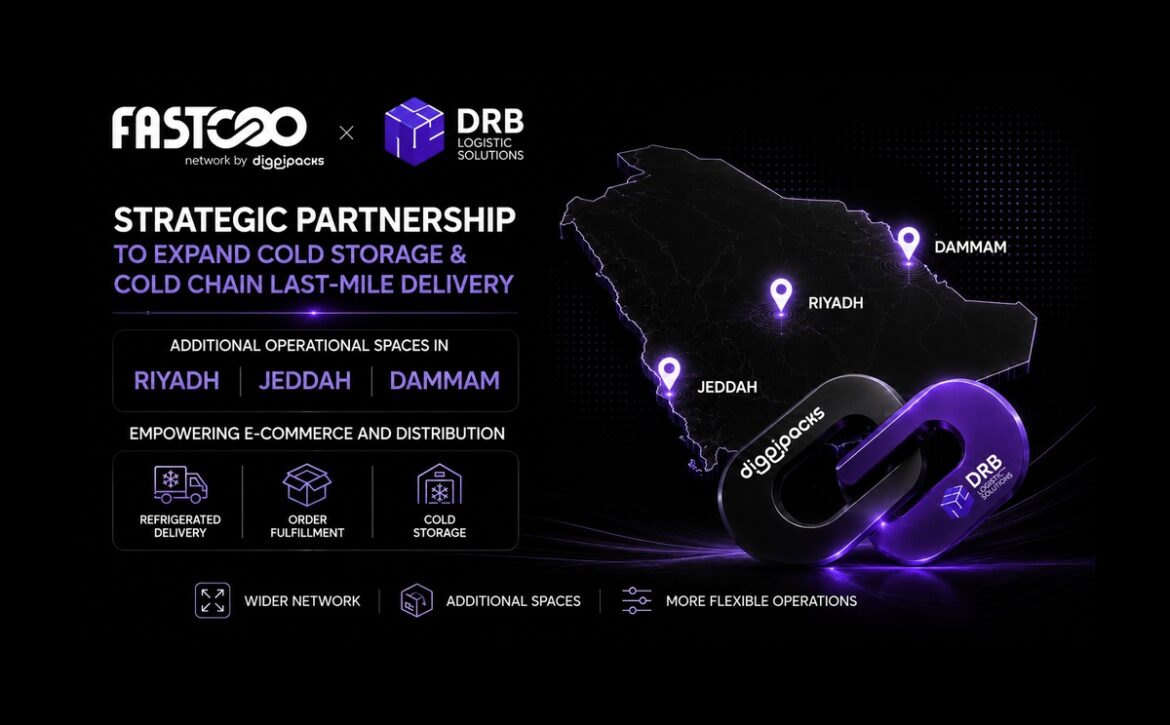
DIGGIPACKS Announces Strategic Partnership with DRB to Expand Cold Storage and Cold Chain Last-Mile Services

DIGGIPACKS is proud to announce a strategic partnership with DRB Cold Chain Last Mile to expand its cold storage and refrigerated delivery capabilities across Saudi Arabia.

Through this partnership, DIGGIPACKS is adding new operational spaces in Riyadh, Jeddah, and Dammam to support e-commerce businesses and distribution operations with more flexible cold chain solutions.

This step reflects the direction of Fastcoo Network by Diggipacks in building a wider logistics network that connects partners, operational spaces, and distribution activities through a more scalable and efficient model.

The partnership supports a broader range of cold chain services, including refrigerated storage, order preparation, and cold last-mile delivery, helping businesses operate more efficiently across key cities in the Kingdom.

By combining specialized logistics partners, technology-enabled operations, and flexible space utilization, DIGGIPACKS continues to strengthen its logistics network and provide businesses with more reliable and scalable solutions.


A wider network. Additional spaces. More flexible operations.

Read More
admin June 9, 2026 0 Comments

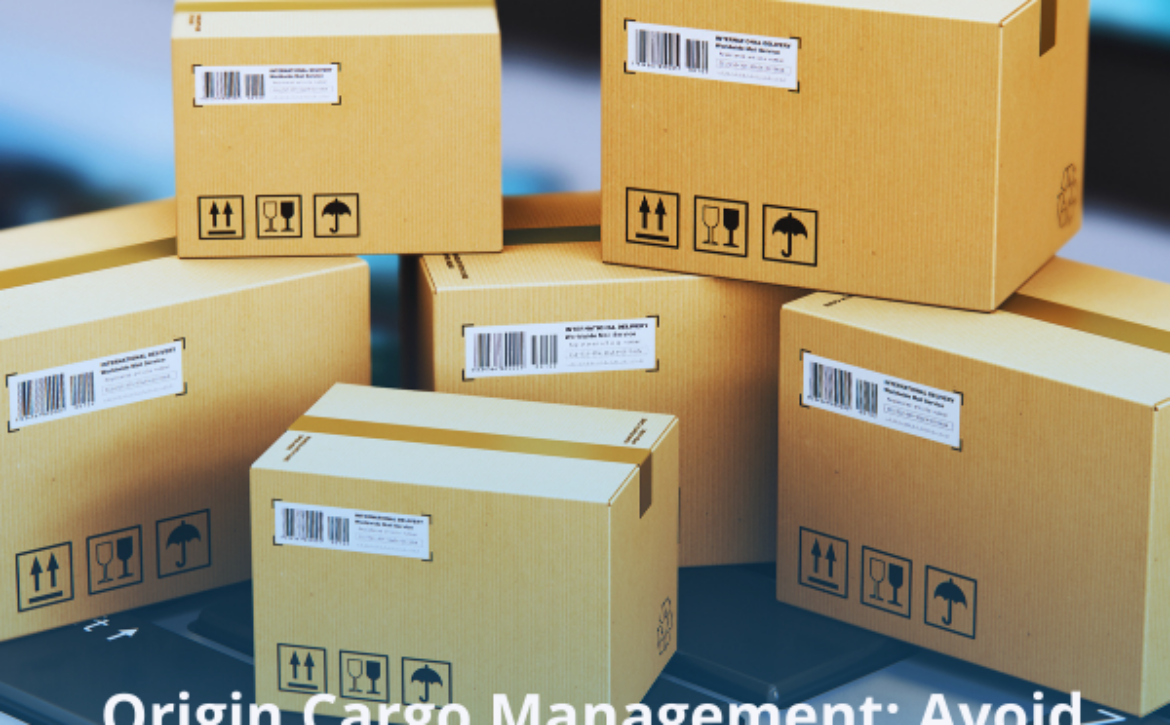
Origin Cargo Management: Avoid Mistakes and Keep Your Costs Down

Origin Cargo Management is one of the modern methods that helps reduce excess inventory in your warehouse, improve local transportation, improve stock availability and lead times, freight management is concerned with a variety of operations, as selection and agreement with logistics service providers, in addition to services for route planning, Planning, controlling truck travel times, scheduling and managing freight, in addition to coordinating empty return containers, and additional freight charges can significantly affect basic shipping costs, and this is what we will cover today in this article on LOGSTIAT logistics solutions.

What Is the Origin Management?

It’s one of the strategies that helps reduce excess inventory in your warehouse, improve local transportation and improve stock availability and lead times. These services ensure comprehensive and cost-effective logistical management, as they help provide less congestion with improved local transportation. , Along with an increase in lead time with the availability of the enhanced stock.

What are cargo management services?

It is one of the effective services that help in controlling the production, shipping and distribution processes in a centralized manner. Through the supply chain management companies can reduce the surplus expenses and provide products to the consumer faster, but this requires strict control over the internal stores, production processes, and distribution channels. , Sales movement, as well as on the company’s showroom stores.

What is cargo management services provide?

There are many distinct services that can be provided by the process of managing goods, and the most prominent services of cargo management are:

  • Provide a single point of contact.
  • Optimizing transportation costs and transit times.
  • Provide superior visibility with a single web-based platform.
  • The ability to benefit from best transportation practices.
  • Prepare customized supply chain reports.
  • Developing and tracking key performance indicators.
  • Bus performance management.
  • Set up market intelligence and assist with freight purchases and negotiations.
  • Reducing cost and risk in the supply chain.
  • What does cargo management services include?
  • Goods management services include a number of other elements, the most prominent of which are:
  • Track and develop key performance indicators.
  • Managing the processes related to purchase orders.
  • Production and vendor management.
  • Management and reservation of the facility.
  • Container re-delivery management.
  • Documentation Department.
  • Manage the delivery at the destination.
  • Create custom automated reports.
  • Managing reservation and delay penalties.

What cargo management services can include?

cargo management services include a number of other elements, the most prominent of which are:

  • Track and develop key performance indicators.
  • Managing the processes related to purchase orders.
  • Production and vendor management.
  • Management and reservation of the facility.
  • Container re-delivery management.
  • Documentation Department.
  • Manage the delivery at the destination.
  • Create custom automated reports.
  • Managing reservation and delay penalties.

Freight costs

It refers to the price that is incurred by the person in order for your goods to be shipped, and the cost of shipping is determined by a number of variables, such as the distance that your shipment needs, its density or volume, as well as the fuel costs and the capacity of the truck that will transport your goods.


What are surcharges?

The additional fee is an additional cost that is added to the basic cost of transporting the goods, such as service fees and handling fees, and these fees leave merchants in a state of confusion in their inability to assess the basic costs of transportation.

How surcharges affect your freight costs

Fright costs keep rising continuously, which makes merchants struggle to maintain their profit margins.

One of the most common reasons and primary sources for the continuous rise in fright costs is the additional fees imposed by shipping companies, which have a huge impact on fright costs and thus your profits as a merchant.

The process of imposing additional freight charges on shipments is one of the things that contribute to increasing shipping costs for individual goods locally and internationally, which affects the trade and exchange process in general.

How can LOGSTIAT serve you help you with Origin Cargo Management

LOGSTIAT is considered one of the best companies that provide various technical solutions for logistics services, and there is LOGSTIAT Plus, which is linked with more than 40 local shipping companies in the Kingdom of Saudi Arabia, as well as the LOGSTIAT Plus system that allows you to link with any company required in the local or international market. .

LOGSTIAT provides you with a special technology to control the size of the number of shipments for each company and for each city you choose and work through your choice of capacity, after which the bills of lading will be created automatically according to the equation that was entered, so it ensures through its full technical solutions the rapid and effective flow of goods in warehouses and centers Your distribution.

Whether in partially or fully automated features and through a single source, including all axes of supply management from warehousing, order picking, packaging and issuance of goods to supply, making it one of the best service providers that can help you in cargo management.

Read More
admin April 21, 2023 0 Comments

What is LCL Shipping? All you need to know about it

What is LCL Shipping? Sea transportation has been the main mode of international trade for centuries and is still a popular mode of transportation due to many factors, such as high load capacity, low cost and reliability in bad weather, and sea freight is also a preferred solution for long-distance shipments, and there are several types of sea freight, And speaking of sea freight, you need to know the difference between FCL and LCL, and in this article we will discuss together All you need to know about LCL Shipping ,then introduce what is meant by FCL Shipping, and then we will show the most prominent differences between FCF and LCL Shipping.

What’s the meaning of LCL Shipping?

It is less than the container load, it is more convenient and manageable for small cargo volumes, by which moderate quantities of cargo belonging to several shippers are accumulated until the container is filled.

Although using an LCL container may be a somewhat slower alternative for ocean shipments, it is cheaper because you share costs with a number of other shippers, so you will not be able to bear the cost of the container alone.you may need to know cost of goods sold

Types of LCL Shipments


Speaking of the types of LCL shipments, we find that there are two types:

1. LCL Shipment in Boxes

In which goods or shipped items are packed in boxes, some accept stacking and others do not, depending on the nature of the shipment itself.

This type is the most economical compared to the other type of LCL shipments, but its main drawback is that in this type of shipment, the shipment is highly prone to damage, due to the accumulation that sometimes occurs.

2. LCL Shipments in Pallets

In which the goods are packed in pallets, the level of safety is higher than the previous type, where all the items are secured by rubber bands or coils as well.

Also, shipping in this type provides ease of handling and therefore the goods are not damaged, especially since of course LCL shipments go through many passes.

Is LCL Shipping the right choice for you?

You may be wondering what the best option for you is.Are LCL shipments right for you or not? Simply, the answer to that question depends on a number of factors that you must consider before deciding whether LCL shipments are the most appropriate fit for your needs, as:

1. The size of your shipment

LCL shipment is most suitable when your shipment volume is from 33 cubic meters or 1200 cubic feet.

2. Shipping time

LCL shipment takes longer than FCL shipment, and this process takes an average of 5 to 7 days, due to a number of factors, the most important of which are:

  • Initially your LCL shipment is combined with other LCL shipments that are assigned to the same container.
  • The container with all LCL shipments is transported from the consolidation warehouse to the port. you may need to know optimize Warehouse Layout
  • After arriving at the port, the container is loaded onto the ship, and once it reaches the destination, the container is moved to another warehouse, where all LCL shipments are separated from the rest of the shipments.
  • Finally, your LCL shipment is assigned, released, and transported to its destination.

3. Your shipment passes through more than one point

LCL shipments are known to have more traffic at touch points than FCL shipments, and this is because LCL shipments need to be handled, loaded and unloaded more than once before they reach their final destination, since they contain more than one shipment in one container.

How Does LCL Shipment Work?

LCL Shipping

As we mentioned, LCL shipping involves the integration of more than one shipment into one container, and the following are the steps that LCL shipping works with starting from packing and preparing the LCL container, all the way to the arrival and receipt of your goods at the port:

First | Transportation to the port

After completing the process of preparing and packing the LCL container, it is transferred directly to the previously agreed port of departure, and after its arrival at the port, it is transferred again to the hand of the shipping line, and then shipped to the destination port.

Second | Recharge the shipment

If you are shipping to a secondary port, your LCL shipment is re-shipped to another container, and sometimes the same container waits some time for more goods to fill the container, before proceeding to its final destination.

Third | Reach the destination

After the LCL container arrives at the destination port, the shipping agent takes the order, assembles the container and transports it to the deconsolidation warehouse, where the goods are individually disassembled.

Fourth | Receive your goods

It is the last step in which the consignee goes to the warehouse to receive his goods, and then the goods will have already been transferred from the deconsolidation warehouse to the final destination warehouse, which is the same from which you will receive your goods.

What is FCL Shipping?

Before viewing the difference between LCL Shipping and FCL shipments, we first need to know what FCL shipment is, It is the full container load i.e. the use of a full container for a single shipment,

Meaning that the container can be loaded and closed safely knowing that everything inside belongs to the same owner.

This type of container is suitable in the event that a large amount of goods has to be exported, and one of its advantages is greater profitability for goods with a volume equal to or greater than 15 cubic meters.

It also provides additional security for the goods thanks to its airtightness and delivery service since the container will make its way directly from its origin to its destination without stopping at ports along the way.

What is the Difference between LCL and FCL?


After we learned what is meant by both LCL Shipping and FCL shipping, there are a number of differences between FCL and LCL, the following are a number of points that illustrate the most prominent differences between them:

  • The main difference between FCL and LCL Shipping is that the buyer shares space in a container for an LCL shipment, compared to a full container space rental under an FCL agreement.
  • LCL Shipping is a method that combines multiple shipments into one common container, meaning that companies that want to import smaller amounts of inventory can pay for the amount of space they use inside the container instead of having to rent out the entire container.
  • FCL shipping is where you pay to use a whole container instead of paying to use a part of it, and when shipping with FCL, there is a fixed price for the container and you have access to all the space available in it unlike LCL Shipping where you only use and pay for a specific space.
  • Shipping with LCL Shipping is somewhat economical if you are only shipping small quantities (more than 0.5m³ and 100kg) because you only pay for that small amount of space.
  • If you are looking to ship more than about 20m3, FCL is generally the best choice.

Read More
admin April 21, 2023 0 Comments

Just In Time Inventory Management

Just in Time Inventory Management, No one disagrees on the extent of the importance of inventory as one of the most important pillars of the production process within the company, in addition to being one of the most important elements of the financial position, but it should be noted that the methods of inventory management are always in constant development and updating because of this element of great importance for companies.

So all companies always harness modern technology in order to improve the methods of inventory management in order to manage the stores as accurately as possible and in the fastest time and with the least effort.

And this is the difficult equation that all companies seek to achieve, and in this article on LOGSTIAT logistics solutions we will show you one of the modern methods of inventory management, which is Just in Time Inventory Management.

What is inventory management?

Before talking about Just in time meaning, we will first need to know what is meant by inventory management. Inventory management refers to the process of ordering, storing, and using a company’s inventory.

This includes managing raw materials, components, and finished products, as well as storing and processing these items.

Just in time meaning (JIT)


The company uses different methods of inventory management, depending on the type of business or product being analyzed, and one of the best inventory management methods is the just in time (JIT) method.

As for the meaning of just in time (JIT), it is one of the methods of inventory management, which is the process of ordering and receiving inventory for production as required.

This means that the company does not have safety inventory and operates with low inventory levels, this strategy helps companies reduce their carrying costs by increasing efficiency and reducing unnecessary costs.

Importance of just-in-time


The Just-in-Time (JIT) method was introduced by Taichi Ono, the founder of the Toyota Global Group, Ono created this method when he noticed the increase in the number of production lines,

That depends on the manufacture of a large amount of one product before moving to the production of another product and the increasing focus of demand on the degree of product diversity rather than the quantity produced.

The just in time (JIT) method is very important as it is one of the best inventory management strategies, as it:

1. Reduces inventory waste

As the just in time (JIT) method reduces the damaged products, through the procurement department requesting the appropriate quantities of raw materials that you need in the production process.

Thus, there is no surplus or deficit in the stock, it allows companies to save significant amounts of money and reduce waste by keeping only the inventory they need to produce and sell products.

2. Decreases warehouse holding cost

As the just in time (JIT) method provides the right items to the production department at the right time and with the required quality, making the stock quantity reach zero.

The Just in Time Inventory management approach reduces storage and insurance costs, as well as the cost of liquidating or disposing of excess inventory.

Advantages of JIT Inventory

Just-in-time inventory management has many advantages that distinguish it from other inventory management methods, as:

  • Its production processes are short; which means manufacturers can move from one product to the next quickly
  • Reduce costs by reducing the need for warehouses.
  • Promote continuous improvement in the production process.
  • Increase efficiency.
  • Reduce money spent on raw materials, as it allows companies to spend less money on raw materials; because it only buys the resources you need to fulfill confirmed orders and nothing more.

Disadvantages of JIT Inventory

In addition to the many advantages that distinguish just-in-time inventory management from other inventory management methods, there are a number of disadvantages as:

  • Possible disruptions in the supply chain, if a raw material supplier encounters a problem and cannot deliver goods on time; this may disrupt the entire production process.
  • Sudden unexpected demand for goods may delay delivery of finished products to customers. You can organize all this through Delivery Management System.

JIT system


Just in Time (JIT) system is a management strategy that reduces inventory and increases efficiency, and the success of a “just in time” production process depends on stable production, quality craftsmanship, zero machine downtime, and reliable suppliers.

Just-in-time inventory management systems reduce production costs; because manufacturers don’t have to pay for inventory storage, they don’t have unwanted stock left if an order is canceled or not met.

Read More
admin April 21, 2023 0 Comments

Discover new opportunities in the next-generation digital supply chain – Supply Chain 4.0

artificial intelligence and online retail have imposed a new and unimaginable reality a few years ago as our needs are one click away, and today there is the digital supply chain, on-demand consumption has shaped the nature of our lives for a long time, but the outbreak of the Corona virus has turned the nature of consumption upside down Getting food, medicine and even tissue paper the traditional way has become difficult, and in this article we will talk about the digital supply chain and its concept, as well as how the transition to digital supply chain can help you, and what is the impact of supply chain 4.0.

What is the Digital Supply Chain?

The concept of digital supply chain has become one of the most important and popular concepts at the moment. By combining traditional supply chains with new technology, digital supply chain has emerged.

We can define the digital supply chain as the key to the successful operation of all companies or organizations that manufacture or distribute products.

The introduction of new technology into supply chains helps to connect the business with all those involved, from suppliers of raw materials, to distributors of finished products, as well as storage suppliers themselves, and ultimately to the customer.

The digital supply chain can provide many advantages to users, the most important of which are:

  • Understand all network connections, suppliers, inventory control, complex relationships, and potential impacts.
  • Identify opportunities to enhance performance, to be more flexible, and to improve communications with customers or suppliers.
  • Gain a clear vision to ensure sustainable sources of supply.
  • Access and analyze Internet of Things (IoT) data for continuous improvement.
  • Receive alerts when disruptions occur or when service level agreements are at risk.

Impact of Supply Chain 4.0


Speaking about the impact of Supply Chain 4.0, we will find that the introduction of digitization has helped significantly in increasing the operational efficiency of supply chains, and it is expected that this effect will increase to:

  • Increased operational efficiency by approximately 30%.
  • Operating costs reduced by up to 40%.
  • Reduce lost sales by up to 75%.
  • Visibly increased agility in supply chains.
  • Inventories decreased by up to 75%.

We can clarify each of the points that we presented in the previous part in some detail, as:

Lost sales

This problem occurs when customer service is low and poor, giving customers false promises, or providing customers with false information about the availability of the desired product.

This makes customers very annoyed with this poor service, and they avoid that brand and turn to other companies that offer the same product.

But through Supply Chain 4.0, this problem can be avoided, and the ways of interacting and communicating with customers are improved, as all market information is collected and thus better forecasting.

And all of this will work effectively and help increase the level of service significantly and clearly, and thus reduce the problem of lost sales.

Supply chain costs

Supply chain costs include many elements, primarily transportation, warehousing, and network setup, but with Supply Chain 4.0, supply chain costs can be reduced by up to 30%.

This can be done by applying the latest methods for calculating transportation and storage costs, while trying to meet the required level of service for the customer.

Combined with trying to pair up with the implementation of smart automation and improving productivity in warehousing, all of this will eventually pay off and lower supply chain costs.

Supply chain planning

With the use of Supply Chain 4.0, 90% of supply chain planning tasks can be automated, ensuring better quality compared to tasks performed manually, thus accurately discovering and identifying what the planner needs and thus making appropriate decisions.

Inventory

Keeping track of your inventory is essential to knowing the difference between your supply and demand, and with Supply Chain 4.0 you will be able to reduce the uncertainty about your supply or demand, thus reducing the proportion of unnecessary inventory, and focus on the required inventory. Through inventory management system.

Transformation into a digital supply chain


A large number of people wonder about the possibility of switching into the digital supply chain, and in fact the transformation into the digital supply chain requires the availability of two main factors, namely:

  • Capacity, as you must build all the capabilities related to digitalization in your organization.
  • Right environment, as you need to provide an innovative environment that matches the new technology.

Therefore, you need to provide a high degree of organization and flexibility, along with one of the technologies and technological systems, based on information technology, which must have a two-speed architecture independent of the old and current systems.

All with the goal of facilitating the transition to the digital supply chain, and thus the ability to work with Supply Chain 4.0 in your organization.

Increasing operational efficiency leveraging Supply Chain 4.0

Supply Chain 4.0 will effectively help increase operational efficiency, through its apparent impact on all areas of supply chain management, as Supply Chain 4.0 has been developed to help make improvements in services provided as well as cost and capital along with greater agility.

Read More
admin April 21, 2023 0 Comments

Warehouse Robots Market – Growth, Trends, Forecasts (2020 – 2030)

Robots have always played a prominent role in movies, television, and children’s games, but now they are moving into a new arena, warehouses. Warehouse robots market appeared, which will change the way companies deal, and in the past, robots were used in warehouses already, but only in repetitive tasks such as assembling products, but with technological progress there has become a warehouse robots market, in which robots will cooperate with humans and in Some cases work completely independently of them, and in this article we will show you Warehouse Robots Market – Growth, Trends, Forecasts (2020 – 2030).

What is Warehouse Robots Market?

Warehouse Robots Market is that market in which robots in warehouses are used to automate various warehouse functions, such as transportation, picking, assembling, packaging, palletizing and removing pallets.

Also, will operate efficiently by reducing the need for human intervention and increasing the efficiency of warehouse operations. through an  inventory management system that has its own.

Warehouse Robots Market was first adopted by Amazon, which used Kiva systems and acquired a number of warehouse robots.

This enabled them to quickly complete warehouse tasks, helping to select items two or three times faster than filling orders manually.

Warehouse Robots Market Overview


Also, the warehouse robots market is expected to grow exponentially, and the market is expected to reach over US$9 billion by 2026.

This means that the global warehouse robots market size is expected to have a compound annual growth rate of 14%.

and we find that if the warehouse robots market system were to be implemented and implemented on a larger scale, this would lead to retailers reducing implementation costs by $450 million to $900 million.

Robot technology also allows the ability to shorten the workforce required to process 12,000 electronic requests with 50 workers, compared to more than 450 workers needed by a traditional center or warehouse that does not use robots.

Warehouse Robots Market Challenges

As for the challenges faced by warehouse robots market, most of them are related to cyber security, as Industry 4.0 links all production processes to the outside world, and those related processes are exposed to many cyber security risks that are increasing in the recent period.

Thus, bots will become clearly vulnerable if they are not paired with updated software, and inadequate network management can cause industrial espionage or install malware that causes automated attacks that harm bots.

All of this will negatively impact security, data privacy, technology, infrastructure, process upgrades and interoperability.

Another challenge facing Warehouse Robots Market is the high initial financial investment, along with a shortage of skilled labor that can make the best use of these robots.

Warehouse Automation Market

Speaking of Warehouse Automation Market, by 2027 it is expected to reach more than $6 billion in revenue, which equates to a compound annual growth rate of more than 11%, according to the Market Research Future (MRFR) report.

There will also be an increased need for a warehouse labor Market due to the spread of automation technologies in warehouses, which will consequently enhance market growth during that period.

Robots will significantly reduce manual labor, and with the increased use of customers for online shopping, e-commerce owners need to manage their inventory control more effectively, and this is what warehouse robots can provide.

Read More
admin April 21, 2023 0 Comments

What is Supply Chain Crisis and why is it in crisis?

The world is currently facing a severe supply chain crisis, and in general, supply chains mean the arrival of the product to the consumer, through the process of transportation from the place of production to the port, then transportation to the port in any country or even within the same country, then transportation to consumers around the world, and cause problems associated with chains The global supply of products is in short supply during the Corona pandemic, which led to a significant increase in prices, as a result of lack of supply and increased demand, and in this article we will discuss the supply chain crisis and how it occurred, as well as how countries will confront it.

Supply Chain Crisis Risks

There are huge risks to the supply chain crisis, which has left store shelves empty with long shipping delays.

Countries are working hard to try to solve this crisis that negatively affects global and local economies as well.

Last year the global economy stopped working, but this year the wheel has turned again and is caught in one of the largest supply chain crises in history.

The new indicators confirm the severity of the problem, the failure of the world to find a quick solution, and how the great crisis of 2021 is still getting worse in some regions.

One of the most important risks of the supply chain crisis is that it will cause companies to lose materials used in manufacturing and production,

And the other scenario is that companies produce finished products and there is no buyer for them.

So companies need to put in a huge effort to properly manage their supply chains, along with the need for sales forecasts and operations to make sure demand is known.

Especially since the supply chain crisis threatens with more massive changes that will clearly negatively affect companies and production processes.

Discover new opportunities in the next-generation digital supply chain

The supply chain didn’t recover from COVID-19

Since the early 1990s, global supply chains have been maximizing efficiency, and companies have sought to enhance their degree of specialization and focus on particular tasks in places that offer economies of scale.

But now there are growing concerns about the various repercussions on supply chains, as supply chains have not yet recovered from the Corona crisis,

Especially since there are a large number of sectors around the world that have been significantly affected by the pandemic.

Global supply chain crisis


The COVID-19 pandemic has caused a major shock to supply chains around the world, with markets at one point facing a huge and sudden surge in demand that was immediately followed by a severe drop in demand.

This is in addition to disruption in production cycles in most companies due to the continuous closures that occurred due to the Covid-19 pandemic.

Therefore, the supply chain crisis is a global crisis that will make companies need to know the change in market demand for their products and how they will manage their cash flows appropriately during that crisis so as not to collapse and lose their own market.


Why the supply chain is in crisis

The reason why the supply chain is in a major crisis is the Corona crisis and the repercussions it has imposed on the economies of the world clearly.

Currently, it has made the economy suffer from a large gap, so the store shelves have become empty,

And this happened due to the shortage of raw materials in companies, and the frequent closings of factories.

This is in addition to the lack of sufficient drivers and consequent disruption of cargo operations,

In addition to the high demand for sea and air freight, and the insufficient infrastructure.

Generally speaking, supply chains depend on people and equipment, and if there are any disruptions to them, the supply chain will face a huge problem in return.

This was clearly evident in the United States of America, which has clearly become out of products.


Getting serious about solving the supply chain crisis

A large number of countries around the world are trying to think of a way to help them seriously solve the supply chain crisis,

Especially as it has greatly affected, as we mentioned, the economies of a large number of countries.

Although the supply chain crisis is complex but solvable, all countries need to be serious about delivering the right mix of targeted policies along with capital investment in their infrastructure.

Read More
admin April 20, 2023 0 Comments