
ديجيباكس تغيّرت… وأصبحت Fastcoo Network by Diggipacks — اكتشف النموذج الجديد 🚀 التفاصيل ←

Why Modern Logistics Needs a Different Investment Lens

Over the past few years, the logistics sector has changed significantly.

The market is no longer only about who owns more warehouses, more vehicles, or more delivery contracts. It has become more complex, faster-moving, and more dependent on models that can connect technology, operations, partners, data, payments, tracking, and customer experience into one ecosystem.

Anyone operating inside this sector understands one important truth:

Logistics is no longer a standalone service.

It has become an ecosystem.

From Traditional Operations to a Technology-Driven Ecosystem

Diggipacks started from a very operational reality: storage, fulfillment, shipping, returns, customers, warehouses, and partners.

But over time, it became clear that the future could not be built on traditional operations alone, asset ownership alone, or even technology that is disconnected from daily operational challenges.

Operational experience had to merge with technology.

Separate services had to become one connected network.

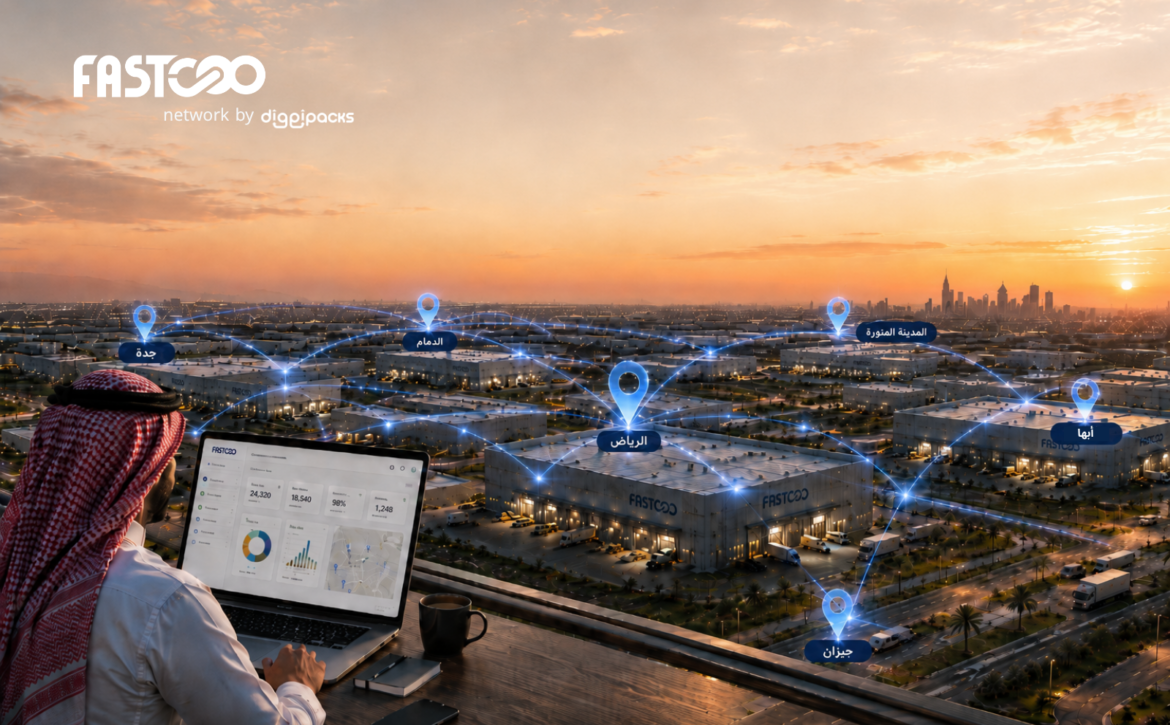
And Diggipacks had to become part of a broader model under Fastcoo Network.

Today, we can say that we have moved toward a clearer and more flexible logistics technology model; an asset-light model built on partners, systems, data, and deep market experience.

The Transformation Was Not Easy

This transformation was not easy.

It was difficult for the team.
It was difficult for customers at the beginning.
And it was difficult for those looking at the company from the outside.

Because merging an operational company with a technology platform, then transforming it into an integrated service network, is not a model that can be explained in one sentence.

But we worked on simplifying it.

We organized the structure.
We connected the partners.
We redefined the role of technology.
And we turned Fastcoo Network into a platform capable of serving different types of customers, different business sizes, and different operational models.

From large enterprises, to mid-sized companies, to emerging online stores, to logistics service providers, to businesses that need storage, delivery, software, or a complete operational network under their own brand.

A Company Should Not Stop at One Service

The core idea is clear:

A company should not stop at one service.

In the logistics market, change is not optional.
It is a condition for survival.

You may launch a service, then realize that the market needs it to be restructured.
You may stop a service because it no longer serves customers properly.
You may launch a new service because it has become necessary.
You may change pricing, operations, integrations, or partnerships.

This is not weakness.

The real weakness is staying fixed in a market that moves every day.

We know when to move.
We know when to wait.
We know when to stop a service.
We know when to rebuild it.
And we know that value is not created by having more services, but by making each service serve the customer and the ecosystem better.

Why We Focused on Partners

Over the past few years, our biggest focus has been on partners.

Because we believe that building a strong logistics ecosystem does not necessarily mean owning everything.

It means connecting the right players, empowering them with technology, increasing their efficiency, and turning them into a network that operates under clear standards.

We have partners who have been working with us for years, some since 2018.

Partners with space, teams, coverage, and local operational experience.

We brought them the technology, systems, tracking, reporting, performance management, integrations, and the ability to operate under clear SLA standards.

This combination of technology and partners may not be fully understood by everyone today.

But over time, it will become much clearer.

Because the market does not need just another company that owns assets.

The market needs a smarter network that uses existing assets more efficiently.

The Problem with How Some Investors Read Logistics

This brings us to an important point about how some investors view this sector.

Over the past few years, we have noticed that many investors look at logistics from the outside and see it as a high-risk, highly competitive, low-margin, operationally heavy sector.

This view is partially understandable.

But it is incomplete.

The problem is not always the market.

Sometimes the problem is the lens used to read the market.

The Confusion Between Operators and Technology Platforms

Some investors place everything related to logistics into one category:

A traditional shipping company.
A fulfillment center.
A fleet-heavy operator.
A SaaS platform.
A warehouse management system.
A tracking platform.
A payment solution.
A partner network.

All of them are sometimes viewed under one label: “logistics risk.”

And this is where the confusion starts.

Not everything that serves logistics is a traditional logistics company.

And not every model in the sector carries the same risks, the same cost structure, or the same scalability limits.

There is a major difference between a company that grows by buying more assets and a company that grows by connecting partner assets.

There is a difference between a company that only sells delivery services and a platform that manages a full network of orders, data, tracking, payments, performance, and partners.

There is a difference between SaaS that is disconnected from operations and SaaS that was built from inside the market and understands warehouses, carriers, returns, cash-on-delivery, merchants, SLAs, and end customers.

Where the Real Value Is Created

Evaluating logistics technology companies the same way traditional logistics operators are evaluated often leads to an incomplete reading.

And evaluating every logistics-related SaaS company as if it were just software disconnected from operations is also incomplete.

The real value today is not in the software alone.

It is not in the warehouse alone.

And it is not in the carrier alone.

The value is in the company that can connect all these players into one network and turn complexity into something manageable and scalable.

The More Important Investment Question

From an investment perspective, the question should not only be:

Why did revenues not grow 100% year over year?

The better question in a sector like this is:

How did the company continue to grow, remain profitable, develop new services, build a partner network, and survive in a highly competitive market without relying fully on external capital?

Growth funded by cash burn can create attractive numbers in the short term.

But growth built on real revenue, real customers, disciplined operations, and a scalable network creates a stronger company over the long term.

Capital Does Not Create the Model from Nothing

Capital is important.

But capital does not create a strong model out of nothing.

The right capital accelerates the right model.

It expands a network that already exists.
It increases the value of a company that knows what it is doing.
It supports a team that understands the market.
And it shortens the time needed for infrastructure that has already been tested in real operations.

But spending money just to increase revenue without discipline, without understanding cost, and without a sustainable operating model is not real growth.

It is only a temporary number on paper.

What a Real Investor Should Ask

This is what separates a deep investor in this sector from a surface-level investor.

The right investor does not look at competition and simply say the market is crowded.

The right investor asks:

Who will survive?
Who has scalable infrastructure?
Who has real operational experience?
Who has multiple revenue streams?
Who can grow without unhealthy cost inflation?
Who can turn capital into real enterprise value, not just expenses?

Logistics Is Difficult, But It Is Not Mysterious

Logistics is not an easy sector.

But it is also not a mysterious sector for those who understand its details.

The market is clear.
The demand is real.
The growth is there.
And yes, the competition is high.

But in competitive markets, survival does not go to the weakest.

It goes to those who adapt, reduce waste, connect partners, develop services, and read market changes early.

Many Major Ecosystems Were Not Understood at the Beginning

Many major models in the world were not fully understood in their early days.

Amazon was not initially understood as a global commerce, logistics, and cloud infrastructure company. It was seen as an online bookstore.

Shopify was not initially understood as a full commerce operating infrastructure. It looked like a tool for building an online store.

Uber was not just a ride-hailing app. It became a model for managing supply and demand through non-owned assets.

Stripe was not just a payment gateway. It became financial infrastructure that thousands of companies rely on to build and operate their businesses.

The point is not to compare size.

The point is that many large ecosystems start as a service, then the market later realizes they are infrastructure.

What We Are Building with Fastcoo Network

This is what we believe we are building with Fastcoo Network.

Today, the services may appear to be separate:

SaaS.
Fulfillment.
Last Mile.
Tracking.
Pay.
Partners.
Apps.
Now.
Core.

But when connected properly, they are no longer separate services.

They become an ecosystem.

An ecosystem that serves the merchant.
Serves the carrier.
Serves the fulfillment center.
Serves the end customer.
And serves the investor who is looking for a model that can grow intelligently, not just expensively.

We Know the Road We Are Taking

We are not saying the road is easy.

And we are not saying the market has no challenges.

But we know the road we are taking.

We have more than 18 years of logistics and technology experience.

We understand the market from the inside.

We know that every city has its own challenges.
Every customer has different needs.
Every service must prove its value.
Every partner must operate under clear standards.
And every expansion decision must be based on real understanding, not just a plan written on paper.

Survival Belongs to Those Who Grow Smarter

Today, Fastcoo Network is not just an idea.

It is not just a presentation.

And it is not just a new service.

It is an asset-light logistics technology infrastructure built on partners, data, operations, experience, and real connectivity between market players.

The full picture may not be clear to everyone from the beginning.

That is normal.

But over time, it will become clearer.

Because in the end, the market does not reward those who explain the most.

It rewards those who build, survive, learn, adapt, and execute better.

In the next phase of logistics, survival will not belong only to those who own more.

It will belong to those who connect more, understand more, move faster, and grow smarter.
Read More
admin May 30, 2026 0 Comments

White Label Logistics: Launch Your Logistics Services Under Your Brand Without Heavy Assets

Entering the logistics market is no longer a simple decision.

Competition is stronger, pricing is more sensitive, customers are more aware, and operating costs are higher than ever. Owning a warehouse, having an operations team, or signing an agreement with a shipping company is no longer enough. Today’s customer expects an integrated service: storage, order fulfillment, shipping, tracking, reports, returns management, clear performance visibility, and the ability to scale quickly.

This is where the White Label Logistics model from Fastcoo Network by Diggipacks comes in.

This model does not simply sell you software.
It does not provide a limited back-office service.
And it does not require you to start from zero.

Instead, it enables you to offer complete logistics services under your company’s brand, while Fastcoo operates the technical and operational infrastructure behind the scenes.

You bring the customers.
You sell the service.
You set your own margin.
You build your brand.
And Fastcoo provides the technology, operations, storage, order fulfillment, shipping, tracking, reporting, and operational support through a ready, scalable network.

What Does White Label Logistics Mean?

You can visit the service page here: “Logistics Solutions Under Your Brand.”

White Label Logistics means you can launch or expand your logistics services under your own company identity without having to build warehouses, develop systems, hire large operations teams, or establish shipping, integration, and reporting networks from scratch.

Your customer sees the service under your brand.
But the infrastructure running the operation in the background is powered by Fastcoo and Diggipacks.

This means you can offer services such as:

  • Storage.
  • Order fulfillment.
  • Shipping.
  • Tracking.
  • Inventory management.
  • Reports.
  • Returns.
  • B2B services.
  • B2C services.
  • Distribution.
  • Carrier integrations.
  • Daily operations management.

All of this without building the entire operation internally from the beginning.

Why Is This Model Important Now?

Because the market has changed.

Today, entering storage, fulfillment, or shipping requires more than just an opportunity or interest. It requires capital, systems, operations, carrier relationships, support teams, quality control, reporting, and a deep understanding of customer expectations.

At the same time, competition in Saudi Arabia has become intense.

There are fulfillment companies, cloud warehouses, shipping companies, last-mile providers, 3PL operators, technology platforms, and providers offering aggressive pricing to win customers. This puts direct pressure on any new player, or even existing players looking to expand.

Competition is no longer only about who provides the service.
It is now about:

  • Pricing.
  • Speed of operation.
  • Fulfillment quality.
  • Storage flexibility.
  • Tracking capability.
  • Reporting clarity.
  • Fast integrations.
  • Scalability.
  • Customer support quality.
  • Returns management.
  • Reducing errors.
  • Serving multiple cities.

This makes building everything internally a heavy and costly decision.

Traditional Market Entry Has Become High-Risk

If you enter the market the traditional way, you will most likely need to:

  • Lease a warehouse.
  • Prepare the facility.
  • Buy or develop systems.
  • Hire an operations team.
  • Hire supervisors and workers.
  • Integrate with shipping companies.
  • Build customer service.
  • Set up reporting and billing.
  • Absorb the cost of operational errors.
  • Manage returns.
  • Manage packaging materials.
  • Pay fixed expenses before having enough order volume.

This is where the problem starts.

Before proving demand, you are already committed to major financial and operational obligations.
If prices come under pressure, your margin shrinks.
If customer acquisition is delayed, fixed costs start weighing you down.
If you expand, you need more warehouses, teams, and integrations.
If you enter a new city, the setup cycle starts again.

This model is no longer suitable for many companies that want to enter the market or scale intelligently.

White Label Is Not a Temporary Stage — It Is a Sustainable Operating Model

The most important point is that White Label Logistics is not just a temporary phase until you grow and build everything yourself.

That is the wrong way to look at it.

Even if you already have stable customers.
Even if you already have consistent revenue.
Even if you already have recurring orders.
Even if you understand the market and have strong sales capabilities.

You still need this model because it allows you to operate in a lighter, faster, and less financially committed way.

Instead of becoming a company burdened by assets, leases, payroll, obligations, and fixed operating costs, you can build a lighter logistics business focused on sales, customers, technology, and commercial relationships, while relying on Fastcoo Network for the operational infrastructure.

This is the difference between a heavy-asset logistics company and a smart, scalable logistics business.

Why Is an Asset-Light Model Stronger?

An asset-light model gives you more flexibility.

You do not start by accumulating obligations.
You do not carry warehouses on your balance sheet.
You do not take on large payroll costs before having enough operational volume.
You do not buy a system and enter a long development cycle.
You do not build a shipping network from scratch.
And you are not locked into fixed costs in one city.

Instead, you start with a ready infrastructure.

You sell.
You bring customers.
You build your brand.
You test services.
You scale based on demand.
And you enter new cities through Fastcoo Network instead of starting from scratch each time.

This model gives you greater freedom to grow.

Expansion to Any City or Country Becomes Easier

One of the biggest challenges for logistics companies is geographic expansion.

You may succeed in one city, but when you enter a new city, the same problems begin again:

  • A new warehouse.
  • A new team.
  • New supervisors.
  • New contracts.
  • New shipping providers.
  • Operational differences.
  • New training.
  • Inconsistent quality.
  • New setup costs.
  • A long time before reaching stability.

Through Fastcoo Network, expansion becomes easier because you are not relying only on your own assets. You benefit from a ready network, partners, systems, operations, integrations, and standards that can be applied by city or market.

This means you can expand from one city to another, and later from one country to another, without rebuilding the entire operational infrastructure every time.

This is a major advantage for any company that wants to grow quickly without inflating costs.

Why Is This Important for Warehouse Owners?

A warehouse owner may have space, but that does not necessarily mean they have a sellable logistics operation.

A warehouse alone is not enough.
Space alone is not enough.
Shelves and pallets do not automatically make you a fulfillment or 3PL provider ready to compete.

To compete, you need:

  • An inventory management system.
  • An order management system.
  • Reports.
  • Customer integrations.
  • Carrier integrations.
  • Receiving and dispatch procedures.
  • Customer service.
  • Clear pricing.
  • Billing.
  • Error management.
  • Returns management.
  • Performance indicators.
  • SLA.
  • SOP.

All of this requires time, expertise, and cost.

The White Label model helps warehouse owners turn available space into a sellable logistics service without building every layer alone.

Instead of remaining just a space waiting to be rented, the warehouse can become part of an integrated logistics service under the partner’s brand, supported by Fastcoo’s technology and Diggipacks’ operational expertise.

Why Is This Important for Fulfillment Centers?

A fulfillment center may already have operations, but it often faces clear challenges:

  • Price pressure.
  • Rising labor costs.
  • Weak technical integration.
  • Difficulty managing multiple clients.
  • Reporting issues.
  • Shipping challenges.
  • Inconsistent service quality.
  • Difficulty expanding to other cities.
  • Weak sales pipeline.
  • Dependence on a limited number of clients.
  • Difficulty offering additional services such as B2B or distribution.

Through White Label, a fulfillment center or service provider can improve its competitiveness because it no longer depends only on its current capabilities. It can benefit from Fastcoo’s network, integrations, technology, standards, and wider service capabilities.

Most importantly, it can grow without entering every stage with new setup costs.

Why Is This Model Easier to Present to Investors?

Traditional logistics models often require heavy assets: warehouses, vehicles, operations teams, equipment, long-term contracts, and fixed obligations.

These models can be operationally strong, but they can be difficult for investors to understand if growth is unclear and margins are not controlled.

The White Label model powered by Fastcoo Network gives the partner a lighter positioning and a more scalable structure.

The company does not need to own all the assets.
It does not need to build all the technology.
It does not need to run everything internally.
Instead, it relies on ready infrastructure and provided technology, while building value around customers, sales, brand, relationships, and revenue growth.

This makes the investment story easier to explain:

  • Lower obligations.
  • Fewer fixed assets.
  • Faster expansion.
  • Lower capital requirements.
  • Higher flexibility.
  • Ability to enter new markets.
  • A model focused on customers and revenue rather than expensive asset expansion.
  • Ability to test the market before committing to major costs.
  • Growth through a ready network instead of building one from scratch.

This does not mean investment is guaranteed, but it makes the model easier for investors to understand, especially if the company can prove demand, retain customers, and maintain healthy margins.

Price Competition Requires a Lighter Model

In Saudi Arabia, pricing in storage, shipping, and fulfillment has become very sensitive.

Customers compare multiple providers.
They ask about storage fees.
Pick-and-pack fees.
Packaging costs.
Shipping rates.
Returns fees.
COD fees.
Reporting.
Settlement time.
Customer support.

Any uncalculated operating cost will immediately appear in your final pricing.

If your fixed costs are high, you will need to raise your price.
If you raise your price, you may lose to competitors.
If you lower your price, you may lose your margin.
If you try to compete without strong systems and operations, you lose service quality.

That is why the solution is not always to build more.
The solution is to build lighter.

White Label gives you the ability to compete with a better cost structure because you do not start with heavy assets and obligations. You use ready infrastructure and operate based on actual usage and the agreed model.

What Does Fastcoo Provide in the Background?

Fastcoo provides the infrastructure needed to operate the service, including:

  • The operating system.
  • Order management.
  • Inventory management.
  • Carrier integrations.
  • Dashboard.
  • Tracking.
  • Reports.
  • Operational billing.
  • Storage.
  • Order fulfillment.
  • Picking, packing, and preparation.
  • Returns management.
  • Operational support.
  • Technical support.
  • Customer service based on the agreed model.
  • Scalability through the network.

The customer sees your brand.
You manage the commercial relationship.
Fastcoo manages the operational backend.

What Can the Partner Sell?

The partner can sell complete logistics services under their own name, such as:

  • Storage for merchants.
  • Fulfillment.
  • Shipping.
  • Order management.
  • Order preparation.
  • Packaging.
  • Inventory management.
  • Tracking.
  • Returns.
  • Distribution.
  • B2B services.
  • B2C services.
  • Solutions for e-commerce businesses.
  • Solutions for companies and distributors.
  • Custom operational solutions based on customer needs.

The partner can start with one service or offer a complete package.
The key point is that the partner does not need to build every layer alone.

Who Is This Model For?

You can visit the service page here: “Logistics Solutions Under Your Brand.”

This model is suitable for any company that has customers, or the ability to acquire customers, and wants to offer logistics services without building the infrastructure from scratch.

It is suitable for:

  • Warehouse owners.
  • Fulfillment centers.
  • Shipping companies.
  • Logistics service providers.
  • E-commerce agencies.
  • Store management companies.
  • Technology platforms.
  • B2B companies.
  • Investors and entrepreneurs.
  • Companies that want to launch a logistics arm under their brand.
  • Companies that want to expand beyond their current city.
  • Companies that want to enter the market with lower financial commitment.

Why Now?

You can visit the service page here: “Logistics Solutions Under Your Brand.”

Because waiting can be costly.

The market is moving fast.
Competitors are expanding.
Prices are under pressure.
Customers are raising expectations.
And late entry makes customer acquisition more expensive.

If you wait until you build everything yourself, you may enter late.
If you enter with high costs, you may not be able to compete.
If you enter without technology, the gaps will show quickly.
If you enter without a network, you remain limited to one city or one service.

White Label gives you the opportunity to enter now, without the weight of heavy assets and without waiting to build the full operation.

Finally

White Label Logistics from Fastcoo Network by Diggipacks is not just a service that appears under your company’s name.

It is a complete operating model that allows you to launch or expand your logistics services under your own brand without building warehouses, systems, or operations teams from scratch.

Even if you already have stable customers and steady revenue, this model remains valuable because it keeps your company light, flexible, and scalable without heavy assets or burdensome financial commitments.

You focus on customers, sales, pricing, and the commercial relationship.
Fastcoo provides the technology, operations, network, reporting, and scalability.
Diggipacks adds the operational expertise and standards that make the service professionally executable.

In a crowded and competitive market, the winner is not always the one who builds everything internally.
The winner is the one who enters faster, scales smarter, and maintains a lighter model capable of growth.

Fastcoo White Label Logistics
Logistics services under your company’s brand, powered by ready operational infrastructure and easier expansion through Fastcoo Network.

Read More
admin May 30, 2026 0 Comments