ديجيباكس تغيّرت… وأصبحت Fastcoo Network by Diggipacks — اكتشف النموذج الجديد 🚀 التفاصيل ←

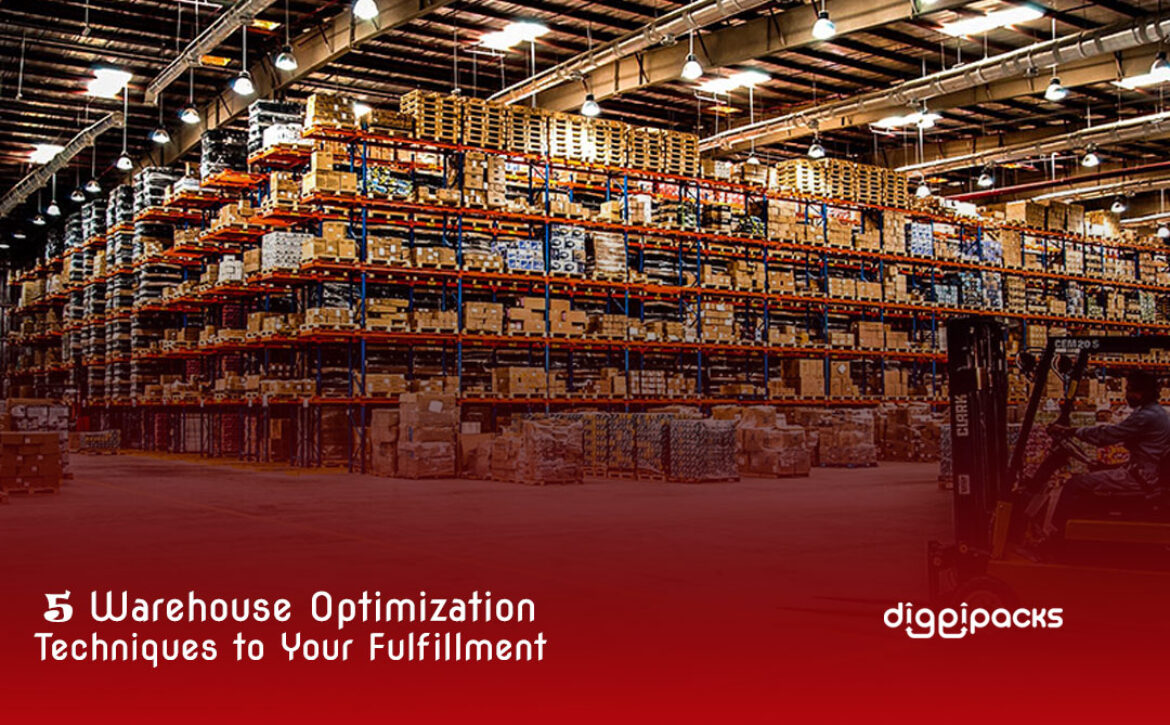
5 Warehouse Optimization Techniques to Your Fulfillment

[et_pb_section fb_built=”1″ _builder_version=”3.22″][et_pb_row _builder_version=”3.25″ background_size=”initial” background_position=”top_left” background_repeat=”repeat”][et_pb_column type=”4_4″ _builder_version=”3.25″ custom_padding=”|||” custom_padding__hover=”|||”][et_pb_text _builder_version=”4.9.4″ background_size=”initial” background_position=”top_left” background_repeat=”repeat” hover_enabled=”0″ text_font_size=”18px” text_text_color=”#6B6B6B” header_2_text_color=”#E02B20″ header_2_font_size=”27px” header_3_text_color=”#E02B20″ header_3_font_size=”27px” header_4_text_color=”#E02B20″ header_4_font_size=”27px” sticky_enabled=”0″]

We’re going to know everything about the warehouse optimization such as the definition and the importance of it in detail through this blog post.

What is Warehouse Optimization?

Warehouse optimization is critical to the effective running of all sizes of warehouses. Warehouse optimization is a structured procedure that encompasses automation as well as determining how to save time, space, as well as assets whilst also lowering defects and improving adaptability, interaction, managerial staff, and client satisfaction.

Warehouse flow, product endorsements, storage, as well as information retrieval are also significant factors for warehouse optimization. Warehouse optimization is critical to the success of lean warehouses as well as agile distribution networks.

Warehouses that were optimized to outperform the competitive market on every stage are the most effective.

Importance of Warehouse Optimization

warehouse optimization

Make Usage Dependable Warehouse Technology Solutions

Companies could use Warehouse Management Technology to perform their day-to-day logistics processes. A warehouse optimization system can assist facility managers in managing a warehouse, storage, as well as order processing.

Daily task preparation, staffing, materials handling, regulation and safety checks, and documentary evidence are also supported by warehouse optimization. Logistics top management could indeed control and evaluate warehouse operations from a single place using a customized software system.

Material damages and urgent shipments are reduced as software solutions help maintain track of every element of warehouse management.

Initiate the Automated Material Handling System (AMHS).

The use of automation systems for the movement of materials and regulation within warehouses is referred to as automated handling of materials (AMH).

Engage in Automated Storing and Retrieving (AS/ RS) systems.

Even though you’re not involved in fully automating your warehouse, you may want to invest heavily in AS/RS to reap instant and long-term advantages. AS/RS processes are computer-controlled machines that select and place components at pre-determined storage locations with speed and precision.

Autonomous Guided Vehicles should be used (AGVs)

AGVs are load carrier machines that are fully automated. They are the best options for warehouse optimization within the provider. They carry a lot and avoid objects along a predetermined path using built-in software as well as sensors. AGVs might not be equipped with a manual adjustment.

Keep a record of the warehouse’s equipment.

Keeping a warehouse equipment guideline allows facilities managers to capitalize on strengths while identifying weaknesses. A checklist requires that managers have all of the equipment needed for an effective warehouse facility.

Top management could use a well-maintained warehouse item list to:

  • Increase warehouse optimization and security.
  • Follow warehousing rules and regs.
  • Enhance efficiency levels
  • Use the right gear to improve warehousing effectiveness.
  • Procedures should be standardized to ensure optimal impressive scores.

5 Best Techniques for Optimizing the Warehouse

  1. Product Velocity

Product Line Acceleration is the speed at which a line changes the direction of its goals. Speed doesn’t even have an orientation on its own. In individual product thoughts, the pace is the amount of time it takes to accomplish a project. The amount of time it takes to create a product is a way of measuring speed.

  • Minimize Errors
  • Make use of the appropriate technology.
  • Review project storage techniques.
  • Ascertain that all products are properly recognized and labeled.
  • Carry out routine warehouse checks
  • Allocate IDs to accomplices to determine issues and track errors.

  • Implement Inventory Management Software

Warehouse inventory software now offers more choices available than before. All in one program, you could indeed keep stock, decrease human errors, save time, as well as cut costs.

  • Automate Shipping

Warehouse Shipping Automation Saves Time and Money Automated shipping processes significantly reduce shipping Cycle Count. Package, able to print shipping labels, address documentation, and inventory stock counting are just a few of the time-consuming duties that have been automated.

  • Use Robotic Technology

The use of automated processes, robots, as well as specialized software to transfer materials, perform multiple functions, and simplify warehouse procedures, is referred to as warehouse robotics.

Warehouse Optimization Challenges

warehouse optimization

Warehouse Troubles The majority of warehouse optimization challenges are linked to inconsistencies, low efficiency, and a lack of accountability. Numerous warehouse managers utilize warehouse management systems, automated structures, sequencing, and automated information gathering to address these issues.

Why You Should Optimize Your Warehouse?

For those that are serious about running a warehouse, the framework you lay helps determine how well your business can run in the long term. By having thought about enhancement from the start, you not just set high expectations, but also leave room for your activities to make adjustments and reconfigure as required.

In comparison, if you have a fully functional warehouse, there are probably still improvements to be made. Occasionally trying to perfect what you do well enough and optimizing what needs improved performance is all that is required to enhance your performance and capabilities.

Aside from improving workflow, optimizing your warehouse has significant economic benefits.

Establishment OF WAREHOUSES

The first rule of warehouse optimization is to get organized. Warehouse managers easily discover themselves over their chiefs if they do not have a well-planned technique of establishment.

Security IN THE WAREHOUSE

One of the most important aspects of warehouse management is ensuring the safety of the employees. The continual transportation of goods could indeed create an optimal climate for an error to occur.

SET UP and optimize Procedures

Your main objective as a company owner or warehouse manager is to make sure that the right product will be delivered to the right spot at the right time. In some ways, you are the intermediary between both the company and its customers.

To become a successful warehouse manager entails taking the lead to boost your potential revenue from behind the action sequences. Warehouse optimization makes a significant contribution to a company’s health besides caring for its goods as the custodians among consumers and businesses.

In conclusion  

We knew everything about the answer to the query ‘What is Warehouse Optimization?’ And the importance of this logistic service in detail through the previous points inside this blog post and we hope you like it too much dear!

[/et_pb_text][/et_pb_column][/et_pb_row][/et_pb_section]

Read More
admin January 11, 2026 0 Comments

5 Steps to the last mile distribution process You Won’t Want to Miss

[et_pb_section fb_built=”1″ _builder_version=”4.16″ global_colors_info=”{}”][et_pb_row _builder_version=”4.16″ background_size=”initial” background_position=”top_left” background_repeat=”repeat” global_colors_info=”{}”][et_pb_column type=”4_4″ _builder_version=”4.16″ custom_padding=”|||” global_colors_info=”{}” custom_padding__hover=”|||”][et_pb_text _builder_version=”4.17.4″ text_text_color=”#575757″ text_font_size=”18px” header_2_text_color=”#E02B20″ header_2_font_size=”27px” header_3_text_color=”#E02B20″ header_3_font_size=”27px” header_4_text_color=”#E02B20″ header_4_font_size=”27px” background_size=”initial” background_position=”top_left” background_repeat=”repeat” hover_enabled=”0″ global_colors_info=”{}” sticky_enabled=”0″]

Over the last few years, we’ve seen an explosion in last-mile distribution. This expansion could be attributed to the massive rise in same-day logistics and the rise of e-commerce.

With the pandemic, this impact was amplified, and we are now having witnessed a shift in how logistical challenges and our entire community perform.

Last mile distribution meaning

What exactly is last mile distribution? Last mile distribution, also reputed as last-mile logistics, is the movement of goods from a distribution center to the last right destination — the client’s door. Steadily for the past delivery service logistics focused on delivering packages as cheaply, rapidly, and precisely as possible.

Last mile distribution center development

last mile distribution

Last-mile distribution centers have increased in popularity as given the fast delivery has increased. As a result, finding manufacturing characteristics near end consumers has become exceedingly challenging, and development teams, Retail stores chains, and engineers have to develop innovative solutions to fulfill last-mile sent in and overcome obstacles.

  • With an educated and remarkable job on parking issues, you could indeed unlock tight sites, speed up authorizations, and enhance efficiency.
  • Using early restriction assimilation and operations and maintenance design, you can speed up authorizations and cut construction costs.
  • Tactically advantageous, proactive zoning explanations reduce grant risk and expenditures.
  • To reduce fears and speed up permissions, educate acceptance agency workers on the end user’s distinctive processes.
  • Increase approval rates by notifying society about the advantages of last-mile distribution centers.

5 Key Steps in the Last Mile distribution Process

Orders are digitally entered into a centralized system

What exactly is a centralized system?

A centralized system has a central destination or hubs in which peers interact. This system frees peers from several attempts and transfers them to the central body.

diggitrack

The Most Important Advantages

  • improved command
  • Inventory control
  • Cost savings
  • the fewer team is required
  • Storage savings

Orders arrive at the transportation hub and await delivery to their end recipient

Each business has its logistic support monitoring system; for instance, awaiting delivery for E-Commerce implies that the order has been managed to pick up by the distributor and would be supplied as soon as possible once your order appears on the distribution sheet. Overall, awaiting delivery indicates that the order is prepared but has yet to be distributed.

Orders are designated to delivery personnel based on routes and recipient addresses

Routes, as well as recipient addresses, are used to assign commands to delivery personnel.

Sortation and designating portions for delivery smartly is essential to having an optimized, expense delivery last mile distribution system.

Orders are scanned before being loaded onto delivery vehicles

This upgrades the order’s condition for both the communicator and the end recipient trying to track the delivery. It also eliminates the potential of packaged goods becoming misplaced all along with manner.

Orders successfully reach the end recipients, and proof of delivery is obtained

The package has shown up at its end destination at this point.

The delivery personnel after which notify the tracking data to prove and assure that the distribution was successful.

What is the last mile problem?

last mile distribution

Last mile distribution processes are notoriously difficult to organize. On the one hand, parcel quantities are subject to significant seasonal variations; they seem to be incredibly high before Christmas, after shopping days like Black Friday, or even during the existing COVID-19 lockdowns, but significantly lower during the summer, when several individuals are on holiday.

Delivery services cannot locate their facilities to the extreme ends and must depend on external facilities during peak periods.

On the other hand, unpredictable disruptions in the delivery are to be anticipated, particularly in inner-city areas, due to traffic congestion, restricted parking space, or illegible attempts to address.

The reality there is other clients to be delivered to everyday complicate the planning of a perfect standardized route. Eventually, there is a lot more room for unpredictability with the clients themselves. Consumers are not prevalent at the delivery point, the distribution location was incorrectly discussed or shifted at the last minute, or the clients have a very particular time window or specific circumstances (such as “kindly do not call before 10:00”) wherein their packages should be supplied.

Distribution boxes, like those commonly found in apartment blocks, help to alleviate the situation. Numerous distribution enterprises’ practice of simply removing parcels on doorsteps or with neighbors is problematic in terms of responsibility.

What are the costs of last mile distribution?

What Is the Cost of last mile distribution? Last mile distribution is now the most expensive option of the fulfillment chain, averaging $10.1 for every package delivered. Companies charge consumers an estimate of $8.08 to cover the expense, with the remainder deducted from the profitability of items sold.

Technology solutions to improve last mile distribution logistics

DELIVERY OF THE GIG ECONOMY

The sharing economy has crept its path into the last mile distribution as a result of new changes in the workplace, which now relies on new tech to look for another job.

TRAFFIC ORDERS

Another manner that technology helps your distribution is by allowing your users to find their orders, which also increases their trust in your facility.

Another manner that technology helps your distribution is by allowing your users to find their orders, which also increases their trust in your facility.

Implement driver management technology to assist your drivers in staying on schedule

Driver management technology now is considered an industry practice in the transportation sector. Knowing which your drivers are and they handle their routes is an important data origin for enhancing performance.

Improve the efficiency and effectiveness of your packaging

Packaging optimization could have a true and beneficial impact on last mile distribution achievement, both in terms of movement and cargo safeguards.

Custom shipping boxes could indeed help you develop efficiency in shipping crates and service vehicles by providing your goods with the accurate box size they require without squandering any space, as well as elevated methods could indeed enhance breakage safeguards and assist your goods to reach the customer securely.

[/et_pb_text][/et_pb_column][/et_pb_row][/et_pb_section]

Read More
admin January 11, 2026 0 Comments

TOP 11 Common inventory‌ ‌problems‌ and Solutions

[et_pb_section fb_built=”1″ _builder_version=”3.22″][et_pb_row _builder_version=”3.25″ background_size=”initial” background_position=”top_left” background_repeat=”repeat”][et_pb_column type=”4_4″ _builder_version=”3.25″ custom_padding=”|||” custom_padding__hover=”|||”][et_pb_text _builder_version=”4.9.4″ background_size=”initial” background_position=”top_left” background_repeat=”repeat” hover_enabled=”0″ header_2_text_color=”#E02B20″ header_2_font_size=”27px” header_3_text_color=”#E02B20″ header_3_font_size=”27px” header_4_font_size=”27px” header_4_text_color=”#E02B20″ sticky_enabled=”0″]

Primaseller has an excellent inventory management asset. Once selecting an inventory control system, look for one that is accurate throughout your locations and is provided by a company that supplies customized assistance and development. to avoid inventory‌ ‌problems‌. This could appear to be a no-brainer, but it is also an extremely common problem.

Likely causes of inventory management problems

A variety of factors contribute to the mood disorders associated with inventory‌ ‌problems‌. However not exhaustive, the list below guideline some of the most likely reasons why your inventory control is suffering.

Manual inventory management practices, like Excel, are typically the first tool used by small-to-medium-sized businesses to manage their resources. While spreadsheets and the like are useful at the start of a small company, they could indeed quickly lead to crippling problems.

Similarly, manual inventory tracking and stocktaking may be appropriate for small companies but then become moment as well as inaccurate as your business grows. Not only will this influence your company’s capacity to expand, but data entry errors could have a major impact.

Large quantities of inventory

Large amounts of inventory could indeed cause managerial night terrors because they eat into your earnings. Most companies have 20 to 40% of their cash flow locked up in inventory. inventory‌ ‌problems‌ are challenging, but it is necessary if you want to progress from impoverished inventory control to excellent inventory control and management. Here’s how you might get rid of some of your stock.

Inadequate foresight

If you don’t use precise data to determine sales trends, finest items, customer response, and other factors, you’ll either order too much and face stockouts and loss of customers, or order even less and face stockouts and loss of customers. With credible information, you could indeed better predict your customers’ future actions and order aimed at meeting customer expectations.

What are the inventory‌ ‌problems‌?

inventory‌ ‌problems‌

Supply chain complexity

One of the inventory‌ ‌problems‌. Globalization increases the complexity of the supply chain network. Numerous businesses originate, disseminate, and market their products through a large network of makers, distributors, manufacturers, middlemen, and retail chains.

Inconsistent Tracking

Manual inventory tracking methods all over multiple software and spreadsheet applications are time-consuming, utterly pointless, and error-prone. A centralized Inventory Problem with financial reporting characteristics could indeed profit even tiny businesses.

Inaccurate Data

You must know precisely what inventory you have at whatever given time. Inventory can no longer be counted yearly using an all-hands-on-deck strategy.

Loss of inventory

Inventory loss one of the inventory‌ ‌problems‌ due to spoiling, harm, or theft could be a distribution network issue. It necessitates the identifying, tracking, as well as measurement of trouble spots.

Demand and market volatility

The bullwhip effect is the most serious concern when it comes to request volatility. Even minor changes in demand could indeed lead to major changes, leaving providers, warehouses, as well as transporters scrambling to stay current with an unsteady supply chain.

Not using good vendors

This could appear to be a no-brainer, and it is also a very frequent issue. Finding a good vendor requires finding a balance between being accurate and being someone who does not charge a fortune.

Fortunately, there are many overview websites currently available in which you can find real feedback from a vendor before deciding to work with them. Furthermore, if a vendor does not fulfill your performance or service standards, or if shipments are delayed and have an impact on your managing inventory, decrease them like a hot potato!

Take into account full vertical integration if you purchase a unique product and want full control over production, request, and inventory levels.

Not Using Automation

Numerous companies are still stuck in the Dark Ages of one-store-only, Perform best inventory management. If they really do not ramp up or automate quickly whilst also going online or omnichannel, they will perish. This is not only outdated, tedious, and time-consuming, but the possibilities for user mistakes are also astounding.

It is critical to automate your systems in the following situations:

  • Users have several shops or warehouses.
  • One physical channel would then soon be joined by online channels.
  • Users have a strict budget and a looking-to-hire limit.
  • Staff members can track SKUs all across one’s shop and warehouse places while also tracking orders, goes back, interactions, and delivery options for all of your items. This, too, is in real-time. Common tasks, such as creating barcodes, receipts, or sales orders, are also simplified by automation. Then avoiding inventory‌ ‌problems‌

Insufficient Order Management

Trying to prevent grossly overstating and trying to run out of inventory is one of the most challenging inventory‌ ‌problems‌ to good inventory management. Utilizing historical and temporary data trends could indeed help you anticipate customer orders more accurately.

Warehouse Efficiency

Having received and put away, trying to pick, prepping, and shipments are all labor-intensive stages in the inventory management control system at the warehouse. The task is to complete all of these tasks as effectively as possible.

Poor Communication

The importance of communication and collaboration cannot be overstated. Once departments are unwilling to share data, recognizing inventory‌ ‌problems‌ and looking for ways to improve becomes much more challenging.

Not Counting Inventory Often

These most advanced inventory‌ ‌problems‌ may contain a few mistakes, which are generally tried to introduce once untraceable inventory, like pilferage, or transfers are not tried to enter. As a result, you must timetable frequent stock audit reports.

If you verify different portions of stock on a routine basis, you can indeed be confident that your scheme numbers are fairly close to actual numbers. Timetabled checks with barcode scan results are required, say, one segment per day. Pick days when you’ll have enough people to count.

How can inventory management software help tackle supply chain problems?

inventory‌ ‌problems‌

To prevent overselling and inventory‌ ‌problems‌, utilize inventory‌ ‌problems‌ to set automatic order quantities based on predetermined stock levels as well as current availability. Retain a safety stock to compensate for supply disruptions and to help to manage enhanced lead-time caused by changing global raw material competitive market.

Effective supply chain management can be done feasibly by the inventory management system, which improves your firm’s customer support by permitting you to do 3 things:

  1. Distribute products to people quickly and accurately than a manual process could.
  2. Track shipping to make sure that they arrive on time.
  3. Preserve optimized inventory levels and ensure that you will always have the products that your clients would like in stock to prevent inventory‌ ‌problems‌

[/et_pb_text][/et_pb_column][/et_pb_row][/et_pb_section]

Read More
admin January 11, 2026 0 Comments

Optimize Your Putaway processes in logistics

[et_pb_section fb_built=”1″ _builder_version=”3.22″][et_pb_row _builder_version=”3.25″ background_size=”initial” background_position=”top_left” background_repeat=”repeat”][et_pb_column type=”4_4″ _builder_version=”3.25″ custom_padding=”|||” custom_padding__hover=”|||”][et_pb_text _builder_version=”4.9.4″ background_size=”initial” background_position=”top_left” background_repeat=”repeat” hover_enabled=”0″ header_2_text_color=”#E02B20″ header_2_font_size=”27px” header_3_text_color=”#E02B20″ header_3_font_size=”27px” header_4_text_color=”#E02B20″ header_4_font_size=”27px” sticky_enabled=”0″]

Once optimizing warehouse management, warehouse managers usually overlook the Putaway Process, even though it is a vital step in rising warehouse efficiency.

All successive warehouse procedures, particularly the picking procedure, are directly affected by the initial submission of goods.

The method of instantly transferring inbound inventory to its final destination in your warehouse is known as direct Putaway Process. Rather than being stored, you start preparing for delivery options as soon as the products are delivered.

What Is the Putaway Process?

Among the most basic warehouse operations is put away. It is the transportation of materials to a suitable storage location. Once goods are not stored properly, issues start. As a result, finding the best storage facility offers numerous advantages. For starters, cargo is stored extra quickly and effectively. Staff travel time is reduced as a result.

Furthermore, proper storage ensures the safety of the goods. Storage and handling also aid in making the most of available floor space. Eventually, the goods are simpler to track, locate, and collect.

Benefits of putaway Process

putaway process

Here are some of the reasons why putaway is critical to the organization:

  • You’re making it much easier to store the next batch of products now that you understand where and how to put them.
  • With a Putaway Process. currently, you could indeed ensure that every product is accounted for.
  • It lowers the likelihood of misplaced or lost items and provides you with a clean and orderly warehouse.
  • This can help you speed up your picking when having to fill a command because you know precisely in which each item is, as long as you’ve got track of their places.
  • This is incredibly beneficial when a warehouse is running low on stock for a specific product and requires it replenished quickly before a customer orders for it.

Types of putaway methods

Fixed-location putaway

This is one of the warehouse Putaway Process that does not necessitate the use of a program. When a warehouse staff allocates a precise area for particular items, this method works. Nevertheless, it does not always imply storing specific products around each other. Goods with similar features could also be managed to keep together based on data. Some people, for instance, prefer to group small items. Somebody else, on either hand, may group temperature-sensitive materials in one location. As a result, it focuses on customizing storage areas for branded items.

Dynamic putaway

A dynamic putaway plan concentrates on putting away arriving inventory in its most convenient place potential (for both storage and retrieval).

Dynamic putaway, as opposed to specific, is perfect whenever the large percentage of your inventory is comparatively close in terms of size, mass, as well as other physical features.

If all other variables are relatively similar, you’ll be capable of making hard choices about where to store inventory as it arrives.

Another big benefit of dynamic Putaway Process is the capacity to prioritize demand over all else. With fewer constraints imposed about where inventory could be contained, you could indeed recognize popular items as they arrive as well as store them as near as poss Because your goods and products may well be stored in multiple locations at various times, keeping track of the inventory will be practically impossible without some technological assistance.

Nevertheless, if you decide that dynamic Putaway Process is the best option for your company, you’ll have to put money in an inventory management system to optimize your procedures.ible for easy retrieval.

Direct putaway

Directed Putaway Process is a characteristic of some WMS software. This program optimizes Putaway Process. As a consequence, products are aimed at the most advantageous storage areas.

 To identify the best location, the program analyzes information like sales, size, cost, as well as mass. It shops objects that are typically purchased together, for instance.

Afterward, this speeds up the picking. If the first option fails, the system would then select the next best choice.

Best Practices to Optimize the Putaway Process

putaway process

Collecting Data and Introducing Analytics in Real-Time

Whenever it comes to fixing warehouse management and trying to implement an efficient Putaway Process, information is king.

To discover the best storage spot, information on cargo size, mass, tallness, having received and shipment regularity, cargo type (e.g., Hazmat, perishable, high value, etc.), order/sales loudness, as well as memory accessibility should be accurately and reliably gathered and analyzed.

As a result, the warehouse management (WMS) should include two main features: sufficient data gathering functionality and continued data processing.

Once the suitable WMS is in location, the next purpose is to confirm that we are getting info efficiently and precisely by computerizing the catalog as often as potential. This, in spin, would then enable us to remove entrance errors and improve overhead.

Keep an eye on storage space and available space.

Another critical component of optimization and enhanced warehouse effectiveness is avoiding travel time to places with insufficient space or the ability to hold the cargo by tracking storage space as well as accessibility.

Shorten Travel Time

Another key aspect when optimizing the Putaway Process and warehouse processes overall is lowering travel time. The primary objective here is to reduce the time required for goods to make the journey from the distribution center to the storage location.

Once feasible, utilize direct putaway.

When feasible, some other best practice is to use straightforward Putaway Process.

When this technique is used, the cargo is immediately moved from its distribution center to its end destination without heading throughout an organizing phase.

Use both fixed and dynamic locations.

If conditions permit, it is also feasible to use a good mixture of fixed and dynamic spots.

A fixed location is a which was before storage capacity, warehouse area, compartment, or bin that has been delegated based on particular criteria.

A fixed location, for instance, could be associated with a particular product line, customer, ultimate stop, and so on.

Because warehouse clerks could indeed memorize a cargo’s specific location assignment, repaired places greatly boost efficiency levels.

Maintain the Warehouse’s Cleanliness and Organization

Last but just not least, a spotless and very well warehouse/distribution center could indeed make and break an effective system.

[/et_pb_text][/et_pb_column][/et_pb_row][/et_pb_section]

Read More
admin January 11, 2026 0 Comments

Warehouse rental with the best logistics partner In Saudi Arabia and Egypt

[et_pb_section fb_built=”1″ _builder_version=”3.22″][et_pb_row _builder_version=”3.25″ background_size=”initial” background_position=”top_left” background_repeat=”repeat” hover_enabled=”0″ sticky_enabled=”0″][et_pb_column type=”4_4″ _builder_version=”3.25″ custom_padding=”|||” custom_padding__hover=”|||”][et_pb_text _builder_version=”4.9.4″ background_size=”initial” background_position=”top_left” background_repeat=”repeat” hover_enabled=”0″ header_2_text_color=”#E02B20″ header_2_font_size=”27px” header_3_text_color=”#E02B20″ header_3_font_size=”27px” header_4_text_color=”#E02B20″ header_4_font_size=”27px” sticky_enabled=”0″]

Warehouse rental is not the same as renting any other form of commercial property. Whereas the Warehouse rental agreement could be comparable, the approach to analysing the underpinning rental properties is not. Once selecting a Warehouse rental, there are several factors to take into account. Furthermore, trying to calculate your rent is more difficult because you must think in a 3d space.

What meaning warehouse rental?

Warehousing is the method of preserving tangible goods in a devoted warehouse or storage unit before they can be started to sell or divided up. Warehouses shop products safely and reliably in an organized manner, allowing you to track where goods are located, once they showed up, how long they have been there, and the volume on hand.

Even though the specifics diverge, the fundamental rental agreement and language of a warehouse rental agreement would be familiar if you’ve completed any other advertising rentals. Warehouse rental, for example, are usually generated on a per square foot basis, though they are typically much lower than rental costs in other types of property. If you’re renting a very tiny space, any load or core component in your warehouse space will be quite tiny.

The best logistics partner for warehouse rental

warehouse rental

To determine the best logistics partner, you must first comprehend your business needs and the logistics service you anticipate. To make sure the checklist’s efficacy, you must first determine your existing Freight Shipping, supply chain, mass transit lines, freight costs, evaluation criteria, as well as connections.

Determine which aspects of your existing logistics provider are unable to suit your requirements, and identify your preferred logistics services. You would then comprehend the quality of service of a logistics company that is appropriate for your company. Furthermore, you must consider business expansion. Finding the right logistics partner is not simple. You should select a supplier who could accommodate your company’s growth.

You could indeed hire professionals to assist you with the selection procedure. Eventually, you decide to thin your possibilities. You will also have a relatively small range of possible logistics services from which to choose the best one for your company. Keep in mind to bargain difficult with them to ensure great possible care on a small budget.

Commercial Lease Basics

A warehouse rental agreement is a writing signed by the two parties for the rental agreement of a Warehouse rental. Understanding the regulations of a Warehouse rental agreement is critical if you want to understand your rights and obligations and defend your preferences.

A commercial rental agreement could perhaps specify what’s included in the rent you pay to the homeowner. The majority of rental agreements are pretty disgusting rentals, rental income leases, or both. Regrettably, not all rents expressly state which classification they fall into, so you must cautiously sign a lease.

Common Commercial Lease Terms

Often these commercial leases are generally for a year or more. The rental agreement could indeed range from one to ten years at best, but they’ve been recognized to last up to 99 years.

Best practices start dictating that any rental agreement should be in writing, particularly if it is for and over one year – the state law of frauds may pertain.

Commercial lease contract terms attempt to ensure that all aspects of the landlord-tenant connection are protected by the agreement.

A commercial rental agreement should cast out every party’s rights and responsibilities, and the regulations could perhaps try to spell out at every specific.

There are many types of commercial rental agreements, and depending on the type of retail property or placement being rented, a special type could pertain. Commercial real estate in the city center, for instance, would not have the same form of rental regulations as commercial real estate in the suburbs. Rentals, by definition, fall into one of five categories: I retail, (ii) bureau, (iii) Warehouse rental, (iv) floor, and (v) made by mixing utilization rentals. Other subtopics and common unique needs are as follows:

Gross rental

  • A renter is responsible to pay real estate taxes and fees.

A lease on the net

  • The renter would then expect to be paid the rental rate as well as a proportion of the maintenance costs, insurance digital payments, as well as other associated expenses.

Triple-net-lease

  • used it for cantilevered construction rentals; tenant pays service charges and other expenditures.

Rent of a Shopping Cente

  • Base rent is calculated based on floor space. Tenants may be appraised a portion of the real estate taxes as well as be made to pay a proportion of gross revenue.

Lease of Land

  • Renter rented bare land and structures on it. Whenever the lease expires, the advancements are returned to the owner.

What else does Diggipacks offer you, the best logistic partner beside warehouse rental?

warehouse rental

Mass transit, Warehouse rental, delivery options, shipments, and having received are all examples of logistics. Not that every logistic support company offers everything. The majority of them could have their field of knowledge. Attempt to align your requirements with the logistic support provider’s service and expert knowledge. Check to see if the logistics provider’s expert knowledge is a good fit for your company.

The long-term viability of the logistics company is important to your company. As a result, you must work with a company that has a track record of long-term performance and survival. The reliable business partner would be able to come to terms with any emergencies or immediate needs that may arise.

If you just want to establish a long-term logistics collaboration, credence is essential. End up making certain that the collaboration could be evaluated.

Is the logistics company known for providing exceptional customer service, prompt response, fluid interaction, and efficient solutions to immediate problems? These components are critical in determining whether the logistics company prioritizes customer support. Ordinarily, it is hard to identify their customer support in the early stages.

In closing

We knew everything about the Warehouse rental through the previous points inside this blog post from the diggipacks blog, and we hope you like it too much buddy!

[/et_pb_text][/et_pb_column][/et_pb_row][/et_pb_section]

Read More
admin January 11, 2026 0 Comments

6 Inventory Performance Metrics to Improve Inventory Management

[et_pb_section fb_built=”1″ _builder_version=”3.22″][et_pb_row _builder_version=”3.25″ background_size=”initial” background_position=”top_left” background_repeat=”repeat”][et_pb_column type=”4_4″ _builder_version=”3.25″ custom_padding=”|||” custom_padding__hover=”|||”][et_pb_text _builder_version=”4.9.4″ header_2_text_color=”#E02B20″ header_2_font_size=”27px” header_3_text_color=”#E02B20″ header_3_font_size=”27px” header_4_text_color=”#E02B20″ header_4_font_size=”27px” background_size=”initial” background_position=”top_left” background_repeat=”repeat” hover_enabled=”0″ sticky_enabled=”0″]

Good Inventory Performance is the most important point for successfully managing any business, as many seek to achieve good inventory management but face a large number of problems that may cause them huge losses, but by measuring and monitoring Inventory Performance on an ongoing basis, merchants will be able to avoid problems that may It results in a loss of customer confidence or lack of profits, and thus negatively affects your business, and there are a set of important inventory performance metrics that will help you effectively in improving your inventory performance, and in this article we will show you the most important inventory performance metrics that you should use.

What to consider when selecting Inventory Performance metrics

Inventory Performance

There are a number of important things to consider when choosing stock performance metrics, as each indicator you include in your business will clearly impact all of your operations.

Therefore, you need to choose inventory performance metrics that synergize your employees and help them achieve the end goal, so you can achieve your organization’s goals in an orderly fashion.

You also need to make inventory performance metrics measurable, specific, and relevant to your goals to achieve them in a timely manner.

Avoid inventory performance metrics that will not improve your inventory performance. You will also need to use an easy-to-use and customizable inventory software to be able to measure and track inventory performance metrics effectively and periodically.

Here are some of the most important inventory performance metrics that you will need in your business:

Inventory Turnover Ratio

Inventory turnover is the number of times inventory has been sold and replenished during a specified period of time. High inventory turnover is an indicator of good efficiency and good management.

As for its low, it indicates the slow movement of sales and your need to conduct a comprehensive assessment of your business to find out the weaknesses and correct them. The inventory turnover rate is calculated as follows:

  • Inventory Turnover Ratio = Cost of goods sold ÷ average inventory

Demand forecasting accuracy

It is one of the important Inventory Performance Indicators as it will enable you to fill in any unexpected gaps, as well as understand demand forecast and compare it to your actual level.

This is one of the important elements of effective inventory control, it will give you accuracy about inventory as well as quick response to any changes, thus growing your business quickly.

Perfect order performance

This indicator helps you determine the effectiveness of your order placement, in terms of speed and accuracy of delivery options, and with significant improvements in manufacturing intelligence, your perfect order performance will increase exponentially.

Perfect order performance includes a number of sub-indicators, such as the rate of fulfilling orders on time, the rate of completed orders, as well as the rate of intact orders without damage.

Customer satisfaction

Another useful Inventory Performance Indicator is the Customer Satisfaction Index, which is measured using net promoter scores or NPS.

Through it, customer satisfaction levels are checked and evaluated by determining the degree of NPS, which helps the company in checking the times of customer orders from beginning to delivery of the order.

Order cycle time

Which measures the average time taken to fulfill orders, from the customer’s order to the full arrival of the order to the customer,

and helps the company determine the effectiveness of its inventory management processes. Therefore, it is an important indicator of Inventory Performance.

The companies that have a high order cycle time, this is a sign of the dissatisfaction of their customers, and therefore they lose competition with others.

But if the company has a low order cycle time, this means that it fulfills the demands quickly, which contributes to:

  • Achieve customer satisfaction.
  • Give it a stronger competitive advantage.
  • Grow quickly.

Carrying costs of inventory

This indicator is one of the most important indicators of measuring inventory performance, which reflects your management of inventory and expenses.

Carrying costs of inventory measures the expenses that were spent on goods while they are stored.

The rise in this indicator indicates poor planning in the types and quantities of goods you have purchased;

It may mean that you buy goods that are not popular or demanded by the public, or that you buy quantities that exceed your selling levels,

Which causes the goods to stay for a longer time in your stores, and thus the high cost of storing them.

If the situation is not remedied, the costs of buying and holding the goods may exceed their selling value,

Which means that you choose the goods that cause a loss, and you can calculate the Inventory Carrying Cost as follows:

  • Inventory Carrying Cost = Total Inventory Value ÷ total inventory Costs

Inventory Management Software Can Help you in Inventory Performance

Inventory Performance

Inventory management software can effectively help you improve your Inventory performance, by giving you accurate information and tracking all inventory purchases and uses.

You can also, through inventory management software, issue purchase orders automatically without the need for manual work.

Thus, through inventory management software, you can provide a unified database that is easily accessible and therefore accurate in measuring inventory flow using appropriate inventory management metrics.

Diggipacks provides you with the best inventory management software, which relies on the latest methods and technology.

That enables you to update products at the maximum speed as well as move inventory from one place to another with ease and ease.

In addition to informing you periodically of the movement of your inventory, determining the necessary spaces for storing it without any human intervention.

[/et_pb_text][/et_pb_column][/et_pb_row][/et_pb_section]

Read More
admin January 11, 2026 0 Comments

What is inventory cycle time ‌and Why do They Matter?

[et_pb_section fb_built=”1″ _builder_version=”3.22″][et_pb_row _builder_version=”3.25″ background_size=”initial” background_position=”top_left” background_repeat=”repeat”][et_pb_column type=”4_4″ _builder_version=”3.25″ custom_padding=”|||” custom_padding__hover=”|||”][et_pb_text _builder_version=”4.9.4″ background_size=”initial” background_position=”top_left” background_repeat=”repeat” hover_enabled=”0″ header_2_text_color=”#E02B20″ header_2_font_size=”27px” header_3_text_color=”#E02B20″ header_3_font_size=”27px” header_4_text_color=”#E02B20″ header_4_font_size=”27px” sticky_enabled=”0″]

Inventory cycle time is one of the most important components in production and manufacturing scheduling as well as inventory control, There are several approaches that you can take to reduce Inventory Cycle Times and thus improve production activities and increase their efficiency, and in this article will show you what an inventory cycle time is, why it is important, and how to improve it.

What Is Inventory Cycle Time?

Inventory cycle time is defined as the total time your company needs to be able to bring the digital products or services it offers to market.

and includes all the time taken from the manufacturing activities of the product or service to its end.

Optimizing Inventory Cycle Time

inventory cycle time

A company strives to maintain its reputation and provide the best experience for its customers,

And the fact that customers are on waiting lists or lack quick sales due to defects in the production process or inaccurate orders can cause serious damage and costs to the company.

They also lead to rapid customer losses, and there are many digital tools that can help companies improve inventory cycle time by:

  • Data management based on cloud systems and automation.
  • Data transparency which enables companies to identify and correct errors and other shortcomings.
  • Monitor workflow using artificial intelligence.
  • P2P inventory control which improves inventory cycle time.
  • Analyze central data to gain insights into opportunities that improve.
  • Real-time tracking and data analysis helps reduce stock outs and maintain high levels of efficiency.
  • Preparing financial reports and financial planning periodically.

Why is cycle Time inventory important?

is of great importance as the less time it has, the more efficient your organization will run.

And is important in its effective role in reducing costs and reducing lead time in delivering goods.

This increases profitability and ROI and thus enhances customer satisfaction, and can also help you simplify manufacturing processes and thus reduce costs.

Inventory cycle time also contributes to meeting production schedules and providing materials for the process, thus enhancing task performance without any delays.

How to Calculate and Reduce Inventory by Reduced Cycle Time

inventory cycle time

As for the calculation method, it is simple and can be easily calculated using a mathematical formula.

The following is the mathematical formula for calculating the inventory cycle time:

  • Inventory cycle time = Production time + Waiting time ÷ through put.

Inventory can be reduced through Reduced Cycle Time, as it is possible to simplify the manufacturing processes as well as reduce the time spent in production activities as well.

The following are a number of methods that will help you in reducing inventory cycle times, which will positively affect inventory management:

Reducing waiting time

Which is the easiest way to assist in reducing inventory cycle times of production operations, and this can be achieved by ensuring that production schedules are met.

Running tasks in parallel

If there are multiple tasks in production, a breakdown of the work structure can help you identify the tasks that need to be run in parallel, thereby reducing inventory cycle Count.

Process re-engineering

Which is one of the best ways in which an activity can be performed by eliminating or modifying tasks dimension, thereby improving cycle time

Improve scheduling

by identifying the potential problem in production activities, and thus improving operations by revising the task schedule, which will help you in improving the time management of employees and production processes.

Employee contribution

Which can contribute to improving cycle times. When employees are involved in the core process, they generate ideas for improvements that contribute to reducing cycle times.

[/et_pb_text][/et_pb_column][/et_pb_row][/et_pb_section]

Read More
admin January 11, 2026 0 Comments

Tips to empowering suppliers and Reap the Rewards

[et_pb_section fb_built=”1″ _builder_version=”3.22″][et_pb_row _builder_version=”3.25″ background_size=”initial” background_position=”top_left” background_repeat=”repeat”][et_pb_column type=”4_4″ _builder_version=”3.25″ custom_padding=”|||” custom_padding__hover=”|||”][et_pb_text _builder_version=”4.9.4″ background_size=”initial” background_position=”top_left” background_repeat=”repeat” hover_enabled=”0″ sticky_enabled=”0″ header_2_text_color=”#E02B20″ header_2_font_size=”27px” header_3_text_color=”#E02B20″ header_3_font_size=”27px”]

There is great importance for empowering suppliers as empowering suppliers can help in overcoming many problems and achieve a huge number of benefits, and empowering suppliers improves efficiency significantly. This is due to their great understanding of the business processes and the needs of the buyer, thus helping to improve the integration of financial operations in the company, and this will lead to the continuous improvement of the company, and in this article, we will show you all the details about empowering suppliers.

Empowering Suppliers definition

Empowering suppliers is to make a B-BBEE compliant entity that is required to meet three key criteria including recognition of B-BBEE’s purchases as a percentage of total purchases.

Therefore, we can say that empowering suppliers are BBBEE compliant entities or institutions that must meet all the regulatory requirements of the country which we will present next.

How to improve empowering suppliers in your organization?

Empowering Suppliers

As we mentioned in the introduction, empowering suppliers achieves many advantages and benefits.

Here are a number of tips that will help you empower your suppliers and reap a lot of benefits:

1. Extend Payments

One tip that will help you empower your suppliers is to be responsible when extending digital payments, as this will help you avoid putting pressure on the supplier’s working capital.

Thus, not forcing them to obtain loans with high interest rates and avoiding the problem of the cash flow gap, and this will help the supplier to connect to cash faster with the payment of a percentage of the transaction.

And thus reduce the daily sales of the supplier while extending the payment days due to the buyer; this is convenient for all parties.

2. Take advantage of discount opportunities

It is one of the most important tips in empowering suppliers, as buyers who have sufficient working capital can make great returns on their money by taking advantage of early payment discounts.

This will increase the liquidity of the supplier, thus strengthening the supply chain resilience, and there are two common models of discount opportunities, namely:

  • Early payment discounts.
  • Dynamic discounting.

3. Take advantage of supplier portal

Empowering suppliers in your organization can be improved through the supplier portal, which helps create more efficient flows of communication between the supplier and the buyer.

The supplier portal also allows access to real-time data and thus greater visibility into billing and payment processes, and thus greater management of their cash.

What Qualifies an Entity as an “Empowering Supplier”?

Empowering Suppliers

There are a number of matters that indicate that an entity or a particular institution is considered as empowering suppliers.

The following are the most important requirements that indicate that the entity fulfills the empowering suppliers:

  • Availability of 1, 4, 8 or more on the BEE scorecard.
  • That the entity be a valid corporate citizen, i.e. in compliance with all South African laws and related regulatory requirements, which include taxation, occupational health and safety, employment equity and skills development.
  • The entity fulfills one or 3 of the following criteria, and this requirement is one of the most difficult demand management of empowering suppliers, and the following are those requirements:
    • Entity expenditure of at least 25% of cost of sales, excluding labor and depreciation costs, in South Africa.
    • Create at least 50% of jobs for blacks.
    • There is at least 25% local transfer of raw materials.
    • Allocate at least 12 days annually to help improve the operational and financial capabilities of beneficiaries from black and emerging markets.
    • Pay 85% of South African labor costs, and this is for the service industry only.

[/et_pb_text][/et_pb_column][/et_pb_row][/et_pb_section]

Read More
admin January 11, 2026 0 Comments

Reduce losses with the incoming inventory solutions

[et_pb_section fb_built=”1″ _builder_version=”3.22″ global_colors_info=”{}”][et_pb_row _builder_version=”3.25″ background_size=”initial” background_position=”top_left” background_repeat=”repeat” global_colors_info=”{}”][et_pb_column type=”4_4″ _builder_version=”3.25″ custom_padding=”|||” global_colors_info=”{}” custom_padding__hover=”|||”][et_pb_text _builder_version=”4.14.8″ background_size=”initial” background_position=”top_left” background_repeat=”repeat” hover_enabled=”0″ global_colors_info=”{}” header_2_text_color=”#E02B20″ header_2_font_size=”27px” header_3_text_color=”#E02B20″ header_3_font_size=”27px” header_4_text_color=”#E02B20″ header_4_font_size=”27px” sticky_enabled=”0″]

Incoming inventory effectively helps you reduce your costs, because it is one of the best ways to manage inventory and improve incoming receipts as well. It helps you check the availability of required materials and thus reduce your inventory costs while enhancing and simplifying the production process. In this article, we will show you all the details about the incoming inventory as well as your inventory and how you can benefit from it in your online store.

What is Incoming inventory?

Before we start rolling out smart incoming inventory control solutions and how you can take advantage of them in your business to reduce your losses, we will first need to know what it is.

Incoming inventory is the purchase orders you have obtained that will be withdrawn from your inventory, it can help reduce inventory costs and simplify production.

Incoming inventory report 

is an important form of reporting in an online store or store, the purpose of which is to show what active purchase orders have been received for your online store or company during a certain period of time.

There are also a number of smart programs responsible for preparing the Incoming inventory report efficiently and accurately, so that it is ready to be viewed directly, which helps you in making better decisions.

It also consists of a number of columns, and each column has its own significance that you must be familiar with to understand the report, as:

  • Product variant.
  • Date and time (in UTC).
  • Received on (when the order line was received).
  • Purchase Order.
  • Quantity ordered.
  • Price (in your base currency).
  • Discount level for this order line item (%).
  • Supplier (for which the purchase order is issued to).

Incoming Inventory Transfers

incoming inventory

is the stock that another store in your organization sends to you to fulfill your orders in the event that this stock is not currently available to you.

In order management to avoid wasting inventory as well as reduce costs for your organization, always try not to receive Incoming Inventory Transfers from any institution until you verify that you do not have this inventory.

Thus, you need to know the orders you need and whether they are available to you or not by following the actual stock level in your organization, and if it is not enough to meet your request, then you can start receiving Incoming Inventory Transfers without any problems.

The incoming inventory solution

In general, smart solutions play a major role in improving and simplifying operations further, and they have an effective role in reducing errors, and all of this in turn leads to a significant reduction in costs.

There are many smart incoming inventory solutions that streamline processes, eliminate manufacturing issues and better fulfill orders.

Also, through this solution, it is possible to improve the quality of these processes, which positively affects the reduction of costs and simplifies the production processes, through the available tools that allow full control.

[/et_pb_text][/et_pb_column][/et_pb_row][/et_pb_section]

Read More
admin January 11, 2026 0 Comments

How Do Reverse Logistics Impact Supply Chain Management? 

[et_pb_section fb_built=”1″ _builder_version=”3.22″ global_colors_info=”{}”][et_pb_row _builder_version=”3.25″ background_size=”initial” background_position=”top_left” background_repeat=”repeat” global_colors_info=”{}”][et_pb_column type=”4_4″ _builder_version=”3.25″ custom_padding=”|||” global_colors_info=”{}” custom_padding__hover=”|||”][et_pb_text _builder_version=”4.14.8″ background_size=”initial” background_position=”top_left” background_repeat=”repeat” hover_enabled=”0″ global_colors_info=”{}” header_2_text_color=”#E02B20″ header_2_font_size=”27px” header_3_text_color=”#E02B20″ header_3_font_size=”27px” header_4_text_color=”#E02B20″ header_4_font_size=”27px” sticky_enabled=”0″]

Reverse logistics is one of the most important operations, which involves moving products back through the supply chain, it specializes in taking back products from customers and reformulating those products or parts of them to create a new product that can be sold, and it  has many advantages that may positively affect the There are two main aspects to that process, returns management and refurbishment or remanufacturing, and in this article we will show you all the details about reverse logistics and how it affects your business.

What Is Reverse Logistics?

Before we get to know the nature of the work of reverse logistics, we will first need to define it to know what it is intended for.

We can define it as the value-added process that deals with how the company receives items from customers.

How Reverse Logistics Works

Reverse Logistics

As for how it works, the most common scenario in which reverse logistics plays out is when a customer wants to return an item.

The process of how a company handles this product is an example of reverse logistics. it can operate in many different ways depending on the specifics of the business.

However, in almost all cases the process can be largely divided into two parts:

  • Return management includes the process of actually managing the products that are returned to the company.
  • Recycling is an aspect that makes a returned or recycled product ready to hit shelves again and be sold again.

Importance of Reverse Logistics to Your Business

Reverse logistics effectively helps in maintaining the flow of your goods more effectively, and this will pay off greatly in many important aspects of your business, the most important of which are:

  • Reduce your costs.
  • Risk reduction.
  • Complete the product life cycle appropriately.

And it effectively helps in maintaining the flow of your goods more effectively, and this will pay off greatly in many important aspects of your business, the most important of which are:

  • Reduce your costs.
  • Risk reduction.
  • Complete the product life cycle appropriately.
  • Strengthen the revenue stream in your business.
  • Facilitate the customer experience process.
  • Improve the customer experience with your company.

Reverse logistics is also linked to some degree to the sustainable economy, in which companies find other ways to create new uses for products through recycling.

Benefits of Optimized Reverse Logistics

There is great importance to improving reverse logistics, as it gives the product a lot of financial benefits, which helps you save a lot of money as well as retain customers.

With the data that you get from your customers after the delivery options, you will be able to gain insight into your organization’s supply chain, which will improve products and your customers’ experience.

In addition to providing a better view of the supply chain, there are other advantages offered, the most important of which are:

  • Increase in customer satisfaction with the services provided.
  • Providing better and faster services.
  • Enhance customers’ sense of your brand.
  • Significantly increase sustainability.
  • Maintaining clients.
  • Significantly reduce costs.
  • Reduce your losses by increasing your returns.

How Do Reverse Logistics Impact Supply Chain Management?

Reverse logistics greatly affects the management of the supply chain. Although it can help improve the supply chain, at the same time it can contribute to increasing its costs.

This will obviously hurt your profitability, as you will direct the additional revenue to cover higher supply chain costs.

Therefore the influence between it and supply chain management is very sensitive.

Monitoring Reverse Logistics in Your Supply Chain

Reverse Logistics

Due to the great influence between reverse logistics and the supply chain, there is great importance to monitor it in the supply chain.

This is in order to find the best way to process the products, so that the company can eventually achieve the desired delivery targets.

This is due to the huge amount of information available on the ways that goods move back and forth through the supply chain.

All companies aim to deliver orders on time to provide the utmost perfection in the delivery process, in terms of time, place, condition, etc.

The only way to achieve this is to monitor the data properly, and it helps you optimize your ordering process.

Manage Reverse Logistics with Warehouse Management Software

Warehouse management software helps you manage incoming and outgoing logistics services, including reverse,

And because reverse logistics is essential to maintaining the reputation of your business, it is very important to use a warehouse management system (WMS).

In addition, a warehouse management system (WMS) will help you provide many advantages:

  • Managing incoming and outgoing logistics.
  • Deliver real-time analytics.
  • Providing insights across transportation and logistics providers.
  • Integrate the obtained information with the financial statements in the Enterprise Resource Planning (ERP) system.
  • Easily track returns.
  • Availability to monitor the movement of goods.
  • Issuing credits through the accounting system and updating everything in the client’s record.

Therefore, we find that all companies are particularly interested in their logistics services, because they know that these revenues are one of the main sources of expenses.

Also, assessing the reverse logistics processes in your business will give you the ability to identify deficiencies, as well as help you address them.

Which will ultimately pay off to enhance the bottom line, visibly reducing your costs as well as increasing customer loyalty and raising your brand reputation.

[/et_pb_text][/et_pb_column][/et_pb_row][/et_pb_section]

Read More
admin January 11, 2026 0 Comments