ديجيباكس تغيّرت… وأصبحت Fastcoo Network by Diggipacks — اكتشف النموذج الجديد 🚀 التفاصيل ←

Category: الحلول التقنية

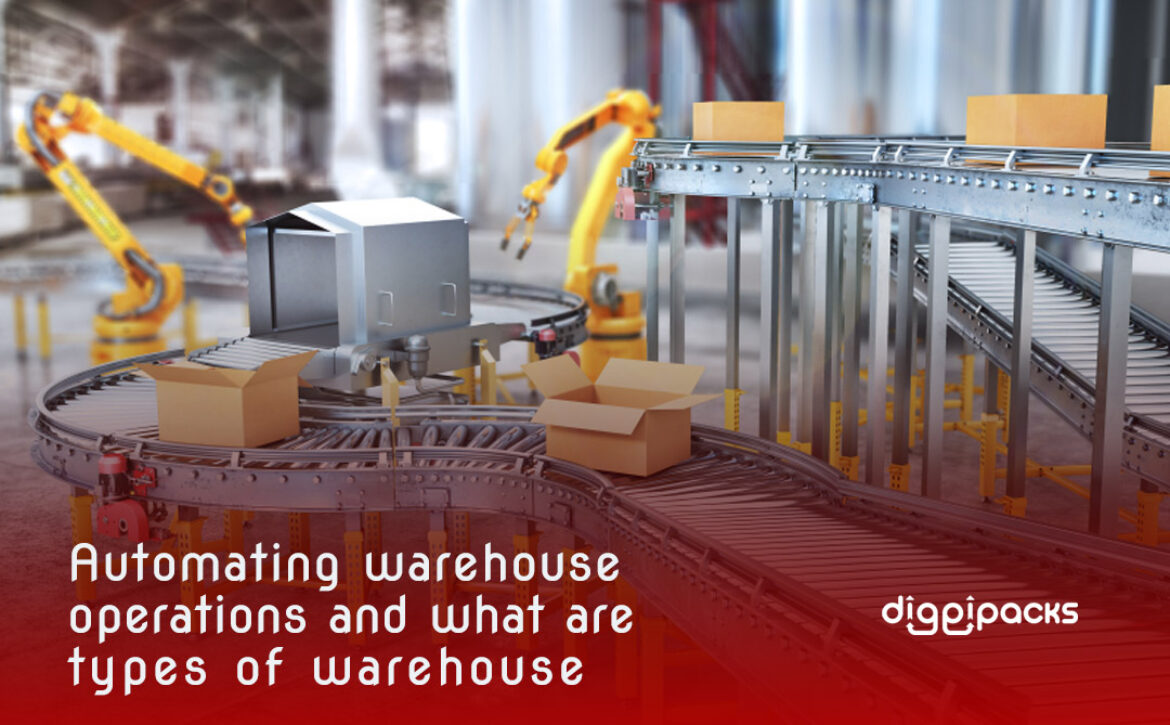
Automating warehouse operations and what are types of Warehouse Automation?

[et_pb_section fb_built=”1″ _builder_version=”3.22″][et_pb_row _builder_version=”3.25″ background_size=”initial” background_position=”top_left” background_repeat=”repeat” hover_enabled=”0″ sticky_enabled=”0″][et_pb_column type=”4_4″ _builder_version=”3.25″ custom_padding=”|||” custom_padding__hover=”|||”][et_pb_text _builder_version=”4.9.4″ background_size=”initial” background_position=”top_left” background_repeat=”repeat” hover_enabled=”0″ header_2_text_color=”#E02B20″ header_2_font_size=”27px” header_3_text_color=”#E02B20″ header_3_font_size=”27px” header_4_text_color=”#E02B20″ header_4_font_size=”27px” sticky_enabled=”0″]

Over the past few years, automating warehouse operations has been said to be one of the most effective ways to improve return on investment (ROI). In addition, there are many aspects covered by automating warehouse operations, and in this article we will learn all the details about automating warehouse operations, what are the most important types of warehouse automation technology and why it is important to implement automating warehouse operations in your company.

What is automating warehouse operations?

Automating warehouse operations are intended to transform stock movement and other warehouse operations through the use of minimal human assistance.

In automating warehouse operations, stock is moved through robots and records are created electronically and logged in automatically without the need for workers to write them down.

How Does Warehouse Automation Work?

automating warehouse operations

How automated warehouses work is about detecting repetitive tasks, manually entering data into picking, storing, and shipping goods, and finding ways to automate them.

That is, using software and technology such as robots and sensors to automate tasks, this ensures that your organization’s vital business processes meet customer demand

It also helps in creating efficient Supply Chain strategies and reducing costs through the use of data-tracking systems.

This data is then transferred to the Enterprise Resource Planning (ERP) system so that it can be retrieved in the future.

Types of Warehouse Automation Technology

There are a large number of types of warehouse automation, due to the many systems and technologies that are used in warehouses.

Which aims, first and foremost, to reduce manual tasks and speed up operations using modern technology and automated systems.

The following are the most important types of automated warehouses:

1. Goods-to-Person (GTP)

It is a type of automated warehouse in which Order Management from person to person through the use of conveyors, lifting systems and other tools.

This type of warehouse automation increases the efficiency of work in warehouses and reduces overcrowding, thus wasting the speed of picking up orders in warehouses, and it is one of the most important forms of automating warehouse operations.

2. Automated Storage and Retrieval Systems (AS/RS)

This type includes a number of automated systems and equipment such as small cranes and vehicles that transport materials.

And this type of warehouse automation is used in large volumes of warehouses.

3. Automatic Guided Vehicles (AGVs):

It is a type of warehouse automation with the least amount of embedded computing power, in which sensor-powered vehicles are used to navigate fixed paths within warehouses.

This type is also suitable only for simple warehouses, while warehouses with space constraints or large human traffic will not be suitable with this type.

4. Autonomous Mobile Robots (AMRs):

This type of automated warehouse is the most flexible of the type AGVs in which GPS systems are used to establish efficient routes through the warehouse.

Obstacle detection systems are also used through laser guidance technology, thus making it possible to navigate safely in warehouses with space constraints or heavy human traffic.

Autonomous Mobile Robots (AMRs) are easy to program through the use of tracks and are quick to implement.

So it is one of the best forms of automating warehouse operations.

5. Pick-to-Light and Put-to-Light Systems

This type of automated warehouse uses portable barcode scanners, which are synchronized with a number of digitally illuminated screens,

Through which warehouse pickers can be directed to where specified items are placed. Thus, Pick-to-Light and Put-to-Light Systems help:

  • Reduce walking and searching time drastically.
  • Reduce human errors while working.

Why Should You Automate Your Warehouse?

You may be wondering why you should automate warehouse operations, and in fact, it is very important.

Warehouses are one of the essential components of logistics management, and therefore any delay in warehouse operation will negatively affect cash flow and customer satisfaction.

Therefore, there is great importance for automating warehouse operations, which helps warehouses in improving their work efficiency and performance, which will lead to:

  • Reduce operating expenses and unnecessary costs of errors.
  • Protect the company’s assets, brand and reputation.
  • Increase the efficiency and productivity of human resources.
  • Minimize manual operations.
  • Dealing with stock keeping units.
  • Optimization of warehouse space, layout and flow.
  • Coordinate the use of material handling equipment such as barcode scanners and laptop computers.

Warehouse Automation Software to the Rescue

automating warehouse operations

Automating warehouse operations will help you effectively and efficiently in meeting the daily challenges of supply chains and relieving those stresses.

It also helps in the effective continuous management as well as the handling of stock quantities, raw materials and other forms more efficiently.

Diggipacks can help you provide the best warehouse automation systems, ensuring you the highest standards of quality, productivity, storage and space.

Diggipacks technologies will also help you track your entire inventory online and without making any contact as well.

Whatever the size of your business it provides you with the necessary space.

[/et_pb_text][/et_pb_column][/et_pb_row][/et_pb_section]
Read More
admin يناير 11, 2026 0 Comments

What Are Material Requirements Planning (MRP) and the benefits of inventory?

[et_pb_section fb_built=”1″ _builder_version=”3.22″][et_pb_row _builder_version=”3.25″ background_size=”initial” background_position=”top_left” background_repeat=”repeat”][et_pb_column type=”4_4″ _builder_version=”3.25″ custom_padding=”|||” custom_padding__hover=”|||”][et_pb_text _builder_version=”4.9.4″ background_size=”initial” background_position=”top_left” background_repeat=”repeat” hover_enabled=”0″ header_2_text_color=”#E02B20″ header_2_font_size=”27px” header_3_text_color=”#E02B20″ header_3_font_size=”27px” header_4_font_size=”27px” header_4_text_color=”#E02B20″ sticky_enabled=”0″]

Companies that produce finished products from purchased components and parts, and manufactured components and parts need a systematic way to plan their needs for those components and parts, and this is what material requirements planning can do.

that beside reducing basic raw materials, the required assemblies, according to what is available in stock or on demand, and finally develop a schedule for arranging the purchased and produced materials.

In this article, we will talk about what material requirements planning as well as its objectives and the most important steps of material requirements planning.

What is Material Requirements Planning (MRP)?

Material requirements planning (MRP) is a computer programmed information system to help manage demand inventory and schedule re-supply orders in time to meet shortages or shortages to assign and execute master production schedules.

are you know The difference between supply chain and logistics explained

What is the importance of Material Requirements Planning (MRP)?

Material Requirements Planning

As for the importance of using material requirements planning (MRP), it is great as it is a set of methods that consider the main production schedule and other information from stock records and product structure records as inputs to determine the requirements and schedule for each item.

Based on the master production schedule, material requirements planning (MRP) creates schedules that specify the parts and special materials required to produce the final items.

Then it proceeds to determine the exact numbers required, and also determine the dates of issuing orders for these materials, based on the delivery periods.

1. Identifying requirements to meet demand

It is the first step in material requirements planning (MRP), through which the customer’s demands are identified as well as the basic requirements to meet his requirements.

A bill of materials is used, which is a list of raw materials and components required to manufacture a final product.

you may like:

5 Reasons to use a Freight Broker for Sending Freight

2. Checking inventory and allocating resources

The second step in MRP is to check demand according to the inventory and resource allocation.

In which requests are checked and verified in your inventory, materials are then distributed through material requirements planning (MRP) accordingly.

3. Scheduling production

The third step is production scheduling, in which the time and labor required for the manufacturing process to be completed and complete is calculated, after which a deadline for delivery is set as well, which is a very accurate step.

4. Identifying issues and making recommendations

The final step in material requirements planning (MRP) is to identify issues and making recommendations and monitor the processes that took place in the previous steps and verify that there are no issues with them.

Also, in this step, alternative or emergency plans can be suggested when there is any delay in the delivery of the deadline.

you may like: Purchase Orders

What are the Benefits of MRP?

There are many benefits that result from the use of material requirements planning (MRP), as it is one of the most important tools that help manage demand inventory and achieve many benefits for facilities.

The following are the most important points that illustrate the benefits of material requirements planning:

  • Reducing inventory levels and thus reducing inventory costs.
  • Improve the efficiency of production scheduling.
  • Improving the level of use of resources (people and equipment).
  • Increasing the customer service level.
  • Respond quickly to market changes.

[/et_pb_text][/et_pb_column][/et_pb_row][/et_pb_section]

Read More
admin يناير 11, 2026 0 Comments

Which order picking method is best for Efficient Order Picking?

[et_pb_section fb_built=”1″ _builder_version=”4.16″ global_colors_info=”{}”][et_pb_row _builder_version=”4.16″ background_size=”initial” background_position=”top_left” background_repeat=”repeat” global_colors_info=”{}”][et_pb_column type=”4_4″ _builder_version=”4.16″ custom_padding=”|||” global_colors_info=”{}” custom_padding__hover=”|||”][et_pb_text _builder_version=”4.17.4″ header_2_text_color=”#E02B20″ header_3_text_color=”#E02B20″ header_3_font_size=”26px” header_4_text_color=”#E02B20″ header_4_font_size=”26px” background_size=”initial” background_position=”top_left” background_repeat=”repeat” hover_enabled=”0″ global_colors_info=”{}” sticky_enabled=”0″]

The order picking process is one of the most important operations in warehouses and stores because it can affect more than half of warehouse operating costs, especially that the rapid execution of orders will affect customer satisfaction and thus increase their retention and avoid losses and additional costs, so it’s method is very important for your organization or Your company, and in this article, we will talk about the concept of order picking as well as the best methods.

What is order picking?

means the process by which products are retrieved from warehouse stock to fulfill customers’ orders, and it is one of the activities that require great accuracy as well as a large number of workers,

Especially since the time is taken in the order picking process will greatly affect the delivery time and thus customer satisfaction.

Order picking in the Warehouse

order picking

Order picking in a warehouse is the process in which the required items are selected from a fulfillment center that meets customer requests, and in fact, it is an activity that requires a lot of costs and requires labor-intensive in warehouses

Also, the costs of picking in a warehouse represent about 55% of the costs of the distribution center, and this process is actually one of the most important operations in any company.

Warehouse picking directly affects the satisfaction of your customers, as well as the reputation of the business and the brand you provide, as well as a direct impact on your profits and revenues as well.

Best Solutions for order picking

Warehouses can improve their systems by enhancing the productivity of their order picking, which will positively affect the efficiency of warehouses and thus customer satisfaction and the efficiency of the entire work.

And the following are the best order picking solutions:

  • Keep your SKUs separately, which will help you reduce costs in searching for the right SKUs, and you can also specify a specific selection site for each SKU.
  • Try to use group strategies when picking orders, which will reduce the time and help you choose more than one order in the same trip and thus increase efficiency, so it is one of the optimal order picking solutions.
  • Enter the horizontal picking system, as it makes it easier to find the necessary items quickly, which will help you to reach the most requested items quickly, and the less requested items use the vertical system with them.
  • Choose the right type of storage for items, thus reducing handling processes so items become fast-moving on the shelves, thus reducing restocking time, and this is one of the best order picking solutions.
  • Collect frequently ordered items in the same area to make it easier to find, thus reducing time and speeding up the delivery process, even more, keeping customers highly satisfied.

you may want to know: Retail stores optimizing Inventory Management, Eases Ecommerce Implementations

diggitrack

Order picking methods

There is more than one method that is used in order picking, and the following are the most important of these methods in some detail:

1. Wave order picking

is one of the most popular methods in which workers are working in specific areas, and after selecting the ordered items they are sorted and then combined into their shipments.

This method helps reduce the time it takes to pick up requests, and it is better than selecting requests from a region and then aggregating at the end.

This method requires a larger number of workers and is more suitable for companies or institutions that have a higher number of picks per order

2. Cluster order picking

The second popular method is Cluster order picking, in which more than one order is picked at the same time so that workers pick a large group of items for multiple orders.

The most common method of this type is the use of a cart loaded with multiple containers, which keeps orders organized and reduces errors.

3. Zone order picking

In this method, the warehouse is divided into zones and each worker is assigned a zone to pull the required items from, then pass an order container into the next zone until the entire order is collected.

This method is the best picking method for large warehouses that suffer from overcrowding.

4. Pick and pass

It is another popular order picking method, in which warehouses are also divided but workers pick SKUs for multiple orders simultaneously within their own district.

Then the containers are passed to the next area, and sometimes the request can be completed without the need for any further passes.

5. Batch order picking

It is a multi-method, in which more than one order is worked on at the same time, which is the best way for companies or institutions that have multiple orders at the same time, and this method will reduce the time for selecting items in each picking cycle.

6. Single order picking

order picking

is the most used order picking method, but it is also the most time-consuming method in warehouses, as each worker in this method works on one order at a time.

will be suitable for those who have smaller warehouses that handle few daily orders.

[/et_pb_text][/et_pb_column][/et_pb_row][/et_pb_section]

Read More
admin يناير 11, 2026 0 Comments

Physical Inventory: types and Best Practices

[et_pb_section fb_built=”1″ _builder_version=”3.22″][et_pb_row _builder_version=”3.25″ background_size=”initial” background_position=”top_left” background_repeat=”repeat”][et_pb_column type=”4_4″ _builder_version=”3.25″ custom_padding=”|||” custom_padding__hover=”|||”][et_pb_text _builder_version=”4.9.4″ background_size=”initial” background_position=”top_left” background_repeat=”repeat” hover_enabled=”0″ sticky_enabled=”0″ header_2_text_color=”#E02B20″ header_2_font_size=”24px” header_3_text_color=”#E02B20″ header_3_font_size=”24px” header_4_text_color=”#E02B20″ header_4_font_size=”24px”]

Physical inventory is one of the most important forms of inventory. After the institution performs the routine work of accounting, which begins with recording in the journal, then posting to the ledger, and finally preparing the trial balance before the inventory, another stage begins, which is the inventory, and there is great importance to the inventory process in general, it is a process An audit of what the institution owns (assets) and all that it is obligated to do towards others (liabilities), and the objective of the physical inventory is to compare what is recorded in the accounting books with what is actually and materially present in the institution, then record the necessary adjustments to match the account balances with what is in reality and Give an honest picture of the organization in the financial statements, and in this article we will show you everything you need to know about physical inventory.

What is Physical Inventory?

Physical inventory is an organized method of calculating a company’s inventory, with employees using a specific method for counting the items and merchandise in managing a warehouse.

Generally, most companies make a physical inventory of their inventory at the end of the reporting period.

Types of Physical Inventory Counts

physical inventory

There is more than one type of physical inventory, and the differences between all of these types lie in the data in the company

There are 4 types of physical-inventory, and the following are those types in some detail:

Manual Completion

It is a type of physical inventory in which paper counts or sheets and pencils are used to record inventory.

The most important feature of Manual Completion is the low cost of the materials used, but it is not without flaws. One of its main drawbacks is its high rate of errors.

Electronic Counting

It is another type of physical inventory in which inventory is recorded through the use of scanners, barcodes or mobile phones.

The most important advantage of Electronic Counting is that it greatly reduces counting errors, and its drawback is that this type requires many materials and additional time to complete.

Cycle Counting

One of the most important types of physical inventory, in which random parts of the inventory are counted at any time, not a specific time, and its most important advantage is that it reduces the additional time for counting as well as the resources used.

Also, through Electronic Counting, the company does not need to stop its operations completely during the counting, but it has a drawback that sometimes it calculates the inventory less than the ideal number required to calculate it.

Full Inventory

The last type of physical inventory, in which an inventory of all inventory is taken at one time, in which case companies bring in temporary employees for the process.

The most important feature of Full Inventory is that it provides reliable and accurate inventory records in the creation of the annual financial document.

As for its drawbacks, it takes a lot of time and labor, and it also requires the operational closure of the company or the entire organization until it is terminated.

Physical Inventory vs. Cycle Counting

There is a difference between Physical Inventory and Cycle Count, physical inventory is a comprehensive annual inventory of most of the company’s assets, while Cycle Counting is on parts of inventory and not the entire inventory.

Physical inventory is not always automated, unlike Cycle Counting, which can always be automated, which saves time and effort, reduces human errors, and provides real-time data.

Therefore, the most effective and accurate inventory processes are those that combine automated systems as well as Cycle Counting.

Benefits Physical Inventory Count

physical inventory

There are a large number of benefits and advantages that physical-inventory provides to its users, and the following are the most important benefits:

  • Maintain accurate and up-to-date inventory records.
  • Provide better forecasts for sales and purchases.
  • Ensure that the right quantity of items is always in stock.
  • Maintaining and satisfying customers.
  • The ability to meet your customers’ requests immediately or tell them when they will be fulfilled.
  • Improving the profits of the company or organization in general.
  • Plan for any losses and avoid depreciation of the items or products you own.
  • Avoid the high cost of storing items.

you may need to know : Retail stores: optimizing Inventory Management, Eases Ecommerce Implementations

What are Issues with Physical Inventory?

Despite the great benefits and advantages provided by the physical-inventory method, it also faces some problems, as it takes a long time and also takes a lot of time to complete.

Also, during the physical inventory process, companies sometimes close their operations, thus not meeting the demands and needs of customers during that time.

Also, the biggest problem that may make a number of companies do not use this method in the inventory is that some

Companies do not have enough staff to perform a complete physical inventory

Sometimes inconsistencies occur, as some internal employees do not record inventory accurately or incorrectly categorize items.

[/et_pb_text][/et_pb_column][/et_pb_row][/et_pb_section]

Read More
admin يناير 11, 2026 0 Comments

Days outstanding inventory – days sales in inventory

[et_pb_section fb_built=”1″ _builder_version=”3.22″][et_pb_row _builder_version=”3.25″ background_size=”initial” background_position=”top_left” background_repeat=”repeat”][et_pb_column type=”4_4″ _builder_version=”3.25″ custom_padding=”|||” custom_padding__hover=”|||”][et_pb_text _builder_version=”4.9.4″ header_2_text_color=”#E02B20″ header_2_font_size=”24px” header_3_text_color=”#E02B20″ header_3_font_size=”24px” header_4_text_color=”#E02B20″ header_4_font_size=”24px” background_size=”initial” background_position=”top_left” background_repeat=”repeat” hover_enabled=”0″ sticky_enabled=”0″]

Days outstanding inventory is one of the most important concepts that must be well understood, as it measures the average number of days that the company will keep in stock before it is transferred to actual sales, and this greatly affects the cash transfer cycle and shows the company’s ability to transfer its investments to Criticism, and in this article, we will talk about all the details of the days outstanding inventory and its calculation method, especially as it significantly affects the company’s performance.

What are days sales in inventory?

Days sales of inventory (DSI) is a financial ratio that shows the average time it takes a company to convert its inventory into actual sales, and this time is usually measured in days.

The day’s sales of inventory (DSI) take more than stock, and is also defined as the average age of inventory, days outstanding inventory (DIO), days in inventory (DII), days sales in inventory, or days inventory and is interpreted in multiple ways.

It is also one of the most important financial ratios that can be interpreted in more than one way. It can refer to the liquidity ratio in the stock or the number of days that the stock will last in the company.

In general, the fewer the day’s sales of inventory (DSI), the better for the company and the less loss it will have.

you may need to know: Physical Inventory: types and Best Practices

The day’s sales in inventory formula

days outstanding inventory

There is great importance for calculating the day’s sales of inventory (DSI), as it affects the company’s financial position and inventory. There is a specific formula to be able to calculate the day’s sales of inventory (DSI), which is as follows:

  • (Inventory / Cost of Sales)* (No. of Days in the Period)

As we mentioned, the smaller the output, the better for the company and its inventory, so it is able to convert its sales into inventory in the shortest possible time.

Importance of Days Sales Inventory to Businesses and Investors

The Days Sales Inventory to Business and Investors is also very important, as it helps them better:

  • Manage their company’s inventory, and it helps them determine how long their company needs to turn their existing inventory into sales.
  • Knowing the extent of inventory liquidity, the smaller its output, the more positive it is for the company, as it shows it that it is able to convert its inventory to cash quickly.

you may need to know: 5 Strategies to build Supply Chain Resilience in a Connected World

What are days outstanding inventory (DIO)?

As mentioned earlier, the concept of Days outstanding inventory (DIO) is not different from the concept of days sales of inventory (DSI), both of which have the same meaning but no more.

Whereas, Days outstanding inventory (DIO) refers to the average number of days it takes a company to replace its inventory for actual sales.

The Days outstanding inventory (DIO) can be used to optimize a company’s marketing, sales, and pricing strategies, as well as product pricing, based on consumer demand and spending patterns.

How to improve days outstanding inventory

Due to the great importance of days outstanding inventory to any company, companies should try to improve it on an ongoing basis.

The following are a number of ways that can help you in improving the days outstanding inventory:

  • Accurately increase forecasting and planning, in order to address inconsistencies between actual sales and projected sales.
  • Disseminate better, more effective and impactful marketing strategies.
  • Accelerate sales, which will help speed up the monetization of your inventory.
  • Use some techniques, such as on-time delivery, to improve your company’s inventory levels.
  • Provide some offers and discounts that will help you get rid of obsolete inventory quickly.

you may need to know: What is a Bonded Warehouse? Our Guide in logistics

Why should I use the Days Outstanding Inventory formula?

days outstanding inventory

The days outstanding inventory (DIO) can be calculated by the following formula, which will give the same output as the first concept, with only different inputs, where:

  • DIO = average inventory/cost of goods sold x number of days

Thus, the lower the days outstanding inventory (DIO) the better for the company, this means that the company’s inventory liquidity is high, and therefore it can convert its inventory to sales quickly.

[/et_pb_text][/et_pb_column][/et_pb_row][/et_pb_section]
Read More
admin يناير 11, 2026 0 Comments

What is ecommerce fulfillment guide to grow your business?

[et_pb_section fb_built=”1″ _builder_version=”4.16″ global_colors_info=”{}”][et_pb_row _builder_version=”4.16″ background_size=”initial” background_position=”top_left” background_repeat=”repeat” global_colors_info=”{}”][et_pb_column type=”4_4″ _builder_version=”4.16″ custom_padding=”|||” global_colors_info=”{}” custom_padding__hover=”|||”][et_pb_text _builder_version=”4.17.4″ header_2_text_color=”#E02B20″ header_2_font_size=”27px” header_3_text_color=”#E02B20″ header_3_font_size=”27px” header_4_text_color=”#E02B20″ header_4_font_size=”27px” background_size=”initial” background_position=”top_left” background_repeat=”repeat” hover_enabled=”0″ global_colors_info=”{}” sticky_enabled=”0″]

ecommerce fulfillment is considered part of the ecommerce process, which includes performing many tasks such as picking and filling orders, as well as executing other ecommerce orders, so ecommerce fulfillment is an integral part of your work, and it will help you greatly in improving your business and enhancing customer satisfaction as well as Significantly increase your revenue, and in this article we will explain to you all the details about ecommerce fulfillment.

What is ecommerce fulfillment?

The ecommerce fulfillment are those centers that help you in the execution of e-commerce orders, as they are the steps taken to receive, process and deliver orders to customers.

It is the third party company that you appoint to complete the steps for fulfilling ecommerce orders, and it is also one of the indispensable tools in your business.

Why Does Your Business Need ecommerce fulfillment?

You may be wondering why you might use ecommerce fulfillment, and in fact, the use of ecommerce fulfillment in your business has become very important.

Where ecommerce fulfillment helps you in managing a warehouse, fulfilling orders, and arranging delivery of your product to the customer at the last mile.

Especially since more than 90% of customers suffer from poor delivery problems, as well as delays in delivering orders, and this means that there is a big problem in customer satisfaction with the service provided.

Ecommerce fulfillment can help you achieve customer satisfaction, and even make them come back to buy from your store again, by simplifying and improving your fulfillment chain.

Types of ecommerce fulfillment Models

ecommerce fulfillment

Types of eCommerce Fulfillment Models

There is more than one way for ecommerce fulfillment, as there are many ecommerce fulfillment forms according to the number of orders in your business as well as the nature of your inventory and the requirements you want to process your orders.

Each of the ecommerce fulfillment forms is appropriate to the nature and size of your business, and the following are the most important ecommerce fulfillment forms:

Self Fulfillment

It is a type of ecommerce fulfillment form, through which you can manage all the fulfillment processes yourself.

That is, you have a small storage center through which you carry out all the processing of your requests yourself, and this model will be suitable for small companies only.

3PL Fulfillment

In this type, the company or facility outsources the fulfillment operations on its behalf, so we call it third party logistics companies.

These companies will do all the logistics for your business, and this type of company has great supplier relationships, thus helping you to facilitate processing orders faster.

3PL also offers unique solutions for handling various orders, and it also offers you the best storage for your goods, so 3PL is the ideal choice for large and medium-sized companies, which gives them a great competitive advantage.

Dropshipping

It is one of the models in which the wholesaler or the manufacturer ships the product directly to the customer, but the merchant does not keep the stock with him,

But as soon as the customer makes an order through the merchant, this order is automatically transmitted to the supplier through which it is processed and delivered order for the end customer.

The dropshipping model is suitable for start-up companies that have not yet found ways to store and process the orders they receive, but it is not suitable for companies that want to expand and grow in the future.

What’s involved in the ecommerce fulfillment process?

There are many e-commerce fulfillment processes, all of which help you improve customer satisfaction and manage your inventory and orders in the best possible way.

Here are the most important e-commerce fulfillment processes:

diggitrack

Storage Services or Warehousing

The first operations that ecommerce fulfillment can provide to you is the storage services, through which your products will be stored in the best possible way.

Stocking through ecommerce fulfillment gives you an opportunity to improve product accessibility as well as speed in product processing while keeping inventory track more effectively.

Inventory Management

The second most important services that ecommerce fulfillment can provide you efficiently is to manage your inventory in the best possible way,

As through ecommerce fulfillment a record is kept of all items available in stock. This helps you to view the stock and its updates on an ongoing basis,

Thus identifying the available products and missing items. All of this will help you in facilitating inventory management,

As well as evaluating customer orders and forecasting your business, and in the end your business will become more organized as well as your supply and demand.

Order Management

In addition to inventory management, ecommerce fulfillment will help you manage orders as well, thus ensuring that no orders are lost and that all of them are properly processed before they are delivered.

Also, through fulfillment centers, the management of orders is synchronized with the warehouse and inventory management system so that the information is continuously and periodically updated.

Order Picking & Packaging

The e-commerce execution chain provides you with accurate picking and filling processes, thus avoiding incorrect order filling processes that may strain your relationship with customers and make them lose confidence in you.

The products are also packaged with the appropriate materials with labels that will facilitate the shipping process, through the fulfillment centers, the orders are packaged correctly.

Shipping & Logistics

Fulfillment centers also help you by providing shipping and other appropriate logistics services, which are one of the most important services they provide to customers, and through which the product is shipped to the end customer.

It will ensure that the products are delivered on time without any delays, thus enhancing the satisfaction of your customers with the service you provide.

Returns Management

In addition to services related to warehouse and order management, as well as shipping and logistics services, the fulfillment centers also provide effective returns handling services.

And that through effective reverse logistics and order management, which will improve the shopping experience of your customers, which will reflect positively on your business.

What is the difference between 3PL and drop shipping?

ecommerce fulfillment

Many people confuse 3PL with the term drop shipping, and in fact there is a difference between them.

As it is through 3PL that requests are traditionally fulfilled, the following is how 3PL works:

  • You buy or make the products yourself and then sell them online.
  • If you purchase merchandise, you are initially making a down payment for those merchandise.
  • Your goods are shipped to third party fulfillment centers.
  • When you get any orders from customers, the shipping center will ship it to the customer from your stock it has.
  • Your profit is the difference between the selling price, merchandise costs, and other expenses.

But drop shipping is different, because you can start with it with less investment, you don’t need to buy goods or send them to outside sources, here’s how drop shipping works:

  • You place the products of other companies in your online store, that is, you do not buy the goods or the inventory available on your online store.
  • Whenever you receive any orders from customers, it is relayed to the original manufacturer or supplier, and that company then ships it directly to your customers.
  • Your profit is the profit set by the original manufacturer or supplier.

So your loss is much less, because you don’t buy or keep inventory, unlike 3PL where you charge upfront for goods as well as the costs of sending goods to fulfillment centers.

[/et_pb_text][/et_pb_column][/et_pb_row][/et_pb_section]

Read More
admin يناير 11, 2026 0 Comments

Improve Customer Satisfaction through on time delivery (OTD)

[et_pb_section fb_built=”1″ _builder_version=”4.16″ global_colors_info=”{}”][et_pb_row _builder_version=”4.16″ background_size=”initial” background_position=”top_left” background_repeat=”repeat” global_colors_info=”{}”][et_pb_column type=”4_4″ _builder_version=”4.16″ custom_padding=”|||” global_colors_info=”{}” custom_padding__hover=”|||”][et_pb_text _builder_version=”4.17.4″ header_2_text_color=”#E02B20″ header_2_font_size=”27px” header_3_text_color=”#E02B20″ header_3_font_size=”27px” header_4_text_color=”#E02B20″ header_4_font_size=”27px” background_size=”initial” background_position=”top_left” background_repeat=”repeat” hover_enabled=”0″ global_colors_info=”{}” sticky_enabled=”0″]

Meeting the expectations and requirements of customers as well as their delivery times is a top priority for every company in the world, and fulfilling customers’ orders on time is very important for any company that wants to succeed and survive in the market, and on time delivery options can help in fulfilling all orders related to operations Executing shipment orders on time, and this will increase customer satisfaction with your business as well as earn their loyalty to you, and in this article we will provide you with all the details about on time delivery and how Diggipacks can help you in fulfilling orders on time.

What is on time delivery (OTD)?

On Time Delivery indicates how you can meet the shipping orders to customers at the time of delivery, and therefore, it is a measure for the extent and forcing orders on time.

Why is on time delivery (OTD) Important?

on time delivery

You are asking for the reason that makes the on time delivery no matter what, and in the truth of the matter to achieve the best cooperation with your customers,

Where they provide them with their orders at the agreed date, which increases the reliability of customers as well as gain their satisfaction and loyalty to your company.

Especially since customers are always expected to get the required products on schedule,

So you should always meet the agreed delivery date, and can be used through on time delivery.

In the case of failure to fulfill the approval date agreed with customers, this will negatively affect your work, and lose customer loyalty and thus damage your business.

Improving On-Time Delivery

Fulfilling customers’ orders in their time is extremely important, so you always need to try to improve your time delivery.

Which will ensure you customer loyalty to your business and earn their trust and satisfy them from your business, and this will reflect positively to your company’s reputation and revenue.

There are many methods that can help you improve your time delivery, as you can use an external company to help you.

Digipack is one of the best companies of course, and will later we will discuss how Digipax can help you improve your time delivery.

Here are a number of the most effective ways they can help you with Improving On-Time Delivery:

  • Create production schedules in your company, provided that they are realistic, and you can do this by communicating with your sales team to reach the optimal operation of the company.
  • Check the efficiency of your monitoring.
  • Establish strong relationships with your suppliers, so you will be able to meet response times and enjoy accurate performance reviews.
  • Reward your employees on an ongoing basis if customer orders are delivered on time.

diggitrack

Reasons for late deliveries

There are many reasons that may result in late deliveries, and therefore should try to avoid those reasons and process them until you keep customer satisfaction.

The following are the most important reasons for delivery:

  • Owning incorrect expectations.
  • Safety Stock Levels are incorrect.
  • There are bad standard operating procedures.
  • Not having accurate shipping documents.
  • Non-compliance with shipping terms.
  • There are problems during transport.
  • The client changes its orders continuously without following the required procedures.
  • There are problems in selecting products.
  • Having errors of output workers.
  • Errors in handling materials.

How to deliver on time?

After you know the importance of on Time Delivery, you will now need to seriously consider how to deliver orders on time without delays.

The following are a number of tips that will help you meet customers’ orders on time and no delay:

  1. Try to understand the reasons for late delivery, analyze its causes.
  2. Focus on steps that address the causes of delays detected in the first step.
  3. Develop an appropriate plan to eliminate and implement those reasons.
  4. Monitor the results of the plan they put, and verify that they have already limited the causes of delays in delivery.

Increase your on time delivery rate with Diggipacks

on time delivery

Diggipacks can help you in Increase your on time delivery rate, through its distinctive services based on the latest technology methods.

Also diggipacks provides customers with best delivery solutions and orders processing, which ensure delivery of orders in its time.

Even after shipping your customers’ orders will help you Diggipacks in follow up each movement and evaluate performance and make sure delivery of shipments in time.

It also will also provide all updates down through your client control panel until the shipping company is finished.

If the Diggipacks team will be scrutinized and ensured that the demand is not connected, so whether your local or international diggipacks shipments will give you the best solutions at the best prices.

[/et_pb_text][/et_pb_column][/et_pb_row][/et_pb_section]

Read More
admin يناير 11, 2026 0 Comments

Warehouse Theft Prevention and How a warehouse management system helps in this?

[et_pb_section fb_built=”1″ _builder_version=”3.22″][et_pb_row _builder_version=”3.25″ background_size=”initial” background_position=”top_left” background_repeat=”repeat”][et_pb_column type=”4_4″ _builder_version=”3.25″ custom_padding=”|||” custom_padding__hover=”|||”][et_pb_text _builder_version=”4.9.4″ background_size=”initial” background_position=”top_left” background_repeat=”repeat” hover_enabled=”0″ header_2_text_color=”#E02B20″ header_2_font_size=”27px” sticky_enabled=”0″ header_3_text_color=”#E02B20″ header_3_font_size=”27px” header_4_text_color=”#E02B20″ header_4_font_size=”27px” text_font_size=”18px”]

Warehouse theft prevention is one of the most important things that warehouse owners should take care of, especially since there are many challenges facing warehouses, and one of the most important challenges is the exposure of those warehouses to theft, which may result in huge losses, and in the recent period, warehouse thefts are frequent. Therefore, warehouse theft prevention has become of great importance, and one of the most important tasks of the warehouse manager is to avoid warehouse theft prevention operations, as well as avoid waste of resources and check that there is no negligence in storage operations, whether from personnel or in the security system and in this article we will show you the best Methods that help warehouse theft prevention.

Warehouse theft prevention

The exposure of warehouses to theft is one of the most common matters, which results in huge losses for various facilities.

Therefore, a large number of warehouse owners seek to provide effective methods that help in warehouse theft prevention, thus maintaining their inventory and reputation in the market.

Tackling warehouse theft by ensuring you can spot it

In order to achieve the best warehouse theft prevention, you first need to make sure that you are able to detect any thefts.

And you can verify thefts by properly tracking the inventory, so you can know the losses that occurred to you.

It is simply possible to track the inventory correctly and know the type of losses incurred by combining stock takes and cycle counts.

Stock takes vs. cycle counting, and how they help to Warehouse Theft Prevention 

warehouse theft prevention

Stock takes and cycle counts can help achieve the best warehouse theft prevention because they help you check inventory repeatedly, and thus verify its accuracy.

One of the most important features of cycle counts is its ability to check inventory without having to stop working in the warehouse, and it can also scan sub-groups at different locations in the warehouse, on a daily or weekly basis and can also be done immediately.

This is one of the most effective methods at warehouse theft prevention because it helps you gain better control over inventory and facilitates the rapid and continuous detection and detection of theft and shortages.

Tips to Warehouse Theft Prevention in your business

And if you want to prevent thefts from happening in your warehouse, here are a number of important tips that will help you prevent warehouse theft and check inventory accuracy in your warehouse:

1. Check the record of new warehouse employees before hiring them

One of the most important things that you should consider before hiring new warehouse employees in your warehouse is to check their history and criminal record,

Which will help you reduce the chances of being robbed by your employees.

2. Establish strict policies about theft and educate your employees about it

The second most important thing about warehouse theft prevention is the need to put in place strict theft policies and zero tolerance for any theft behavior from your employees.

You will also need to take a signature from each employee agreeing to the theft policy and how they will be punished if they do so.

Also, the best way to prevent warehouse theft is to deploy unknown employees to monitor their Co-workers, and immediately report any suspicious activities or intentions of theft.

3. Deal strictly in case of proof of theft in the warehouse

If a theft has been proven in the warehouse, you need to follow the shift record on your warehouse, to check whether the theft occurred while the employees were on duty or not, and from the employees who were on duty.

And if you notice any strange behavior, such as the entry and exit of a particular employee at odd times and repeatedly, you need to check carefully to verify that this employee has nothing to do with the theft that took place.

4. Increase strong administrative presence in warehouses

Strong administrative presence in warehouses is one of the most important factors that helps in effective warehouse theft prevention.

You can use modern technologies that enable administrators to have a strong presence in warehouses and thus deter expected thefts in the warehouse.

5. Restrict access to inventory in the warehouse

One of the important tips for warehouse theft prevention is to try to restrict access to inventory in the warehouse, which you can do by separating the receiving and shipping methods.

Thus preventing non-warehouse employees from accessing the inventory in your warehouse and thus protecting it from chances of being robbed from strangers.

6. Provide strong security systems in your warehouse

First of all, you will need to provide strong security systems in your warehouse, which will help you in facilitating warehouse theft prevention, through:

  • Access control.
  • Distribution of CCTV cameras and verify that they are in a hidden location so that no one will notice. You also have to provide all warehouse exits with security devices and security personnel,

To inspect and check all vehicles leaving the warehouse to verify that no unauthorized stock is leaving.

Also, one of the tips you need is to prevent the presence of any private cars next to the warehouse, so that some people do not take advantage of them in theft operations.

7. Understand the realities of theft among your employees

One of the most important tips is to try to know the conditions of each warehouse employee you have, and verify his motives, and the motives of poverty are many, some of them are due to poverty or need, and some are due to greed.

Check all these points and try not to mistreat your employees and give them the appropriate wages for their effort and value them for any special activity or extra effort.

How a warehouse management system helps to Warehouse Theft Prevention

warehouse theft prevention

Another important factor that helps more effectively in warehouse theft prevention is the implementation of a warehouse management system.

The application of the warehouse management system is one of the best modern technologies that help you in controlling inventory and controlling warehouses,

By providing accurate inventory records, and determining what resources you have and what you do not.

Warehouse management systems also help you identify lost stock immediately. And all these amazing features and services provided by the warehouse management system will give you the possibility of warehouse theft prevention.

Diggipacks offers you the best managing a warehouse that help you monitor your inventory and warehouse and follow up on all operations accurately and easily in a fully automated and accurate way.

[/et_pb_text][/et_pb_column][/et_pb_row][/et_pb_section]

Read More
admin يناير 11, 2026 0 Comments

What Is freight‌ ‌handlers‌? Definition and Skills

[et_pb_section fb_built=”1″ _builder_version=”3.22″][et_pb_row _builder_version=”3.25″ background_size=”initial” background_position=”top_left” background_repeat=”repeat”][et_pb_column type=”4_4″ _builder_version=”3.25″ custom_padding=”|||” custom_padding__hover=”|||”][et_pb_text _builder_version=”4.9.4″ background_size=”initial” background_position=”top_left” background_repeat=”repeat” hover_enabled=”0″ header_2_text_color=”#E02B20″ header_2_font_size=”27px” header_3_text_color=”#E02B20″ header_3_font_size=”27px” header_4_text_color=”#E02B20″ header_4_font_size=”27px” sticky_enabled=”0″]

During the international shipping logistics process, individuals need specialists in moving goods smoothly through a network of roads, seaports, and airports, and those specialists are freight‌ ‌handlers‌, and they are professionals in dealing with the movement of goods, and in this article, we will explain to you all the details about freight‌ ‌handlers‌ and their most important skills.

What are freight‌ ‌handlers‌?

Freight handling is that process in which cargo is loaded and unloaded from the point of origin to its final point, freight‌ ‌handlers‌ also ensure that the cargo will be transported more efficiently through all phases until it reaches its final destination.

Freight handler skills

There are a number of skills that a Freight handler needs in order to be able to perform the tasks and functions that we mentioned in the previous part.

And the following are the most important skills that a Freight handler needs to complete his work:

  • The ability to stand and work for long periods of time.
  • The possibility of lifting heavy objects and massive equipment.
  • Possess basic computer skills to deal with modern systems to run various programs related to the field of shipping and transportation.
  • Possess leadership skills.
  • Ability to communicate and deal with the team and staff.
  • Understand workplace safety guidelines and safety stock.

What equipment is used in freight handling?

freight‌ ‌handlers‌

During the freight‌ ‌handlers‌ process, the freight handler needs a number of basic tools and equipment.

Especially since a large number of freight‌ ‌handlers‌ are used to transport shipments of special tools and equipment.

The following are the most important pieces of equipment used in the freight‌ ‌handlers‌ process:

1. Forklifts

It is one of the most important tools that the freight handler needs in the process of transporting freight, and it is used to unload and ship goods, especially heavy or bulky goods.

Forklifts also help the freight handler to move bulky packages in storage facilities and move them from one place to another with ease.

2. Carts

The second most important tool that the freight handler needs in their business is Carts, which helps in transporting parcels from one vehicle to another and it can also put large parcels inside warehouses.

3. Pallets

Pallets can be used to keep large packages mounted on pallets stable while they are being moved, allowing the freight handler to move those large packages through the use of forklifts.

4. Dollies

These are small carts that help the freight handler in transporting heavy packages that cannot be lifted manually.

5. Pallet jacks

A simpler form of forklift helps a freight handler move and store large items in storage facilities.

4. Scanners

It is the equipment used by the freight handler to record the codes of shipment items that arrive or leave the processing area,

And this feature helps customers and shipping companies to know the location of the items during the shipping process.

5. Inventory software

Freight handler uses a digital inventory management system that helps them track and locate items or shipments, thus making them easily accessible and traceable.

6. Reach trucks

Handling cargo in small spaces as well as narrow warehouse aisles, Reach trucks are a variant of specialized forklifts.

7. Protective materials

It is one of the most important materials that the freight handler depends on during the transport of goods,

And it is a protective material that protects the shipments during their journey so that they are not exposed to any damage or damage.

8. Loading ramps

It is one of the most important tools used in the process of cargo handling, which helps in loading or unloading goods from trucks, ships, or aircraft.

Loading ramps allow for fast and safe transportation, and the use of wheeled devices to move large items more easily for operators.

What do freight‌ ‌handlers‌ do?

freight‌ ‌handlers‌

Similarly, a Freight handler is that person responsible and specialized in loading and unloading the goods at the point of origin until they reach their final destination.

Freight handler needs a number of important skills in order to succeed in performing its task, and the following are the most important tasks:

  • Operate transporting, unloading, and loading machines.
  • Transport the goods to the required destinations.
  • Storage of goods on the sidewalks and in warehouses.
  • Keep track of the locations of shipments in storage units.
  • Ensure the safe arrival of shipments.
  • Keep records of shipment.
  • Packaging and packing.
  • Labeling of merchandise.
  • Sorting goods and shipments in warehouses.

How to Become a Freight Handler

In order to become a Freight handler, you will need to have a number of important skills in order to be able to perform the basic functions that you need in the cargo handling process.

Especially since freight‌ ‌handlers‌ manage the entry and exit of large trucks containing items for warehousing or delivery.

In addition, freight‌ ‌handlers‌ check and validate the goods before they are cleared for storage or leave the warehouse,

So in order to become a successful Freight handler, you will need a number of basic skills and certificates that indicate your ability to operate forklifts and deal with various equipment.

[/et_pb_text][/et_pb_column][/et_pb_row][/et_pb_section]
Read More
admin يناير 11, 2026 0 Comments

What is stocktaking‌? The complete 2020 guide

[et_pb_section fb_built=”1″ _builder_version=”3.22″][et_pb_row _builder_version=”3.25″ background_size=”initial” background_position=”top_left” background_repeat=”repeat”][et_pb_column type=”4_4″ _builder_version=”3.25″ custom_padding=”|||” custom_padding__hover=”|||”][et_pb_text _builder_version=”4.9.4″ background_size=”initial” background_position=”top_left” background_repeat=”repeat” hover_enabled=”0″ header_2_text_color=”#E02B20″ header_2_font_size=”27px” header_3_text_color=”#E02B20″ header_3_font_size=”27px” header_4_text_color=”#E02B20″ header_4_font_size=”27px” sticky_enabled=”0″]

The stocktaking‌ process is one of the most important processes that help the company determine what it owns of items and materials, and it is one of the accounting operations that take place either at the end or middle of the financial period, and some companies do it on a quarterly basis, and the stocktaking‌ process is done by comparing the balances of assets, debts And the items that are accounted for, with what is already there, and therefore we determine the difference and then search for the reasons for the differences to make the accounts recorded balances exactly match what is in reality, and in this article we will show you all the details about stocktaking‌, its importance and how it is done.

What is stocktaking‌?

As for the concept of stocktaking‌, it means the physical verification of the quantity and condition of the stock available in the company or factory, which helps the company to identify cases of stock shortages.

The stocktaking‌ process is one of the most important processes that help in auditing your stock, which contributes to its better control and thus achieving effective stock management.

Benefits of the stocktaking‌

stocktaking‌

Now that we have learned about the importance of stocktaking‌ and its effective role in inventory management, we will now move on to show the benefits of stocktaking:

  • It keeps your inventory up-to-date, by providing accurate data on inventory continuously.
  • Detecting the factors that negatively affect the stored items, as stocktaking‌ helps you know whether the storage conditions you provide for the items are appropriate or not.
  • Detecting theft operations, thus trying to improve security measures and reduce and limit theft.
  • Optimize your sales strategies, through continuous monitoring of inventory and knowledge of high-selling and low-selling items.

Why is stocktaking‌ important?

stocktaking‌ is considered one of the important processes in inventory management and auditing, which positively affects the continuation of work efficiently and without problems.

The following are a number of points that illustrate the importance of stocktaking‌:

  • Recognize and remedy your inventory shortage.
  • Knowing the damaged stock or the one that is close to being damaged.
  • Detecting cases of stock theft.
  • Get to know your turnover.
  • Detecting thefts and identifying inventory shrinkage issues.
  • Identify issues with damaged inventory and missing or unfulfilled requisitions.
  • Expose poor inventory control practices.
  • Ensure that business objectives are achieved by addressing issues that will arise during the stocktaking‌ process.
  • Determining the performance of products and thus identifying the popular and stagnant products.
  • Maximize the performance of storage requests operations.
  • Strengthen pricing strategies by analyzing your sales and profits, identifying and thus maximizing profits.

How do you do stocktaking‌?

stocktaking‌ is a meticulously organized process for the purpose of maintaining and continuity of the business.

Although this process varies by business, there are a number of basic steps when conducting stocktaking‌, as:

  • Before beginning the count, pause sales and purchases, take time to resolve discrepancies and resolve issues, and eliminate any distractions.
  • During the count process, stock all salable stock, recording all stock levels on the shelf.
  • After the count process, estimate the inventory correctly and check your evaluation of it again, then renew the inventory items that are close to being sold out, check the discrepancies in the inventory and determine their causes.

How often should stocktaking‌ be done?

To be able to maintain good stocktaking levels, as well as eliminate stock losses, and ensure accurate stocktaking records, you will need to do stocktaking once a month.

But make sure you do it right so that it doesn’t go too long without fruitful results.

How to improve your stocktaking?

stocktaking‌

As for the way in which you can improve stocktaking, there is more than one way in which you can enhance your stocktaking by relying on a number of modern tools and techniques, as:

Barcode scanning

Which will help you speed up the process and reduce the chance of making mistakes while taking stock counts.

Cloud-based inventory management

Which will help you effectively in monitoring inventory levels and actual response, thus keeping track of inventory movements and maintaining up-to-date information on your inventory.

Regular stock takes.

which helps you address any issues that may arise in stock, thus identifying the best as well as underperforming products.

Allocate one counter

Which helps to avoid making mistakes while collecting huge information, especially since many employees miscommunicate with each other in teamwork.

Stocktaking with inventory management software

Inventory management software can help you to make the best stocktaking, as it has many modern techniques and methods.

Which make the stocktaking process more accurate and less time consuming as well. Diggipacks provides you with the best inventory management software that helps you in:

  • Updating products as quickly as possible.
  • Moving inventory from one place to another with ease.
  • Enabling you to know all the movements of your inventory periodically.
  • Determining the spaces needed to store it without any human intervention.

[/et_pb_text][/et_pb_column][/et_pb_row][/et_pb_section]

Read More
admin يناير 11, 2026 0 Comments