ديجيباكس تغيّرت… وأصبحت Fastcoo Network by Diggipacks — اكتشف النموذج الجديد 🚀 التفاصيل ←

Category: الحلول التقنية

Days outstanding inventory – days sales in inventory

[et_pb_section fb_built=”1″ _builder_version=”3.22″][et_pb_row _builder_version=”3.25″ background_size=”initial” background_position=”top_left” background_repeat=”repeat”][et_pb_column type=”4_4″ _builder_version=”3.25″ custom_padding=”|||” custom_padding__hover=”|||”][et_pb_text _builder_version=”4.9.4″ header_2_text_color=”#E02B20″ header_2_font_size=”24px” header_3_text_color=”#E02B20″ header_3_font_size=”24px” header_4_text_color=”#E02B20″ header_4_font_size=”24px” background_size=”initial” background_position=”top_left” background_repeat=”repeat” hover_enabled=”0″ sticky_enabled=”0″]

Days outstanding inventory is one of the most important concepts that must be well understood, as it measures the average number of days that the company will keep in stock before it is transferred to actual sales, and this greatly affects the cash transfer cycle and shows the company’s ability to transfer its investments to Criticism, and in this article, we will talk about all the details of the days outstanding inventory and its calculation method, especially as it significantly affects the company’s performance.

What are days sales in inventory?

Days sales of inventory (DSI) is a financial ratio that shows the average time it takes a company to convert its inventory into actual sales, and this time is usually measured in days.

The day’s sales of inventory (DSI) take more than stock, and is also defined as the average age of inventory, days outstanding inventory (DIO), days in inventory (DII), days sales in inventory, or days inventory and is interpreted in multiple ways.

It is also one of the most important financial ratios that can be interpreted in more than one way. It can refer to the liquidity ratio in the stock or the number of days that the stock will last in the company.

In general, the fewer the day’s sales of inventory (DSI), the better for the company and the less loss it will have.

you may need to know: Physical Inventory: types and Best Practices

The day’s sales in inventory formula

days outstanding inventory

There is great importance for calculating the day’s sales of inventory (DSI), as it affects the company’s financial position and inventory. There is a specific formula to be able to calculate the day’s sales of inventory (DSI), which is as follows:

  • (Inventory / Cost of Sales)* (No. of Days in the Period)

As we mentioned, the smaller the output, the better for the company and its inventory, so it is able to convert its sales into inventory in the shortest possible time.

Importance of Days Sales Inventory to Businesses and Investors

The Days Sales Inventory to Business and Investors is also very important, as it helps them better:

  • Manage their company’s inventory, and it helps them determine how long their company needs to turn their existing inventory into sales.
  • Knowing the extent of inventory liquidity, the smaller its output, the more positive it is for the company, as it shows it that it is able to convert its inventory to cash quickly.

you may need to know: 5 Strategies to build Supply Chain Resilience in a Connected World

What are days outstanding inventory (DIO)?

As mentioned earlier, the concept of Days outstanding inventory (DIO) is not different from the concept of days sales of inventory (DSI), both of which have the same meaning but no more.

Whereas, Days outstanding inventory (DIO) refers to the average number of days it takes a company to replace its inventory for actual sales.

The Days outstanding inventory (DIO) can be used to optimize a company’s marketing, sales, and pricing strategies, as well as product pricing, based on consumer demand and spending patterns.

How to improve days outstanding inventory

Due to the great importance of days outstanding inventory to any company, companies should try to improve it on an ongoing basis.

The following are a number of ways that can help you in improving the days outstanding inventory:

  • Accurately increase forecasting and planning, in order to address inconsistencies between actual sales and projected sales.
  • Disseminate better, more effective and impactful marketing strategies.
  • Accelerate sales, which will help speed up the monetization of your inventory.
  • Use some techniques, such as on-time delivery, to improve your company’s inventory levels.
  • Provide some offers and discounts that will help you get rid of obsolete inventory quickly.

you may need to know: What is a Bonded Warehouse? Our Guide in logistics

Why should I use the Days Outstanding Inventory formula?

days outstanding inventory

The days outstanding inventory (DIO) can be calculated by the following formula, which will give the same output as the first concept, with only different inputs, where:

  • DIO = average inventory/cost of goods sold x number of days

Thus, the lower the days outstanding inventory (DIO) the better for the company, this means that the company’s inventory liquidity is high, and therefore it can convert its inventory to sales quickly.

[/et_pb_text][/et_pb_column][/et_pb_row][/et_pb_section]

Read More
admin يناير 11, 2026 0 Comments

Ready for the future of Green Logistics – Leverage technology with diggipacks

[et_pb_section fb_built=”1″ _builder_version=”3.22″][et_pb_row _builder_version=”3.25″ background_size=”initial” background_position=”top_left” background_repeat=”repeat”][et_pb_column type=”4_4″ _builder_version=”3.25″ custom_padding=”|||” custom_padding__hover=”|||”][et_pb_text _builder_version=”4.9.4″ header_2_text_color=”#E02B20″ header_2_font_size=”24px” header_3_text_color=”#E02B20″ header_3_font_size=”24px” header_4_text_color=”#E02B20″ header_4_font_size=”24px” background_size=”initial” background_position=”top_left” background_repeat=”repeat” hover_enabled=”0″ sticky_enabled=”0″]

All countries seek to reduce environmental pollution and preserve the environment in various possible ways, green logistics have emerged, which aims to reduce and reduce the environmental impact of logistics activities, and this includes all activities of forward and reverse flows of digital products, as well as information and services between the point of origin and the point of consumption, while trying to create sustainable values For different organizations or companies, using a balance of economic and environmental efficiency, and in this article we will talk about everything you need to know about green logistics and how to become environmentally friendly in your logistics.

What is the meaning of Green Logistics?

green logistics

Green logistics means all sustainable measures and policies through which the environmental impact of various logistics activities can be reduced.

The concept of green logistics will in turn affect all configurations and operations of fast logistics services. As well as the nature and form of tools and equipment used in the distribution, transportation, and storage of the goods themselves.

And this includes all the activities of the forward and reverse flows of products and services between the point of origin and the point of consumption.

In fact, green logistics can be traced back to the mid-1980s. At the time, it was understandable to characterize logistics systems and approaches that use advanced technology and equipment to minimize environmental damage during logistics operations.

The objectives of green logistics

As for the objectives of green logistics services, they are in fact aimed at trying to find a balance between the environment and the economy, through many methods and tools.

The following are the most important objectives of green logistics services:

  • Measure the carbon footprints of logistics and its operations, in order to establish a point of consideration for sustainability measures as well as manage their outcomes.
  • Reduce soil, water and air pollution.
  • Reducing noise and hustle, by analyzing the impact of logistical areas, specifically those related to transport operations.
  • Guidance in the use of supplies.
  • Reuse containers as well as recycle packaging.
  • Spreading sustainability in supply chains resilience, product design and packaging as well.

How to apply eco-friendly logistics approaches?

There are a number of effective strategies and ways in which you can include eco-friendly logistics approaches to your organization or company, the most important of which are:

  • Base your purchasing policies on eco-friendly standards, such as product characteristics and use of eco-friendly packaging, as well as manufacturing processes that are eco-friendly.
  • Improve the management of your transport fleet, by purchasing vehicles that operate in a way that preserves the environment, as well as relying on systems that help in planning delivery routes and determining the appropriate loads.
  • Owning a warehouse that follows the standards of sustainable construction and management, through the use of logistic buildings whose design includes measures to protect the environment.
  • Reducing the recycling of waste produced in your warehouse, by using sustainable waste management standards, such as trying to sort waste by materials to be recycled.
  • Optimize reverse logistics and inventory management, and utilize quality control processes for returned products.
  • Efficiently pick up your orders.

Green Logistics Strategies for Eco-Friendly Delivery

There are also a number of green logistics strategies, which are in fact environmentally friendly and related to delivery operations, and the following are the most important of those strategies:

Free delivery mode with a longer delivery period

Especially since delivery on the same day of the order is a huge waste, and a large percentage of customers prefer to wait for a longer time for delivery than to get the delivery process free of charge, and this will be more suitable for the environment and for the customer as well.

Combine orders together to reduce the number of vehicles

Reducing the number of operating vehicles means reducing the risk to the environment and pollution as well. You can collect orders in the same area and only one vehicle delivers them, this will reduce the risk to the environment as well as increase energy efficiency.

Intelligent fleet management

The use of smart fleet management, which includes some algorithms and working mechanisms through which it can prioritize sending the green request first.

Using bicycles for local delivery

One of the most environmentally friendly ways of delivering deliveries is to use bicycles to deliver orders locally, so there are no emissions of gases during the delivery process.

Applying Green Logistics to Supply Chains

Due to the great importance of green logistics, a large number of companies have started investing in green logistics and implementing it in their supply chains.

Especially since green logistics contributes significantly to reducing supply chain costs, so its introduction is in fact a win-win for both companies and the environment.

Go green in your logistics

green logistics

So you also need to start introducing green logistics into your business, which will make your company or organization ready for the future in which all businesses will be sustainable.

Diggipacks services can help you transition to green logistics, as it provides many eco-friendly logistics services.

Also it designed a smart and sustainable system to deal with all the problems of customers who were suffering from poor storage and delivery with integrated solutions.

[/et_pb_text][/et_pb_column][/et_pb_row][/et_pb_section]

Read More
admin يناير 11, 2026 0 Comments

Top 4 Inventory Management Trends to Know in 2022

[et_pb_section fb_built=”1″ _builder_version=”3.22″][et_pb_row _builder_version=”3.25″ background_size=”initial” background_position=”top_left” background_repeat=”repeat”][et_pb_column type=”4_4″ _builder_version=”3.25″ custom_padding=”|||” custom_padding__hover=”|||”][et_pb_text _builder_version=”4.9.4″ header_2_text_color=”#E02B20″ header_2_font_size=”24px” header_3_text_color=”#E02B20″ header_3_font_size=”24px” background_size=”initial” background_position=”top_left” background_repeat=”repeat” hover_enabled=”0″ sticky_enabled=”0″]

There are a number of inventory management trends that all companies and employers must follow, and companies incur the costs of storage, tracking and securing inventory, and poorly managed inventories can create major financial problems for businessmen, whether mismanagement leads to stockpiling or inventory shortage, In this article, we will present the most important inventory management trends, and we will first learn what inventory management and its systems are.

What Is Inventory Management?

Before talking about inventory management trends, we will first need to know what inventory management is, and inventory management is one of the tools business owners use to assess the performance of their organization.

By using the right software, they can keep track of inventory levels at any given moment, ensuring that you are on the right track to profit and success.

Inventory Management Trends

Inventory Management Trends

Inventory management is one of the most important things that can affect the efficiency of the work of any business, and there are a number of inventory management trends that any business owner or business must take into account.

Below are Top 4 Inventory Management Trends to Know in 2022:

1. Sourcing Supply Chain Management

One of the most important inventory management trends is the attempt to manage supply chain sourcing. After the Corona pandemic, there has been a reorganization of manufacturing functions.

Especially since international supply chains have been reduced in prevalence during that period, this has made all companies rethink their supply chain strategies.

Then the companies have realized that it is better for them to diversify their supply chain options.

2. Rethinking Inventory Forecasting

One of inventory management trends to consider in 2022 is a rethink of inventory forecasting. Previously, companies could use inventory management software to forecast inventory trends and plan demand strategies with them.

But now it’s getting more complicated, which of course makes companies need to rethink inventory forecasting.

After the Corona pandemic, companies need to respond to problems differently, you will first need to respond to the problem by taking temporary measures to prevent damage to your company for that period.

And then take other steps to restart the company’s activity, and then make a renewal through learning and developing policies that help the company to stabilize in the long term.

3. Automating Warehouse Processes

The automation of warehouse operations is one of the most important inventory management trends to consider in 2022, which will help in better managing a warehouse, enhances efficiency and customer satisfaction.

And there are a number of methods used in automating warehouse management:

  • Use barcode scanners to scan merchandise, settle orders, and update inventory records.
  • Pick up all items for multiple sales orders in one trip.

4. Inventory Management Software  

The most common inventory management trends is the use of inventory management software, as there is great importance to use inventory management software in companies,

which will help you in managing supply chains, preparing reports to identify various trends, as well as automating warehouse operations.

Fastcoo offers one of the best Inventory Management System with modern technology that distributes shipments automatically with a programmed voice system for each case in your warehouses.

The following are the most important services that the Inventory Management Software provided by Fastcoo to you:

  • Know the destination of the shipment by simply scanning the barcode.
  • Providing a sound system for each case and city.
  • The presence of an intelligent system that refuses to receive duplicate shipments and informs you of the error
  • Automatic update of each shipment once shipments are cleared.
  • Provide alerts on shipments that have not been sent for delivery
  • Extracting data and reports and saving them to this system
  • Automatically print labels for each shipment.
  • Preparing shipments for delivery so you don’t miss any shipment.
  • Provide alerts for duplicate or unregistered shipments

The future of logistics

Inventory Management Trends

The most important thing that you should consider besides the four Inventory Management Trends is to look to the future, they are renewable and development, which will serve as success and the basis for your company to continue in the market.

Fastcoo can provide you with the best inventory management software, as well as Diggipacks, they are able to help you overcome many challenges.

[/et_pb_text][/et_pb_column][/et_pb_row][/et_pb_section]
Read More
admin يناير 11, 2026 0 Comments

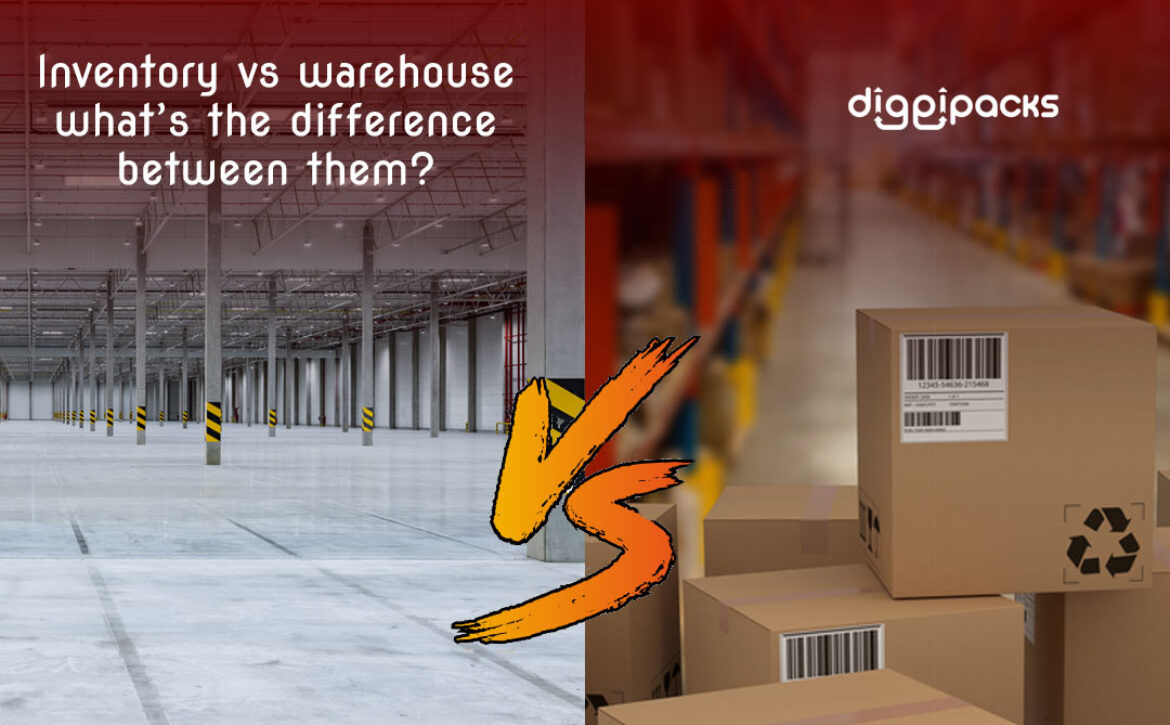
Inventory vs warehouse what’s the Difference Between them?

[et_pb_section fb_built=”1″ _builder_version=”3.22″][et_pb_row _builder_version=”3.25″ background_size=”initial” background_position=”top_left” background_repeat=”repeat”][et_pb_column type=”4_4″ _builder_version=”3.25″ custom_padding=”|||” custom_padding__hover=”|||”][et_pb_text _builder_version=”4.9.4″ background_size=”initial” background_position=”top_left” background_repeat=”repeat” hover_enabled=”0″ header_2_text_color=”#E02B20″ header_2_font_size=”27px” header_3_text_color=”#E02B20″ header_3_font_size=”27px” header_4_font_size=”27px” header_4_text_color=”#E02B20″ sticky_enabled=”0″]

Inventory vs warehouse many people do not know the most important differences between them, and some believe that Inventory and warehouse have the same form and carry out the same purposes in one style, but in fact this is not true, there are clear differences between Inventory and warehouse, and importantly, there is great importance for the operations of Warehousing and it must be accurate to meet customer demands in the best possible way, and in this article we will talk about Inventory vs warehouse in some detail, as well as we will show you the importance of integrating inventory management systems and warehouse management together and their impact on the development of your business.

What Is Inventory?

Inventory vs warehouse

Before we talk about Inventory vs warehouse we will first need to know what a warehouse is, which is any building in which we store goods.

Which is used by suppliers and wholesalers, and they are usually large buildings located near the producing factories and equipped with lifting and transporting facilities to load the goods and transport them to the distribution trucks then Distribution Center.

With warehouses, a system called warehouse management is used, which means the management that is mainly concerned with the buildings designated for warehouses.

And their development and the provision of floor spaces for inventory, As well as the methods of arranging items and their validity.

It is also concerned with the work of delivery, transportation, preservation, safety, damage, and safety stock, and is also responsible for appointing the working staff assigned to these works.

What Is Warehouse?

In the context of our conversation about Inventory vs warehouse, and after we have learned what warehouses are, we will now move to define what is meant by Inventory.

Whereas, the Inventory is the place in which the goods and quantities of items are stored and provided on demand, and the storekeeper is responsible for it, and its purpose is to store the goods there for the purpose of selling them.

With Inventory, a system called managing a warehouse is used, a system that aims to touch the provision of items and materials when needed and at the right time.

And that with the greatest possible efficiency and control the inventory budget compared to the quantities of stored items.

Inventory vs warehouse 

Some believe that the comparison between Inventory vs warehouse is incorrect and that both are of the same content and for storage of goods at the same way.

But in fact this is not true, as Inventory vs warehouse is of great importance, there is a big difference between each.

As the difference between Inventory vs warehouse stands out in the size of each place and the nature of use as well as the technology used in each of them.

Differences between Inventory and Warehouse

And if you want to know the most important differences between each of them, the following points will show you Inventory vs warehouse in some detail to clarify the differences between them:

  • Warehouse is very large places and different goods are placed in these places, but Inventory is smaller in size and space, it is a place dedicated to storing goods in order to achieve the purpose of selling them.
  • Who enter the warehouses are the wholesalers who distribute these goods to a group of different stores, while the Inventory is the regular sellers and not the big dealers.
  • The locations of these warehouses are close to the factories that carry out the production process, while Inventory does not have to be near the factory, it is sufficient to be close to the outlet directly.
  • Warehouses are equipped with many distinct machines, due to the large number of works and goods that are inside, but the warehouse uses fewer technologies and machines.
  • In warehouses there is complete and best insurance, while in Inventory there is general storekeeper with a lower level of security.
  • Inventory management differs from warehouse management, where in warehouse management, you provide the goods when you need them, and this is at the right time when they are requested.

Integrating Inventory Management and Warehouse Management Systems to Grow Your Operations

Inventory vs warehouse

The integration of inventory management and warehouse management systems together is of great importance, as it clearly helps in business growth.

Nowadays, with the great development that the world is witnessing as well as customers looking for better level of services.

All companies need to have real-time access to stock and demand status and this can be achieved by relying on automated systems.

As automating your inventory and warehouse operations will enhance your business and make it easier for you to expand and grow.

This is what Diggipacks Systems can offer you, which is one of the best companies that provide the latest logistics solutions based on modern technology.

Diggipacks provides you with the best storage and delivery methods as it relies on advanced technology that suits the local markets.

Which in the end achieve customer satisfaction and help in providing storage methods and delivery solutions so that orders are processed as quickly, accurately and efficiently as possible.

[/et_pb_text][/et_pb_column][/et_pb_row][/et_pb_section]

Read More
admin يناير 11, 2026 0 Comments

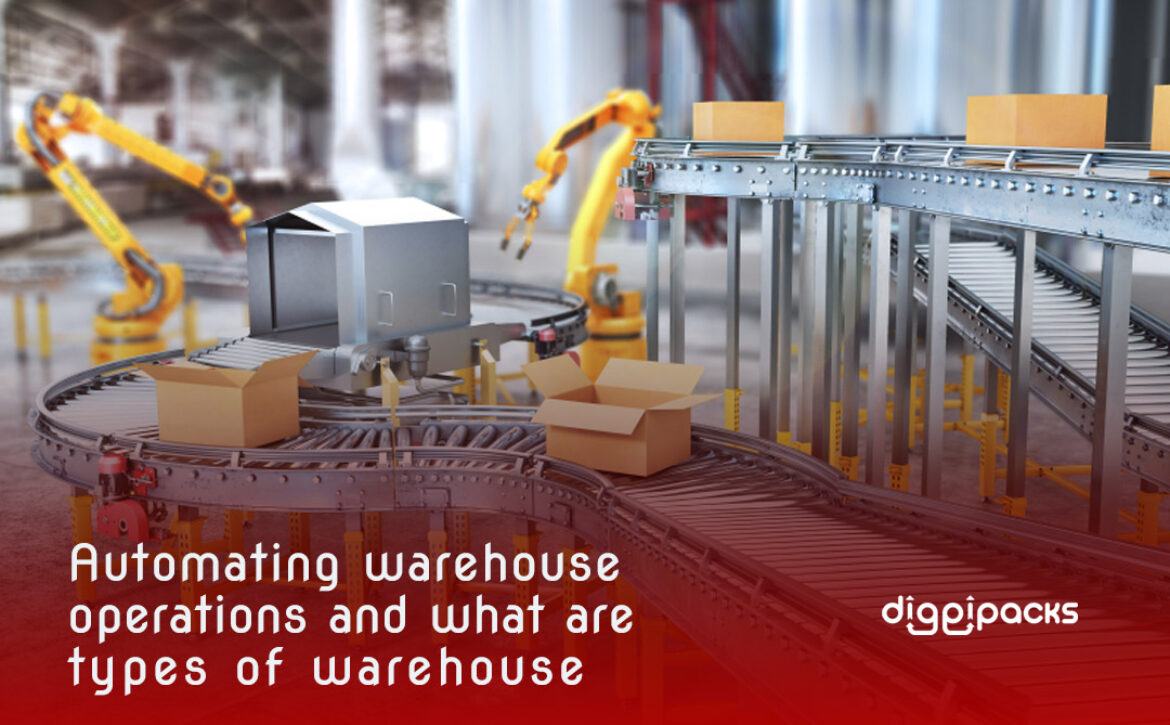
Automating warehouse operations and what are types of Warehouse Automation?

[et_pb_section fb_built=”1″ _builder_version=”3.22″][et_pb_row _builder_version=”3.25″ background_size=”initial” background_position=”top_left” background_repeat=”repeat” hover_enabled=”0″ sticky_enabled=”0″][et_pb_column type=”4_4″ _builder_version=”3.25″ custom_padding=”|||” custom_padding__hover=”|||”][et_pb_text _builder_version=”4.9.4″ background_size=”initial” background_position=”top_left” background_repeat=”repeat” hover_enabled=”0″ header_2_text_color=”#E02B20″ header_2_font_size=”27px” header_3_text_color=”#E02B20″ header_3_font_size=”27px” header_4_text_color=”#E02B20″ header_4_font_size=”27px” sticky_enabled=”0″]

Over the past few years, automating warehouse operations has been said to be one of the most effective ways to improve return on investment (ROI). In addition, there are many aspects covered by automating warehouse operations, and in this article we will learn all the details about automating warehouse operations, what are the most important types of warehouse automation technology and why it is important to implement automating warehouse operations in your company.

What is automating warehouse operations?

Automating warehouse operations are intended to transform stock movement and other warehouse operations through the use of minimal human assistance.

In automating warehouse operations, stock is moved through robots and records are created electronically and logged in automatically without the need for workers to write them down.

How Does Warehouse Automation Work?

automating warehouse operations

How automated warehouses work is about detecting repetitive tasks, manually entering data into picking, storing, and shipping goods, and finding ways to automate them.

That is, using software and technology such as robots and sensors to automate tasks, this ensures that your organization’s vital business processes meet customer demand

It also helps in creating efficient Supply Chain strategies and reducing costs through the use of data-tracking systems.

This data is then transferred to the Enterprise Resource Planning (ERP) system so that it can be retrieved in the future.

Types of Warehouse Automation Technology

There are a large number of types of warehouse automation, due to the many systems and technologies that are used in warehouses.

Which aims, first and foremost, to reduce manual tasks and speed up operations using modern technology and automated systems.

The following are the most important types of automated warehouses:

1. Goods-to-Person (GTP)

It is a type of automated warehouse in which Order Management from person to person through the use of conveyors, lifting systems and other tools.

This type of warehouse automation increases the efficiency of work in warehouses and reduces overcrowding, thus wasting the speed of picking up orders in warehouses, and it is one of the most important forms of automating warehouse operations.

2. Automated Storage and Retrieval Systems (AS/RS)

This type includes a number of automated systems and equipment such as small cranes and vehicles that transport materials.

And this type of warehouse automation is used in large volumes of warehouses.

3. Automatic Guided Vehicles (AGVs):

It is a type of warehouse automation with the least amount of embedded computing power, in which sensor-powered vehicles are used to navigate fixed paths within warehouses.

This type is also suitable only for simple warehouses, while warehouses with space constraints or large human traffic will not be suitable with this type.

4. Autonomous Mobile Robots (AMRs):

This type of automated warehouse is the most flexible of the type AGVs in which GPS systems are used to establish efficient routes through the warehouse.

Obstacle detection systems are also used through laser guidance technology, thus making it possible to navigate safely in warehouses with space constraints or heavy human traffic.

Autonomous Mobile Robots (AMRs) are easy to program through the use of tracks and are quick to implement.

So it is one of the best forms of automating warehouse operations.

5. Pick-to-Light and Put-to-Light Systems

This type of automated warehouse uses portable barcode scanners, which are synchronized with a number of digitally illuminated screens,

Through which warehouse pickers can be directed to where specified items are placed. Thus, Pick-to-Light and Put-to-Light Systems help:

  • Reduce walking and searching time drastically.
  • Reduce human errors while working.

Why Should You Automate Your Warehouse?

You may be wondering why you should automate warehouse operations, and in fact, it is very important.

Warehouses are one of the essential components of logistics management, and therefore any delay in warehouse operation will negatively affect cash flow and customer satisfaction.

Therefore, there is great importance for automating warehouse operations, which helps warehouses in improving their work efficiency and performance, which will lead to:

  • Reduce operating expenses and unnecessary costs of errors.
  • Protect the company’s assets, brand and reputation.
  • Increase the efficiency and productivity of human resources.
  • Minimize manual operations.
  • Dealing with stock keeping units.
  • Optimization of warehouse space, layout and flow.
  • Coordinate the use of material handling equipment such as barcode scanners and laptop computers.

Warehouse Automation Software to the Rescue

automating warehouse operations

Automating warehouse operations will help you effectively and efficiently in meeting the daily challenges of supply chains and relieving those stresses.

It also helps in the effective continuous management as well as the handling of stock quantities, raw materials and other forms more efficiently.

Diggipacks can help you provide the best warehouse automation systems, ensuring you the highest standards of quality, productivity, storage and space.

Diggipacks technologies will also help you track your entire inventory online and without making any contact as well.

Whatever the size of your business it provides you with the necessary space.

[/et_pb_text][/et_pb_column][/et_pb_row][/et_pb_section]

Read More
admin يناير 11, 2026 0 Comments

What Are Material Requirements Planning (MRP) and the benefits of inventory?

[et_pb_section fb_built=”1″ _builder_version=”3.22″][et_pb_row _builder_version=”3.25″ background_size=”initial” background_position=”top_left” background_repeat=”repeat”][et_pb_column type=”4_4″ _builder_version=”3.25″ custom_padding=”|||” custom_padding__hover=”|||”][et_pb_text _builder_version=”4.9.4″ background_size=”initial” background_position=”top_left” background_repeat=”repeat” hover_enabled=”0″ header_2_text_color=”#E02B20″ header_2_font_size=”27px” header_3_text_color=”#E02B20″ header_3_font_size=”27px” header_4_font_size=”27px” header_4_text_color=”#E02B20″ sticky_enabled=”0″]

Companies that produce finished products from purchased components and parts, and manufactured components and parts need a systematic way to plan their needs for those components and parts, and this is what material requirements planning can do.

that beside reducing basic raw materials, the required assemblies, according to what is available in stock or on demand, and finally develop a schedule for arranging the purchased and produced materials.

In this article, we will talk about what material requirements planning as well as its objectives and the most important steps of material requirements planning.

What is Material Requirements Planning (MRP)?

Material requirements planning (MRP) is a computer programmed information system to help manage demand inventory and schedule re-supply orders in time to meet shortages or shortages to assign and execute master production schedules.

are you know The difference between supply chain and logistics explained

What is the importance of Material Requirements Planning (MRP)?

Material Requirements Planning

As for the importance of using material requirements planning (MRP), it is great as it is a set of methods that consider the main production schedule and other information from stock records and product structure records as inputs to determine the requirements and schedule for each item.

Based on the master production schedule, material requirements planning (MRP) creates schedules that specify the parts and special materials required to produce the final items.

Then it proceeds to determine the exact numbers required, and also determine the dates of issuing orders for these materials, based on the delivery periods.

1. Identifying requirements to meet demand

It is the first step in material requirements planning (MRP), through which the customer’s demands are identified as well as the basic requirements to meet his requirements.

A bill of materials is used, which is a list of raw materials and components required to manufacture a final product.

you may like:

5 Reasons to use a Freight Broker for Sending Freight

2. Checking inventory and allocating resources

The second step in MRP is to check demand according to the inventory and resource allocation.

In which requests are checked and verified in your inventory, materials are then distributed through material requirements planning (MRP) accordingly.

3. Scheduling production

The third step is production scheduling, in which the time and labor required for the manufacturing process to be completed and complete is calculated, after which a deadline for delivery is set as well, which is a very accurate step.

4. Identifying issues and making recommendations

The final step in material requirements planning (MRP) is to identify issues and making recommendations and monitor the processes that took place in the previous steps and verify that there are no issues with them.

Also, in this step, alternative or emergency plans can be suggested when there is any delay in the delivery of the deadline.

you may like: Purchase Orders

What are the Benefits of MRP?

There are many benefits that result from the use of material requirements planning (MRP), as it is one of the most important tools that help manage demand inventory and achieve many benefits for facilities.

The following are the most important points that illustrate the benefits of material requirements planning:

  • Reducing inventory levels and thus reducing inventory costs.
  • Improve the efficiency of production scheduling.
  • Improving the level of use of resources (people and equipment).
  • Increasing the customer service level.
  • Respond quickly to market changes.

[/et_pb_text][/et_pb_column][/et_pb_row][/et_pb_section]
Read More
admin يناير 11, 2026 0 Comments

Serial Shipping Container Code (SSCC code): a unique logistics ID

[et_pb_section fb_built=”1″ _builder_version=”3.22″][et_pb_row _builder_version=”3.25″ background_size=”initial” background_position=”top_left” background_repeat=”repeat”][et_pb_column type=”4_4″ _builder_version=”3.25″ custom_padding=”|||” custom_padding__hover=”|||”][et_pb_text _builder_version=”4.9.4″ header_2_text_color=”#E02B20″ header_2_font_size=”27px” header_3_text_color=”#E02B20″ header_3_font_size=”27px” header_4_text_color=”#E02B20″ header_4_font_size=”27px” background_size=”initial” background_position=”top_left” background_repeat=”repeat” hover_enabled=”0″ sticky_enabled=”0″]

The sscc code (Serial Shipping Container Code) is one of the most important and complex numbers on the container door, which is granted by the International Standards Organization and is expressed in an alphabetical sequence of 18 digits through which the logistic units are identified, and the sscc code (Serial Shipping Container Code) is placed in the form of a bar code and is also used in e-commerce transactions, and in this article we will show you all the details about the sscc code (Serial Shipping Container Code).

What is a Serial Shipping Container Code (sscc code)?

sscc code

A Serial Shipping Container Code (sscc code) is a serial number that is placed on shipping containers to identify the container’s logistic destination.

The sscc code is 18 digits long, and this serial code is generated during filling at a particular party, and then loses its value after receiving by or after unloading by another party.

What is an sscc code used for?

Companies make great use of the sscc code (Serial Shipping Container Code), as it effectively helps them in managing quality effectively.

Thus, through the sscc code (Serial Shipping Container Code), each shipment is identifiable along the supply chain, and the following are its most important uses:

  • Global shipment exclusivity guarantee
  • The possibility of handling the shipment easily electronically.
  • Easily integrate shipments into electronic exchanges.
  • Full control over the movement of goods.
  • Reduce personnel costs and increase data reliability.
  • Fulfilling legal requirements for food and drug shipments.

Advantages of marking with SSCC numbers

Companies can also benefit from sscc code labels in more than one way, the most important of which are:

  • Achieving customer satisfaction with the services provided by smoothly processing orders as well as on time delivery.
  • Reducing stock outs.
  • Full tracking of shipments via the transportation path.
  • Real-time identification of charging units.
  • Ease of real-time data acquisition and handling of bulk shipments and volumes.
  • Communicate effectively with business partners around the world.

Tips for correct labeling with SSCC

Some have problems with proper labeling when using SSCC, and here are a number of guidelines for printing the GS1 transport label and its applications:

  • The SSCC label must be at least 50 mm from the edge of the pallet.
  • Put the SSCC label on the surface of the packages.
  • The barcode of the SSCC must be located at a distance of at least 400 mm.
  • Put the SSCC label on at least one side of the package, preferably on both sides.
  • Put only one label on each side of the package.

Create barcode labels with SSCC

As for the way to create SSCC labels, you need to use specialized programs to create barcodes, and through it you can create SSCC and encrypt your labels as well.

Difference between SSCC and other standards

sscc code

Many confuse the sscc code with other standards that govern functions and logistics, as there are a large number of Supply Chain strategies that make it easy to read the information.

One of the most common conflations is between the concepts of SSCC and GS1-128, which is an international barcode standard and is very popular in logistics.

The GS1-128 contains a wide range of information, including information contained in the sscc code.

SSCC is also often confused with GTIN (Global Trade Item Number), but there is a big difference between them, as:

  • The sscc code provides information on the contents of the shipment and container.
  • The GTIN includes the commercial data of the shipment, such as the total price of the cargo, the amount of value of the unit, its net weight, and so on.

Importance of SSCC codes in logistics

The sscc code is of great importance in logistics and services, and its main benefit is the ability to easily identify the tonnage of each shipment by the unique numbers it carries.

There are a number of other advantages of the sscc code in logistics, the most important of which are:

  • Traceability throughout the SSCC code supply chain.
  • Ease of monitoring of any type of commodity by all stakeholders in the supply chain.
  • Automate the easy reading and entry of data into systems, thus facilitating order management.
  • The possibility of creating a practically unlimited number of variants.
  • Facilitate interpretation of standardized ISPM information across the supply chain.
  • The ability to integrate the sscc code with other submission documents, as this code can be easily integrated with other standards.
  • Reduce errors in order management, transportation and delivery to end customers.
  • The ability to read sscc code around the world, as it is internationally standardized and thus easy to read around the world.

[/et_pb_text][/et_pb_column][/et_pb_row][/et_pb_section]

Read More
admin يناير 11, 2026 0 Comments

What is ecommerce fulfillment guide to grow your business?

[et_pb_section fb_built=”1″ _builder_version=”4.16″ global_colors_info=”{}”][et_pb_row _builder_version=”4.16″ background_size=”initial” background_position=”top_left” background_repeat=”repeat” global_colors_info=”{}”][et_pb_column type=”4_4″ _builder_version=”4.16″ custom_padding=”|||” global_colors_info=”{}” custom_padding__hover=”|||”][et_pb_text _builder_version=”4.17.4″ header_2_text_color=”#E02B20″ header_2_font_size=”27px” header_3_text_color=”#E02B20″ header_3_font_size=”27px” header_4_text_color=”#E02B20″ header_4_font_size=”27px” background_size=”initial” background_position=”top_left” background_repeat=”repeat” hover_enabled=”0″ global_colors_info=”{}” sticky_enabled=”0″]

ecommerce fulfillment is considered part of the ecommerce process, which includes performing many tasks such as picking and filling orders, as well as executing other ecommerce orders, so ecommerce fulfillment is an integral part of your work, and it will help you greatly in improving your business and enhancing customer satisfaction as well as Significantly increase your revenue, and in this article we will explain to you all the details about ecommerce fulfillment.

What is ecommerce fulfillment?

The ecommerce fulfillment are those centers that help you in the execution of e-commerce orders, as they are the steps taken to receive, process and deliver orders to customers.

It is the third party company that you appoint to complete the steps for fulfilling ecommerce orders, and it is also one of the indispensable tools in your business.

Why Does Your Business Need ecommerce fulfillment?

You may be wondering why you might use ecommerce fulfillment, and in fact, the use of ecommerce fulfillment in your business has become very important.

Where ecommerce fulfillment helps you in managing a warehouse, fulfilling orders, and arranging delivery of your product to the customer at the last mile.

Especially since more than 90% of customers suffer from poor delivery problems, as well as delays in delivering orders, and this means that there is a big problem in customer satisfaction with the service provided.

Ecommerce fulfillment can help you achieve customer satisfaction, and even make them come back to buy from your store again, by simplifying and improving your fulfillment chain.

Types of ecommerce fulfillment Models

ecommerce fulfillment

Types of eCommerce Fulfillment Models

There is more than one way for ecommerce fulfillment, as there are many ecommerce fulfillment forms according to the number of orders in your business as well as the nature of your inventory and the requirements you want to process your orders.

Each of the ecommerce fulfillment forms is appropriate to the nature and size of your business, and the following are the most important ecommerce fulfillment forms:

Self Fulfillment

It is a type of ecommerce fulfillment form, through which you can manage all the fulfillment processes yourself.

That is, you have a small storage center through which you carry out all the processing of your requests yourself, and this model will be suitable for small companies only.

3PL Fulfillment

In this type, the company or facility outsources the fulfillment operations on its behalf, so we call it third party logistics companies.

These companies will do all the logistics for your business, and this type of company has great supplier relationships, thus helping you to facilitate processing orders faster.

3PL also offers unique solutions for handling various orders, and it also offers you the best storage for your goods, so 3PL is the ideal choice for large and medium-sized companies, which gives them a great competitive advantage.

Dropshipping

It is one of the models in which the wholesaler or the manufacturer ships the product directly to the customer, but the merchant does not keep the stock with him,

But as soon as the customer makes an order through the merchant, this order is automatically transmitted to the supplier through which it is processed and delivered order for the end customer.

The dropshipping model is suitable for start-up companies that have not yet found ways to store and process the orders they receive, but it is not suitable for companies that want to expand and grow in the future.

What’s involved in the ecommerce fulfillment process?

There are many e-commerce fulfillment processes, all of which help you improve customer satisfaction and manage your inventory and orders in the best possible way.

Here are the most important e-commerce fulfillment processes:

diggitrack

Storage Services or Warehousing

The first operations that ecommerce fulfillment can provide to you is the storage services, through which your products will be stored in the best possible way.

Stocking through ecommerce fulfillment gives you an opportunity to improve product accessibility as well as speed in product processing while keeping inventory track more effectively.

Inventory Management

The second most important services that ecommerce fulfillment can provide you efficiently is to manage your inventory in the best possible way,

As through ecommerce fulfillment a record is kept of all items available in stock. This helps you to view the stock and its updates on an ongoing basis,

Thus identifying the available products and missing items. All of this will help you in facilitating inventory management,

As well as evaluating customer orders and forecasting your business, and in the end your business will become more organized as well as your supply and demand.

Order Management

In addition to inventory management, ecommerce fulfillment will help you manage orders as well, thus ensuring that no orders are lost and that all of them are properly processed before they are delivered.

Also, through fulfillment centers, the management of orders is synchronized with the warehouse and inventory management system so that the information is continuously and periodically updated.

Order Picking & Packaging

The e-commerce execution chain provides you with accurate picking and filling processes, thus avoiding incorrect order filling processes that may strain your relationship with customers and make them lose confidence in you.

The products are also packaged with the appropriate materials with labels that will facilitate the shipping process, through the fulfillment centers, the orders are packaged correctly.

Shipping & Logistics

Fulfillment centers also help you by providing shipping and other appropriate logistics services, which are one of the most important services they provide to customers, and through which the product is shipped to the end customer.

It will ensure that the products are delivered on time without any delays, thus enhancing the satisfaction of your customers with the service you provide.

Returns Management

In addition to services related to warehouse and order management, as well as shipping and logistics services, the fulfillment centers also provide effective returns handling services.

And that through effective reverse logistics and order management, which will improve the shopping experience of your customers, which will reflect positively on your business.

What is the difference between 3PL and drop shipping?

ecommerce fulfillment

Many people confuse 3PL with the term drop shipping, and in fact there is a difference between them.

As it is through 3PL that requests are traditionally fulfilled, the following is how 3PL works:

  • You buy or make the products yourself and then sell them online.
  • If you purchase merchandise, you are initially making a down payment for those merchandise.
  • Your goods are shipped to third party fulfillment centers.
  • When you get any orders from customers, the shipping center will ship it to the customer from your stock it has.
  • Your profit is the difference between the selling price, merchandise costs, and other expenses.

But drop shipping is different, because you can start with it with less investment, you don’t need to buy goods or send them to outside sources, here’s how drop shipping works:

  • You place the products of other companies in your online store, that is, you do not buy the goods or the inventory available on your online store.
  • Whenever you receive any orders from customers, it is relayed to the original manufacturer or supplier, and that company then ships it directly to your customers.
  • Your profit is the profit set by the original manufacturer or supplier.

So your loss is much less, because you don’t buy or keep inventory, unlike 3PL where you charge upfront for goods as well as the costs of sending goods to fulfillment centers.

[/et_pb_text][/et_pb_column][/et_pb_row][/et_pb_section]

Read More
admin يناير 11, 2026 0 Comments

Improve Customer Satisfaction through on time delivery (OTD)

[et_pb_section fb_built=”1″ _builder_version=”4.16″ global_colors_info=”{}”][et_pb_row _builder_version=”4.16″ background_size=”initial” background_position=”top_left” background_repeat=”repeat” global_colors_info=”{}”][et_pb_column type=”4_4″ _builder_version=”4.16″ custom_padding=”|||” global_colors_info=”{}” custom_padding__hover=”|||”][et_pb_text _builder_version=”4.17.4″ header_2_text_color=”#E02B20″ header_2_font_size=”27px” header_3_text_color=”#E02B20″ header_3_font_size=”27px” header_4_text_color=”#E02B20″ header_4_font_size=”27px” background_size=”initial” background_position=”top_left” background_repeat=”repeat” hover_enabled=”0″ global_colors_info=”{}” sticky_enabled=”0″]

Meeting the expectations and requirements of customers as well as their delivery times is a top priority for every company in the world, and fulfilling customers’ orders on time is very important for any company that wants to succeed and survive in the market, and on time delivery options can help in fulfilling all orders related to operations Executing shipment orders on time, and this will increase customer satisfaction with your business as well as earn their loyalty to you, and in this article we will provide you with all the details about on time delivery and how Diggipacks can help you in fulfilling orders on time.

What is on time delivery (OTD)?

On Time Delivery indicates how you can meet the shipping orders to customers at the time of delivery, and therefore, it is a measure for the extent and forcing orders on time.

Why is on time delivery (OTD) Important?

on time delivery

You are asking for the reason that makes the on time delivery no matter what, and in the truth of the matter to achieve the best cooperation with your customers,

Where they provide them with their orders at the agreed date, which increases the reliability of customers as well as gain their satisfaction and loyalty to your company.

Especially since customers are always expected to get the required products on schedule,

So you should always meet the agreed delivery date, and can be used through on time delivery.

In the case of failure to fulfill the approval date agreed with customers, this will negatively affect your work, and lose customer loyalty and thus damage your business.

Improving On-Time Delivery

Fulfilling customers’ orders in their time is extremely important, so you always need to try to improve your time delivery.

Which will ensure you customer loyalty to your business and earn their trust and satisfy them from your business, and this will reflect positively to your company’s reputation and revenue.

There are many methods that can help you improve your time delivery, as you can use an external company to help you.

Digipack is one of the best companies of course, and will later we will discuss how Digipax can help you improve your time delivery.

Here are a number of the most effective ways they can help you with Improving On-Time Delivery:

  • Create production schedules in your company, provided that they are realistic, and you can do this by communicating with your sales team to reach the optimal operation of the company.
  • Check the efficiency of your monitoring.
  • Establish strong relationships with your suppliers, so you will be able to meet response times and enjoy accurate performance reviews.
  • Reward your employees on an ongoing basis if customer orders are delivered on time.

diggitrack

Reasons for late deliveries

There are many reasons that may result in late deliveries, and therefore should try to avoid those reasons and process them until you keep customer satisfaction.

The following are the most important reasons for delivery:

  • Owning incorrect expectations.
  • Safety Stock Levels are incorrect.
  • There are bad standard operating procedures.
  • Not having accurate shipping documents.
  • Non-compliance with shipping terms.
  • There are problems during transport.
  • The client changes its orders continuously without following the required procedures.
  • There are problems in selecting products.
  • Having errors of output workers.
  • Errors in handling materials.

How to deliver on time?

After you know the importance of on Time Delivery, you will now need to seriously consider how to deliver orders on time without delays.

The following are a number of tips that will help you meet customers’ orders on time and no delay:

  1. Try to understand the reasons for late delivery, analyze its causes.
  2. Focus on steps that address the causes of delays detected in the first step.
  3. Develop an appropriate plan to eliminate and implement those reasons.
  4. Monitor the results of the plan they put, and verify that they have already limited the causes of delays in delivery.

Increase your on time delivery rate with Diggipacks

on time delivery

Diggipacks can help you in Increase your on time delivery rate, through its distinctive services based on the latest technology methods.

Also diggipacks provides customers with best delivery solutions and orders processing, which ensure delivery of orders in its time.

Even after shipping your customers’ orders will help you Diggipacks in follow up each movement and evaluate performance and make sure delivery of shipments in time.

It also will also provide all updates down through your client control panel until the shipping company is finished.

If the Diggipacks team will be scrutinized and ensured that the demand is not connected, so whether your local or international diggipacks shipments will give you the best solutions at the best prices.

[/et_pb_text][/et_pb_column][/et_pb_row][/et_pb_section]
Read More
admin يناير 11, 2026 0 Comments

Warehouse Theft Prevention and How a warehouse management system helps in this?

[et_pb_section fb_built=”1″ _builder_version=”3.22″][et_pb_row _builder_version=”3.25″ background_size=”initial” background_position=”top_left” background_repeat=”repeat”][et_pb_column type=”4_4″ _builder_version=”3.25″ custom_padding=”|||” custom_padding__hover=”|||”][et_pb_text _builder_version=”4.9.4″ background_size=”initial” background_position=”top_left” background_repeat=”repeat” hover_enabled=”0″ header_2_text_color=”#E02B20″ header_2_font_size=”27px” sticky_enabled=”0″ header_3_text_color=”#E02B20″ header_3_font_size=”27px” header_4_text_color=”#E02B20″ header_4_font_size=”27px” text_font_size=”18px”]

Warehouse theft prevention is one of the most important things that warehouse owners should take care of, especially since there are many challenges facing warehouses, and one of the most important challenges is the exposure of those warehouses to theft, which may result in huge losses, and in the recent period, warehouse thefts are frequent. Therefore, warehouse theft prevention has become of great importance, and one of the most important tasks of the warehouse manager is to avoid warehouse theft prevention operations, as well as avoid waste of resources and check that there is no negligence in storage operations, whether from personnel or in the security system and in this article we will show you the best Methods that help warehouse theft prevention.

Warehouse theft prevention

The exposure of warehouses to theft is one of the most common matters, which results in huge losses for various facilities.

Therefore, a large number of warehouse owners seek to provide effective methods that help in warehouse theft prevention, thus maintaining their inventory and reputation in the market.

Tackling warehouse theft by ensuring you can spot it

In order to achieve the best warehouse theft prevention, you first need to make sure that you are able to detect any thefts.

And you can verify thefts by properly tracking the inventory, so you can know the losses that occurred to you.

It is simply possible to track the inventory correctly and know the type of losses incurred by combining stock takes and cycle counts.

Stock takes vs. cycle counting, and how they help to Warehouse Theft Prevention 

warehouse theft prevention

Stock takes and cycle counts can help achieve the best warehouse theft prevention because they help you check inventory repeatedly, and thus verify its accuracy.

One of the most important features of cycle counts is its ability to check inventory without having to stop working in the warehouse, and it can also scan sub-groups at different locations in the warehouse, on a daily or weekly basis and can also be done immediately.

This is one of the most effective methods at warehouse theft prevention because it helps you gain better control over inventory and facilitates the rapid and continuous detection and detection of theft and shortages.

Tips to Warehouse Theft Prevention in your business

And if you want to prevent thefts from happening in your warehouse, here are a number of important tips that will help you prevent warehouse theft and check inventory accuracy in your warehouse:

1. Check the record of new warehouse employees before hiring them

One of the most important things that you should consider before hiring new warehouse employees in your warehouse is to check their history and criminal record,

Which will help you reduce the chances of being robbed by your employees.

2. Establish strict policies about theft and educate your employees about it

The second most important thing about warehouse theft prevention is the need to put in place strict theft policies and zero tolerance for any theft behavior from your employees.

You will also need to take a signature from each employee agreeing to the theft policy and how they will be punished if they do so.

Also, the best way to prevent warehouse theft is to deploy unknown employees to monitor their Co-workers, and immediately report any suspicious activities or intentions of theft.

3. Deal strictly in case of proof of theft in the warehouse

If a theft has been proven in the warehouse, you need to follow the shift record on your warehouse, to check whether the theft occurred while the employees were on duty or not, and from the employees who were on duty.

And if you notice any strange behavior, such as the entry and exit of a particular employee at odd times and repeatedly, you need to check carefully to verify that this employee has nothing to do with the theft that took place.

4. Increase strong administrative presence in warehouses

Strong administrative presence in warehouses is one of the most important factors that helps in effective warehouse theft prevention.

You can use modern technologies that enable administrators to have a strong presence in warehouses and thus deter expected thefts in the warehouse.

5. Restrict access to inventory in the warehouse

One of the important tips for warehouse theft prevention is to try to restrict access to inventory in the warehouse, which you can do by separating the receiving and shipping methods.

Thus preventing non-warehouse employees from accessing the inventory in your warehouse and thus protecting it from chances of being robbed from strangers.

6. Provide strong security systems in your warehouse

First of all, you will need to provide strong security systems in your warehouse, which will help you in facilitating warehouse theft prevention, through:

  • Access control.
  • Distribution of CCTV cameras and verify that they are in a hidden location so that no one will notice. You also have to provide all warehouse exits with security devices and security personnel,

To inspect and check all vehicles leaving the warehouse to verify that no unauthorized stock is leaving.

Also, one of the tips you need is to prevent the presence of any private cars next to the warehouse, so that some people do not take advantage of them in theft operations.

7. Understand the realities of theft among your employees

One of the most important tips is to try to know the conditions of each warehouse employee you have, and verify his motives, and the motives of poverty are many, some of them are due to poverty or need, and some are due to greed.

Check all these points and try not to mistreat your employees and give them the appropriate wages for their effort and value them for any special activity or extra effort.

How a warehouse management system helps to Warehouse Theft Prevention

warehouse theft prevention

Another important factor that helps more effectively in warehouse theft prevention is the implementation of a warehouse management system.

The application of the warehouse management system is one of the best modern technologies that help you in controlling inventory and controlling warehouses,

By providing accurate inventory records, and determining what resources you have and what you do not.

Warehouse management systems also help you identify lost stock immediately. And all these amazing features and services provided by the warehouse management system will give you the possibility of warehouse theft prevention.

Diggipacks offers you the best managing a warehouse that help you monitor your inventory and warehouse and follow up on all operations accurately and easily in a fully automated and accurate way.

[/et_pb_text][/et_pb_column][/et_pb_row][/et_pb_section]

Read More
admin يناير 11, 2026 0 Comments